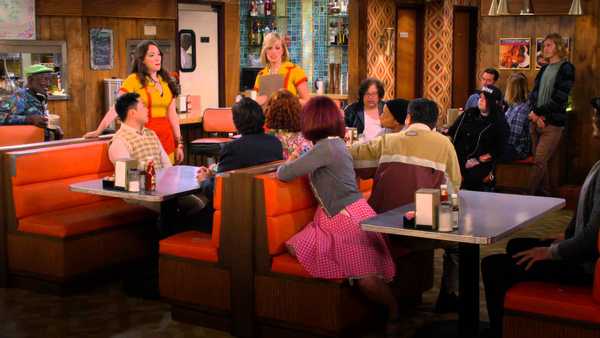
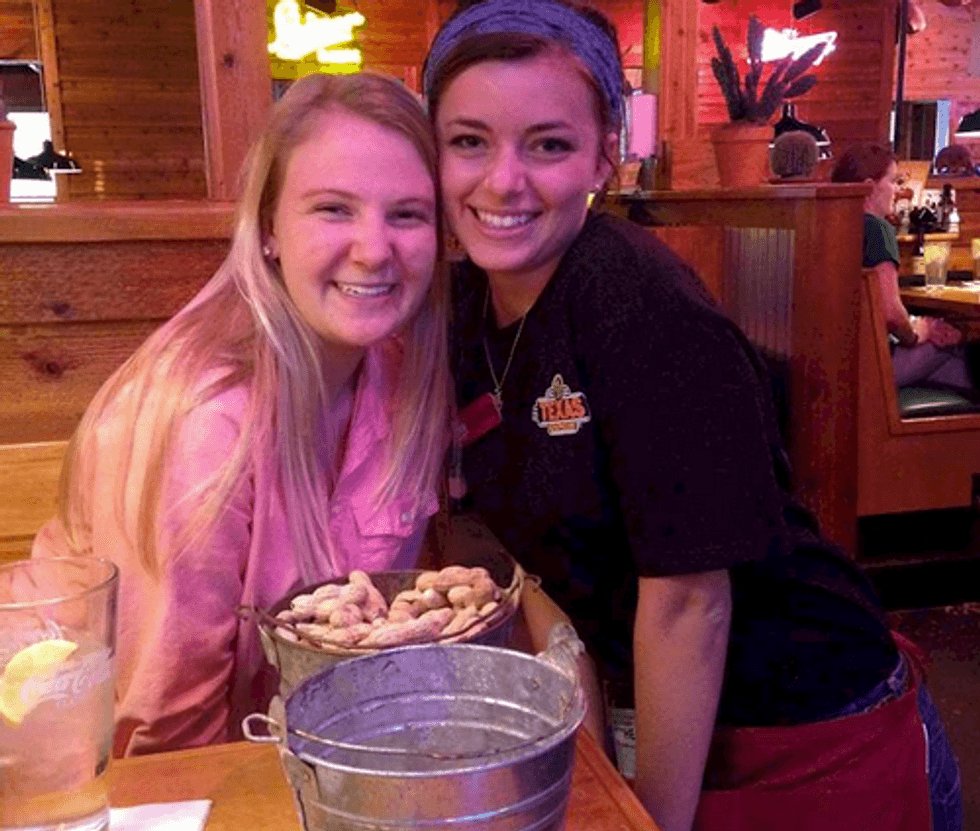
Let's face it. Waiting tables is not quite as romantic as T-Swiz makes it, but at some point in your life, I hope you get the back-breaking, feet-aching, greasy-food-smelling opportunity to work as a server in a restaurant. Not only do you get to carry out countless amounts of delicious food without getting to taste any of it for up to 6-12 hours per shift, or watch your table leave you no tip despite the fact that you've catered to their every need, curiosity, or change of mind, but you also get to learn five of the most vital lessons in dealing with other people.
1. Sometimes people are just grouchy.
Not everybody is going to like you. No matter how big your smile is or how hard you work to earn their approval, they might simply be indifferent toward you. The real world does not work that way. Your attitude, manners, and service may never matter to them -- you may never matter to them at all. Don't get upset if someone is rude to you no matter how hard you try because your worth is not defined by their opinion of you. Just because you care what someone thinks of you, does not mean they care about you in anyway. These types of people should not get to control your mood or how your day is going at all. Fake a smile, give them what they need, and spend no more time thinking about them than they spend thinking about you.
2. It's not what you say; it's how you say it.
I was told to always ask for favors nicely on my first day of training as a waitress. A nervous, shy wreck, I had no idea what to expect from my coworkers, let alone the people I would be serving at my tables. Never in my life had I been exposed to so many different types of people from so many different backgrounds and been held responsible for serving so many different items. I assumed that everyone I would be working with would get sick of me asking for help or being slower than them at the job. I soon came to realize that as long as I asked nicely and purposefully, people had no problem helping me out. My coworkers answered all my silly questions about the menu and the system, sometimes three or four times, and had no problem helping me when I got behind with my tables those first few shifts. All you have to do is ask nicely.
This is also true on the side of waiting tables. I've had a man snap his fingers at me and call me over to his table, "Hey! It's been ten minutes, and I still haven't gotten my salad," while banging his fists on the table. First of all, I'm not a dog. I don't need to be snapped at. Second, I'm probably at least 30 years younger than this man so I'm very confused why he thinks it's necessary to be so aggressive toward me. Third, the same request could have easily been made with a different approach and a lot less fear instilled. Had he calmly explained that he had not received his salad and asked for me to check on it, I would've been able to do my job just as efficiently and urgently without the yelling, snapping, and degrading.
3. Honesty is the best policy.
There is no faster destruction of a web of lies than by a restaurant staff. When you have a server, a busboy, a cook, and a manager all working to properly serve a guest at a table, there is no way the guest is going to hear the same story unless it is the truth. If you mess up, apologize and confess. It's that simple. No one likes to be made a fool; anyone would rather hear an apology and an attempt to fix the situation rather than a mistake dragged out until you're caught and forced to explain. Most people will understand if you own up to your mistake the first time around, and if they don't, there is nothing you can do about it except fix it anyway.
If you don't know the answer to a question, admit it and go find the answer. Making up an answer will leave you either in a quickly spiraling web of lies or looking foolish when you have to apologize once you find out the correct answer. Neither option is a place you want to be when you're trying to gain the respect of another person.
4. The little things build up.
This is especially true for money, time, and detail. Having several smaller tables with consequently smaller tips will always bring in more money than a large table or two. And not buying the little things will always save you money in the end. $2.50 per soda per person at a five person table adds up to $16 extra on your bill once tax and tip are calculated.
As for time, wasting a minute here and there to check your phone or gossip with your coworker takes away from time you can be serving your table, refilling drinks, or making a new pot coffee instead of waiting until the last minute to do it when you suddenly have five other things that need to be done immediately.
Detail could not be more important when you're working with other people. Beating around the bushes and avoiding the nitty gritty details leads you to an unfinished project and lots of confusion between workers. It will always be best to get the details out of the way first and lay out the expectations before you begin working with other people. If you don't have time to do it right the first time, you better have time to come back and fix it, and I'm sure you probably won't.
5. Everybody has a story of their own.
Whether you're being served or are the server, everybody has a story of their own, and everybody is going through something. The oldest rule in the book is to "Treat one another as you would like to be treated," but no, it goes further than that. Treat others how you would want to be treated on your absolute worst day. You never know when someone is having theirs. It takes one person to go out of their way to be kind to you to make your worst day contain a little bit of hope. You never know what brought someone into a restaurant to eat, or on the other side, what the story is behind the hands that prepared your meal. Most restaurant staff are students or have children or someone for whom they're financially responsible. They work in a restaurant because of the flexible schedule and quick money, not because they enjoy catering to every need of a group of people at one time. Get to know the people around you and get to know their stories.
And no, rounding up to the nearest dollar does not count as a tip.