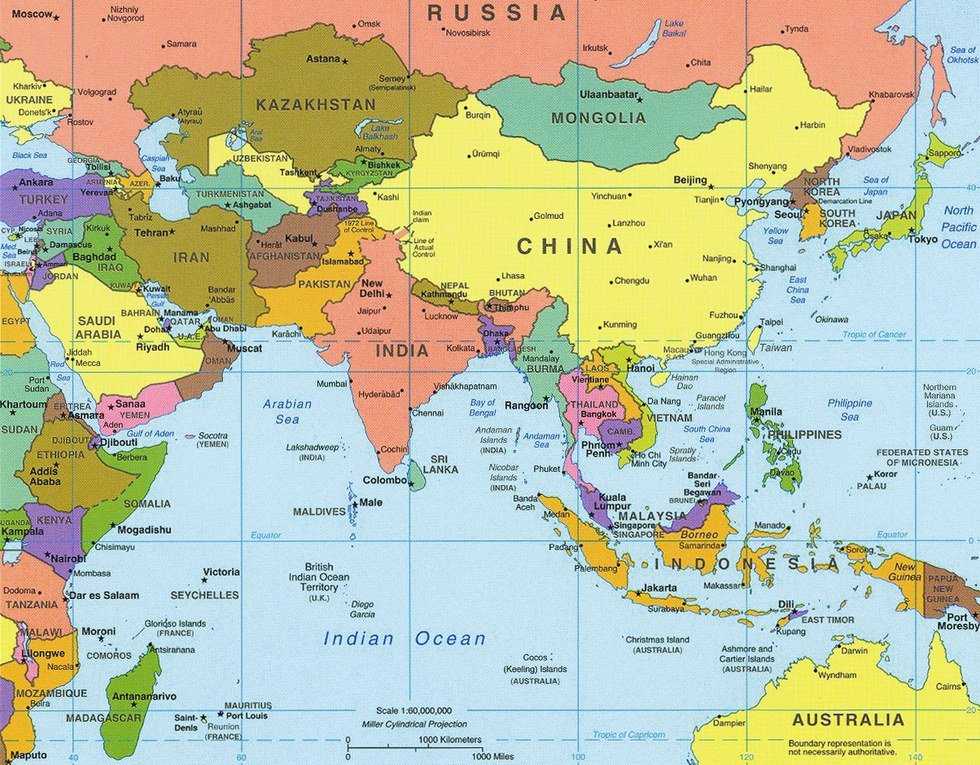
“Asian-American” is an interesting label. The continent of Asia is huge, comprised of around 50 countries grouped into various regions such as East Asia, Southeast Asia, South Asia, Central Asia, West Asia (or the Middle East) and sometimes the Pacific Islands. Obviously, Asia is not a homogeneous place. Billions of people who are part of different cultures and ethnicities, practice different religions and speak a multitude of different languages are Asian or of Asian descent. So what exactly is an “Asian” identity?
In the U.S., when someone uses the term “Asian”, they are traditionally referring to people of East Asian, and occasionally Southeast Asian, descent. This contrasts with the use of the term “Asian” in the U.K, where it normally refers to people of South Asian origin. While it’s important to teach the Western world that the word “Asian” doesn’t refer to any single culture, identity or group of people, in discussions of Asian-American identity, it’s equally necessary to be aware of context.
Without a doubt, people from various regions and countries in Asia have different cultures and face different struggles and distinct forms of racism. Consequently, it is not beneficial to group them all together and act as if all Asian-Americans experience the same types of prejudice, are subject to the same stereotypes, or even face the same experiences when living in the U.S. During discussions of identity, racism and immigrant experience, this has to be kept in mind. We should understand that it’s not wrong to be aware of these distinctions, and that is precisely because Asia is so diverse. Asia isn’t homogeneous, and neither are Asians.
My family is from Nepal, a small country in South Asia. I do sometimes call myself Asian-American, and oftentimes South Asian. I’ve been told many things before, such as “you’re not Asian!”, “aren’t you Indian?” and my personal favorite, “you’re not Asian, you’re Indian!” These unsolicited opinions on my identity are frustrating on a number of levels, and reveal the very close-minded view that many Westerners have, as well as their need to characterize people and put them into boxes. Personally, the label I feel fits me best is “Nepali”. For many Asian-Americans like myself, specific nationalities and cultures can sometimes be most important because that is where the essence of identity often stems from.
The label of “Asian-American” isn’t necessarily bad, however. Although there will never be one single shared experience among all Asians, we do have various things in common. Many Asian-Americans are first or second generation immigrants, and the experience of growing up between two or more cultures is one that I know a number of Asian-Americans can sympathize with. As a result, we often have to struggle against xenophobia and other anti-immigrant sentiments, along with the romanticized, sometimes fetishized and often inaccurate views of our homelands held by the West. There are also many recognizable shared aspects among our different cultures, present in food, language, music and art, due to both historical and ongoing cultural exchange.
Clearly, there are some overarching similarities that many Asian-Americans may share. There are also countless differences between our separate countries that help to mold our identities. The nuances and intricacies of each of our cultures do not have to be sacrificed when discussing and coming together over common attributes. Both realms of identity can exist at the same time.
Some may say that the label of Asian-American is pointless because it cannot possibly encompass such a diverse geographic area in a meaningful way. Whether or not that is true, the term will probably stick around for a while. In my opinion, the most important implication of the Asian-American identity is that it can unite us -- allowing for solidarity while we strive for effective activism, all while celebrating our diverse continent.