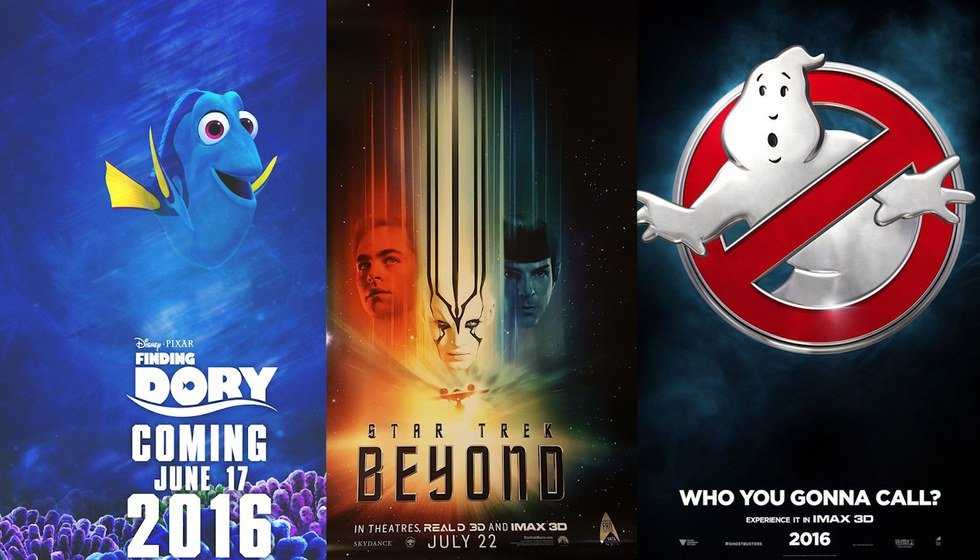
It's no secret that 2016 has been one of the worst years, both critically and commercially, in recent memory for summer blockbusters. A number of anticipated sequels, reboots and remakes have come and gone from cinemas with little more than a shrug from their intended audiences. There have always been movies that underperform when compared to their predecessors. However, it seems like nearly ever movie this summer has been a disappointment. I've been obsessed with film for the majority of my life so these last few months have led to me re-evaluating what I even like to see in a popcorn movie.
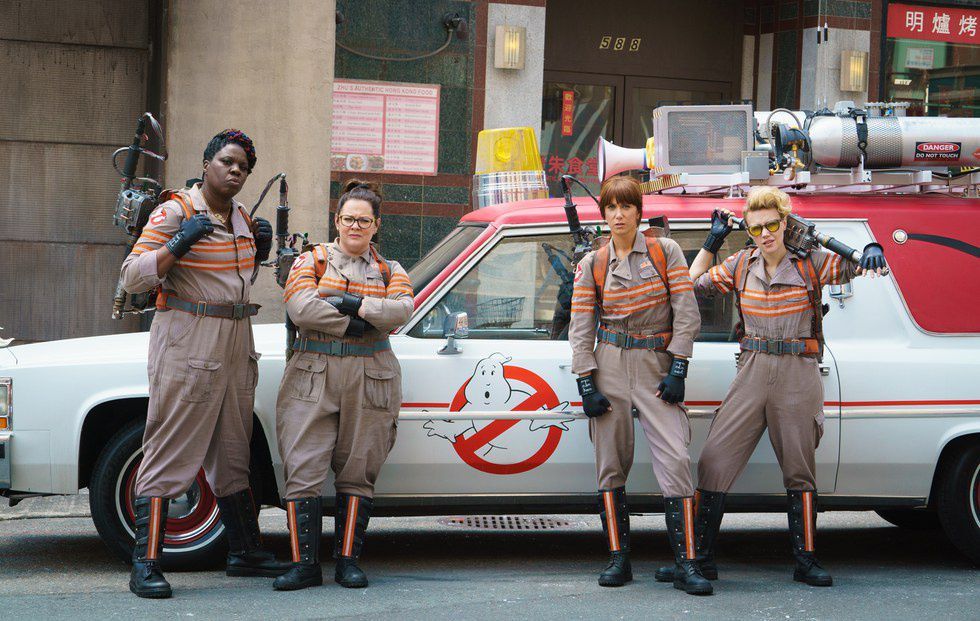
To dig a little deeper and figure out the key ingredients of big-budget filmmaking I want to take a look at two recent reboots/sequels. One is "Ghostbusters" and the other is "Star Trek: Beyond." The political furor over "Ghostbusters" has led to many critics and reviewers using the movie in service of an agenda rather than just looking at it as a film. The talking point that has been raised over and over is that the target demographic (men who grew up on the 1984 original) hate the movie because they believe women can't be funny.
This idea is almost as absurd as the fact that the most controversial film of the year is "Ghostbusters." You have to look no further than an episode of 30 Rock or Parks and Recreation to see women are funny, and you have to do no more than watch the new "Ghostbusters" to see why fans of the original don't like when something they love is re-interpreted poorly. The new movie breaks the cardinal rule of reboots, which is to honor the original film by doing something interesting based on the already established framework.
Here the filmmakers (Sony) change nearly everything about the series that made people love it in the first place. They show a complete disregard for the dry humor that has always been a staple of "Ghostbusters" and replace it with off character improvisation that prevents the movie from ever settling on a clear tone. I can't quite ignore this nagging feeling that instead of allowing the dialogue to breathe or inform the characters the director (Paul Feig) was behind the camera saying, "Just say it in a funny way. Act funny. Come on. Make it funny."
I adore the outlandish nature of the original and I simply find it odd that the third act of the reboot basically becomes an action film. When the big setpiece of the movie features the heroines battling a literal representation of the "Ghostbusters" logo then you have to wonder if the people in charge hate the property they were tasked with adapting . "Ghostbusters" has always fundamentally been about science conquering superstition. When you remove the core of something popular and insult your audience at the same time it's no surprise that it will fail to recoup its budget at the box office.
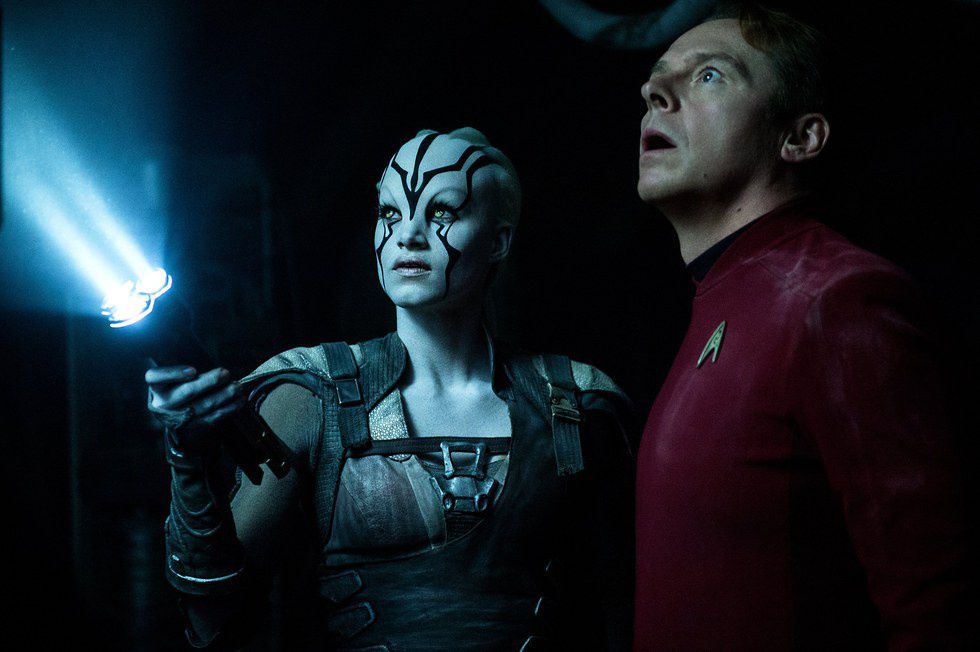
On the other hand, you have "Star Trek: Beyond." This third entry in J.J. Abrams' rebooted "Star Trek" franchise finds a way to both honor the original series and make it enjoyable for modern audiences. Oddly enough it actually does this without Abrams at the helm. "Beyond" works as a blockbuster for three key reasons. It doesn't try to reinvent the characters people already know and love, it utilizes modern filmmaking techniques in a way that improve upon the originals and it has a consistent script.
From the classic characters to the newly established ones, everyone in this movie gets their proper development and screen time. By nailing the traits that make the crew of the Starship Enterprise tick, the actors have plenty of room to show how their versions of these iconic characters grow and mature in this new timeline.
On top of the ensemble of reliable performances, the VFX laden setpieces are thrilling because they are stylized in a way that makes you feel the danger the characters are in. There is a scene in every new "Trek" film where the Enterprise is destroyed. The inevitable destruction of the ship feels much more personal and important in this entry because it is a long, drawn out disaster filmed creatively instead of just another flippant action scene.
Tying everything together is the script written by Simon Pegg and Doug Jung. They nail all of the endearingly corny, techno-babble that makes "Trek" what it is, while focusing on two conflicting ideologies that ground the film in a time honored science fiction tradition.
I may just be saying this because I'm a writer, but I think a summer blockbuster lives or dies based on how solid its script is. Without following a proper script you end up with too many deviations filmed on the fly, which lead to the editors having a difficult time making something coherent. This has the side-effect of losing the performances in the mix and turning the plot into a flimsy excuse to hang setpieces on. Ultimately, the majority of this summer's blockbusters have all suffered largely from some form of problem that should have been corrected in the script writing phase of pre-production.
What are your favorite movies of the summer?