
To be or not to be, that is the question one quartet violinist asked himself while composing a scene from one of Shakespeare’s most prominent plays.
“I’ve had a particular fascination, bordering on obsession, with the play of Hamlet,” Emerson String Quartet violinist Eugene Drucker said. “Shakespeare is just so inspiring when you really try to get into the rythms of his verse and especially the tensions between the characters.”
The audience is dark and silent. All eyes stare eagerly at the warmly lit stage. A young girl is standing on a raised platform in the middle of the floor. She is draped in a long, tan dress, which dangles just above her bare feet. Her name is Ophela. She doesn't speak, but there is an anguished expression on her face. The violins below her start to cry as she sorrowfully calls out to the man she loves, a man who doesn't love her back.
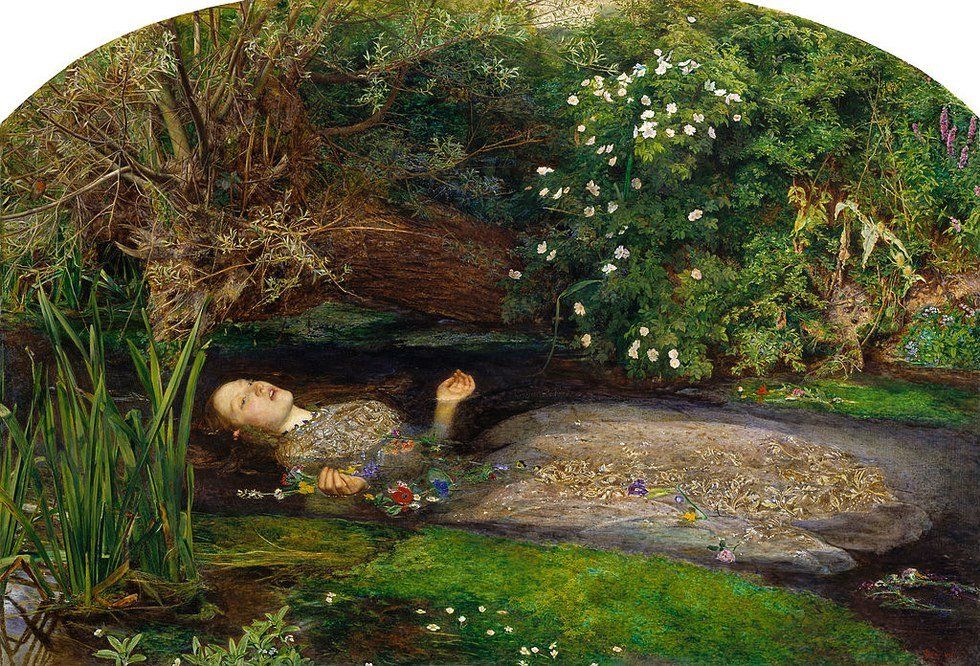
The 15 minute piece is called Madness and the Death of Ophelia, one of two female characters in the play. Ophelia struggles with her father and brother’s disapproval of her love for Hamlet, who views her only as a sexual object. The young girl eventually goes insane and commits suicide.
“I’m thinking of their depth, the imagery that is so compelling,” Drucker said. “Within ophelia’s speech when she goes mad, the way she speaks is entirely different from the way she spoke before.”
Drucker’s composition is written for a quartet. The four-instrument ensemble usually consists of two violins, a viola and a cello, like the Escher quartet, which performed the piece with Drucker in Stony Brook University’s Staller Center October 28.
“It’s a beautiful, expressive, contemporary work,” Escher String Quartet violinist Aaron Boyd said. “It is an ideal piece, and it has the rare pleasure of having the voice, and of course, string players love the voice as the instrument that we most emulate or try to emulate.”
But getting to play pieces like Madness and the Death of Ophelia isn’t the only pleasurable part of being in a quartet for Boyd.
“We can be very free,” he said. “We can criticize freely. We can chat very freely. We spend a great deal of time together also, so it is like an awkward and odd and fascinating marriage.”
While the Escher Quartet may be an unusual marriage, its music does not fall short of grace.
“I think in an ideal sense, the music plays you, and so we play great music,” Boyd said. “98 percent of the music that we play is the ultimate experience of that particular composer’s work. It’s a nice thing where we are all partners with the music.”