
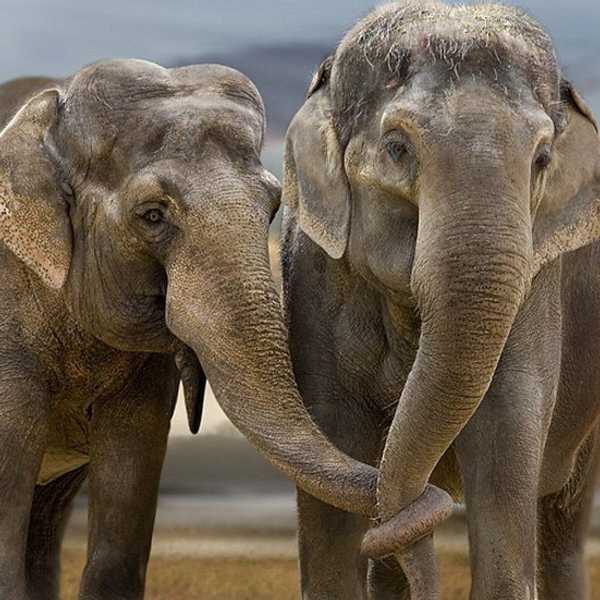
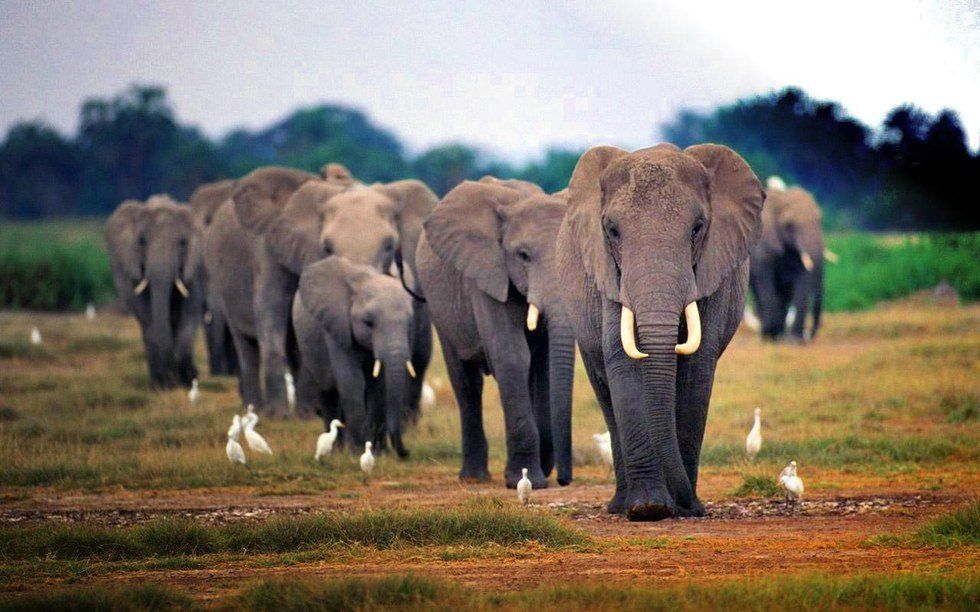
For centuries, elephants have played a big role in the world's economies, culture and religion. They have done everything from entertaining us in circuses, to being tamed and used in wars, to being regarded as gods in some civilizations. This week, the world received some startling news surrounding the low numbers of elephants that are left on our planet. The African elephant used to be found all over Africa and the Asian elephant roamed from Syria to China to Indonesia. As time has gone on, and the extinction rates have drastically increased, elephants are found in small groups south of the Sahara desert and scarcely in Southeast Asia, Sri Lanka and India.
In the early twentieth century there were close to ten million elephants, and now elephant numbers are as low as 252,000 and expected to drop down to 160,000 by the year 2025. Between 2007 and 2014, the elephant population plummeted by at least 30%, or 144,000 elephants. As researches have traveled over the African plains, they only spotted one herd of 36 elephants in an area the size of Mexico. It is clear that these gentle mammals are disappearing right before our eyes, and there isn't much we can do.
There are many reasons why the Asian and African elephant populations have been decreasing. One of the main reasons being their habitat. Elephants need lots and lots of room to live not only because of their size, but also because of how much they eat. Humans are competing with elephants for living space, and as more and more humans clear or the land that is being used by elephants, the less space the elephants have. Elephant hunting or "poaching" has been a major factor for the disappearance of this species, and they are killed solely for their valuable ivory tusks. Although trade of tusks is illegal, it has not been completely eliminated and is still a common practice in many places.
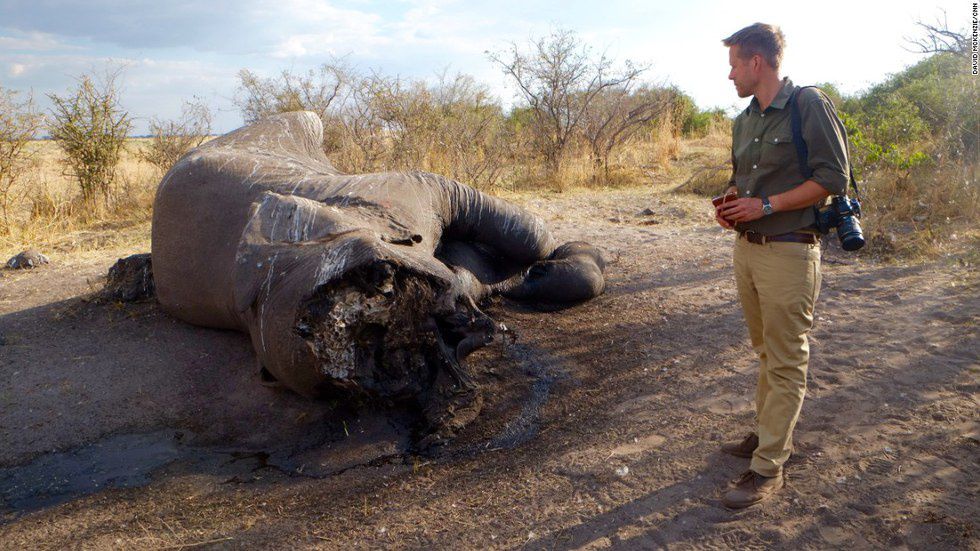
Often, all the local people living among elephants would be farmers, and found that they could make more money by selling the tusks of one elephant, than they would be able to make farming and doing manual labor for twelve years. That alone makes it really hard to prevent because lots of workers want to take the easy way out and save themselves from 12 or more years of work. Some places such as Botswana, have put in extra effort to protect their wildlife from poachers by deploying their Botswana Defense Force which is made up of around 700 specially-trained soldiers that are stationed in 40 different areas. It is devastating to watch from the outside, especially living so far from where all of this is going on, but there are ways to help. To find out how you can help elephant conservation, adopt and elephant, or donate, click here.