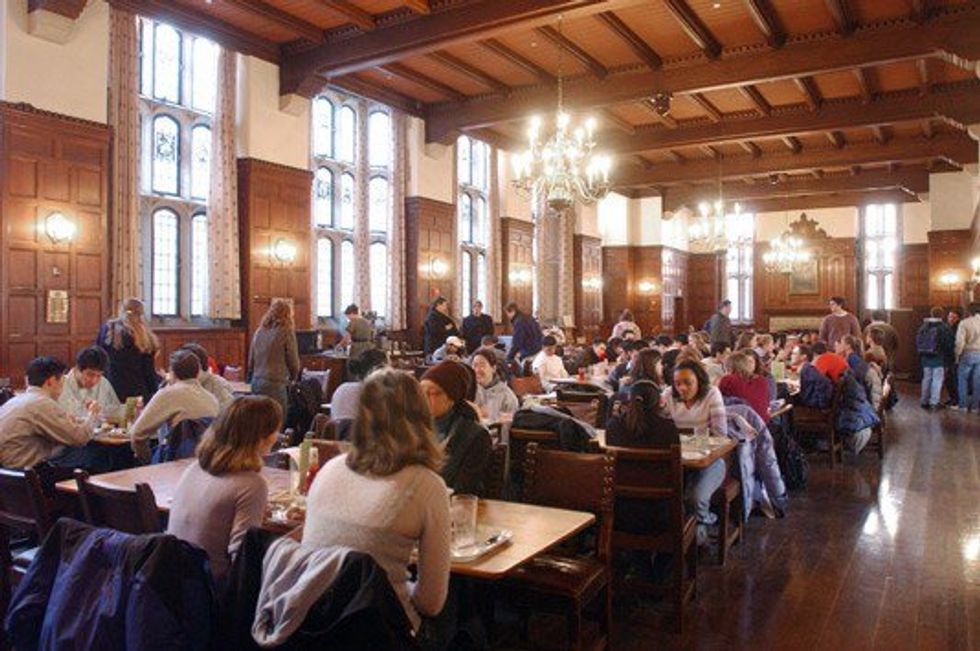
Yale has one of the best dining halls in the country, out of its 14, and yet, for the vegetable, fruit, and lean protein goers, it is so difficult to find something appetizing for all three meals. That is why, when I go home for Thanksgiving, Christmas, Spring, and Summer break, I always try and eat the freshest of fruits, the greenest of vegetables, the leanest of meats, in order to maintain an overall healthy lifestyle throughout the school year. But it is proven every time I return to the meal plan, that I can no longer maintain my happy and healthy lifestyle, and I resort to eating bites of cereal and mass-produced casseroles for each meal.
It is difficult to complain about Yale’s dining hall menu, because we have such a variety of food, maintain a sustainable menu, and comparatively have many more options for each meal than most universities. But regardless, surviving on a dining hall plan in general presents its challenges when you are trying to lose weight on an extreme note, but on a more general and applicable note, when you are trying to simply maintain a healthy digestive system.
That is why many choose to move off campus for their junior and senior years. Not just for the reason that they are living on their “own” with their own freedom, responsibilities, and their own apartment, but so that they can cook their meals, in the fashion that they want to, WHEN they want to. Many people eat their meals at many different times, and therefore the hours of operation for the dining also provide challenges, not just the menu. This is the case especially for athletes who do not make it to the dinner in time after practice, and are forced to eat at restaurants off campus. These challenges also face most of the student population at Yale, since most students do not go to sleep before midnight, meaning that there exists a span of 5 hours after dinner closes and before bed, which most students fulfill their hunger by eating easy access junk food- further deteriorating the “healthy lifestyle.” Perhaps if dining halls had more flexible hours, students would eat their dinners later, and avoid junk food to snack on while studying.
In addition to adjusting hours, it also seems like it would be more efficient if, instead of the dining hall making complicated mass recipes, the dining halls could make simple items such as a variety of grilled meats, whole grains, vegetables, dairy products, and fruits, for each meal, allowing people to make what they want out of each ingredient. They can decide if they want to make a casserole with the many options they are given, instead of having no choice in the matter, and having to resort to eating cereal and ice cream if they do not want to eat something they are unsure of.
But realistically, these changes, for many reasons, are not going to happen, and it is easiest to try and stalk up on healthy natural food in your own dorm room if you are not going to live off campus. This often requires grocery shopping several times throughout the year as well as a fridge of some sort, but it can be worth it to have your own food choice when there are no other options in the dining hall. It is an adjustment, but everyone needs the “college experience” at some point!