

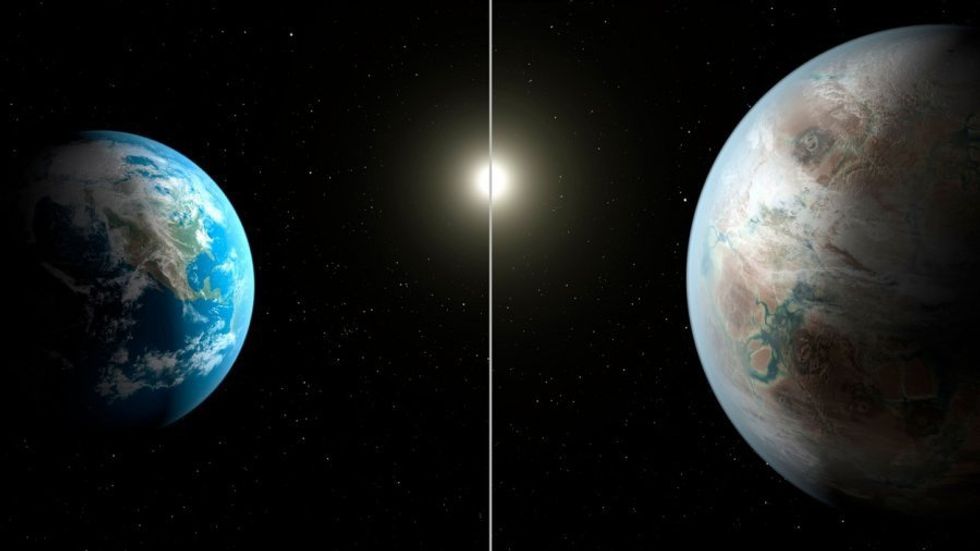
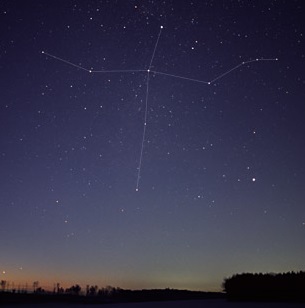
Last week, the Kepler Telescope’s planet hunting mission made an astounding discovery. The mission located another Earth-like planet in the correct habitable zone orbiting a sun-like star with the possible capability to support life. This star is located in the constellation Cygnus, also known as the swan, which is a staple constellation in the summer sky if you’re a Northern Hemisphere resident like me. This star and its surrounding planets are roughly 1,400 light-years away from Earth. Below is an image of Cygnus.
The earth-like planet, named Kepler-452b, is roughly the same distance from its star as we are to the sun. This means that the temperature on its surface provides a possibility for water, the key ingredient for life. NASA uses the presence of water on a planet to determine whether or not life is a possibility. For example, recent discoveries of water on Ganymede, one of Jupiter’s moons, and Enceladus, one of Saturn’s moons, have raised the question of whether or not life could be on those moons. Of course, this life would not be high functioning life forms, but simple microorganisms. Ganymede and Enceladus, however, are too far from the sun to sustain any more developed life, and Ganymede does not have a rocky surface needed for life. Interestingly, Enceladus does have a slightly rocky surface, and current research is suggesting there is some sort of internalized heating system underneath the planet’s surface, which could lead to the formation of some life.
The appeal of a planet such as Kepler-452b is the fact that it has many other life-sustaining attributes besides water. According to nasa.gov, Kepler-452b holds other similarities to Earth as well, for example, the planet takes 385 days to orbit its star, much like our 365 days. As previously mentioned, Kepler-452b is roughly the same distance away from its star as we are from the sun. Earth is 1 astronomical unit (AU) away from the sun, while Kepler-452b is 1.05 AUs away from its star. Another supporting factor for Kepler-452b is that it is the smallest Earth-like planet yet, meaning it is the most similar in size to Earth.
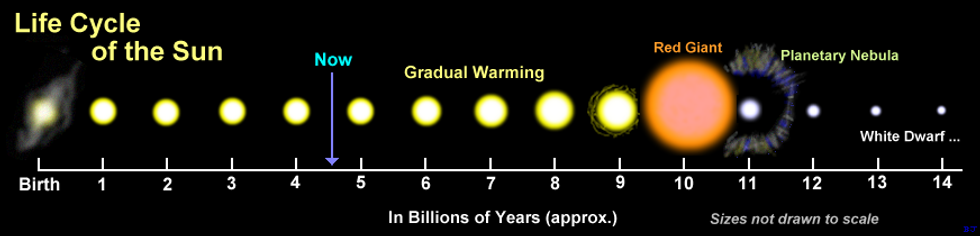
While Kepler-452b sounds like the perfect candidate for another Earth, there are also a few downsides to the planet. To start, the star it is orbiting is roughly 1 to 1.5 billion years older than our sun. Due to the stars both being very similar, and due to this star’s age, we know it is emitting much more heat than our sun. As stars of this variety age, they begin to grow and release more heat. This is due to the star nearing the Red Giant phase, which occurs once the stars are about 10 billion years old. The Red Giant phase is reached when a star has no more hydrogen to convert into helium through nuclear fusion. The helium then begins to be fused into carbon, causing the star to expand greatly and engulf any surrounding planets. The sun is about 4.5 billion years old, while this star is close to 6 billion years old, meaning it is much closer to the Red Giant phase than the sun, and is emitting much more heat. So, Kepler-452b must be hotter than Earth, however, it is unclear as to how much hotter that may be.
Kepler-452b is also 60 percent larger than the Earth, meaning the heat increase may not affect it as much as it would affect Earth. Another way to measure a planet's similarity to Earth is a measurement called the Earth Similarity Index (ESI). The index ranges from 0 to 1, Earth representing the 1. So, the more Earth-like the planet is, the closer its ESI is to 1. Kepler-452b does not have the highest ESI, clocking in at .83. The highest ESI currently is .88 and is held by another planet discovered by the Kepler Telescope. It is also still unknown whether or not Kepler-452b is a rocky or gaseous planet. The odds look to be a little over 50 percent in favor of it being a rocky planet, which helps the chances that Kepler-452b houses life.
I have always been so interested in astronomy and NASA’s work discovering Earth-like planets on their search for life, so I hope this has explained the findings on Kepler-452b in an understandable way, and has sparked your interest in these findings as well! As always, support for NASA in order for them to continue to make these incredible discoveries is always necessary and appreciated, even during times where other less “newsworthy” discoveries are being made. If you’re interested in Kepler-452b, I recommend further researching the constellation Cygnus and the many discoveries happening amongst its stars. Furthermore, Cygnus is a beautiful constellation and houses other great discoveries, including the first black hole ever found, Cygnus X-1. So next time you’re out on a clear night, keep your eyes open for Cygnus, and for Kepler-452b.















