Driving While Black? There's An App For That

Driving While Black? There's An App For That

Driving While Black The App
76
views

How often have you heard in the news of unjustifiable traffic stops? Too often if you ask me. What if their was an app that could guide you through your police encounter safely, hopefully, and maybe even without a ticket! Would you download it?

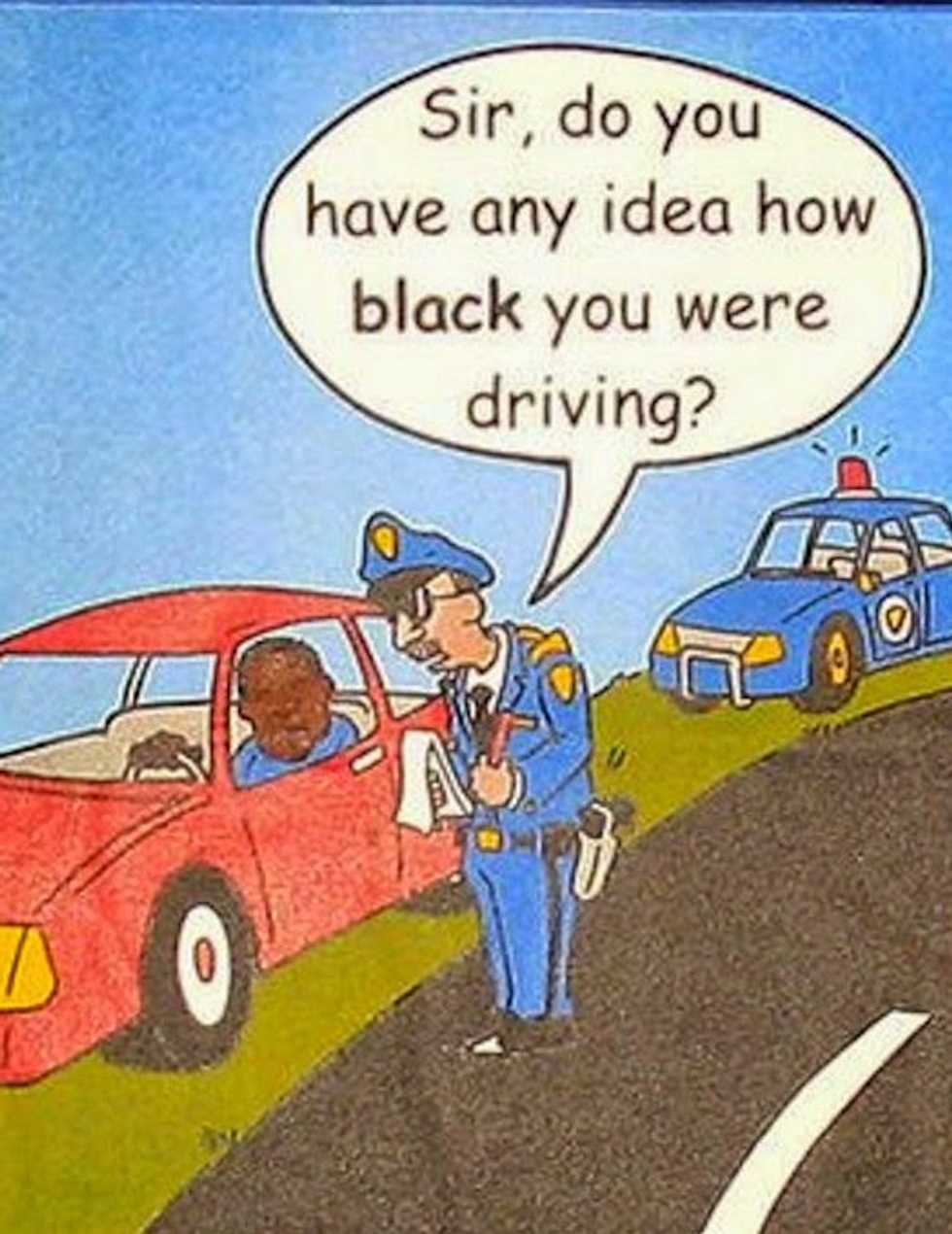
Too many times we've seen African American people, and other minorities, get racially profiled when driving. This issue has ignited a flame in America as we try to find the truth on the death of Sandra Bland. How did turning into a lane with out a signal result in an arrest? Examples of this kind of racial profiling are deeply rooted in American history. Driving while black (DWB) a crime millions of people commit, and sadly are targeted by police because of it.

Black people tend to experience a disproportionate number of law enforcement traffic stops. Some stops are for legitimate, non-discriminatory reasons, but others may appear to be “premeditated” stops, motivated by unconscious or conscious bias and perceptions that a driver looks “suspicious” based on factors such as race, color, socio-economic status, the type and condition of the driver’s vehicle, and the presence and appearance of any passengers. Mariann Hyland and Melvin Oden-Orr have created an app with a mission is to promote safety, accountability and justice during traffic stop encounters through the use of technology. They named it Driving While Black The App, it has so much resourceful information that gives you the confidence and knowledge you will need the next time you get stopped.
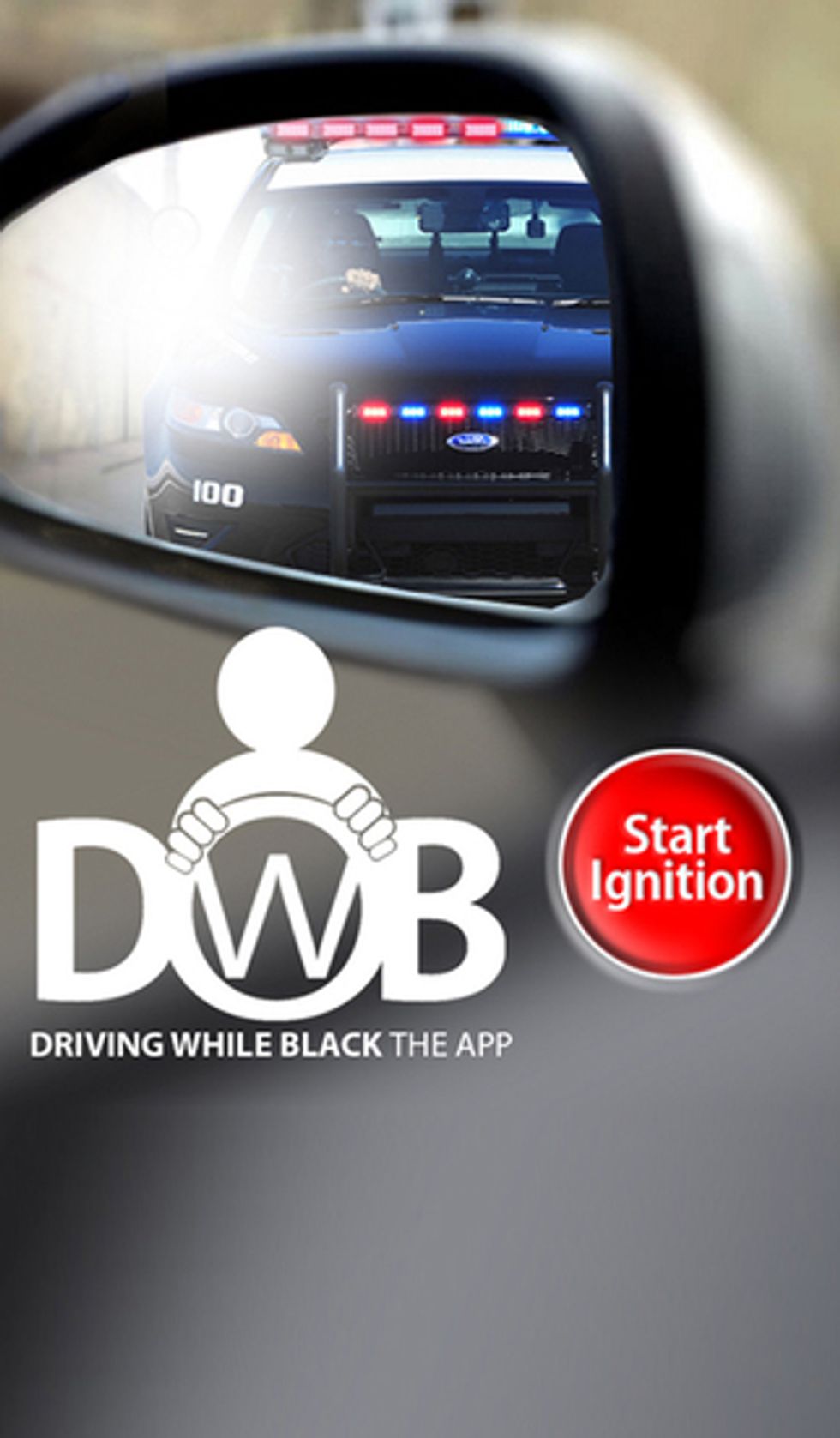
There seems to literally be an app for everything you can possibly think of, and this one seems to be a life saver. Though an app cannot protect you, it can prepare you in the event of a traffic stop. The app is available for IPhone and Android users. Teenagers and young adult drivers benefit a lot from this app. It provides information about the law and the proper procedure on what you should do when pulled over. The app allows you to notify family and friends when you get stopped, find legal professionals in your area, and even gives tips on how to make complaints or suggestions to legal authorities.
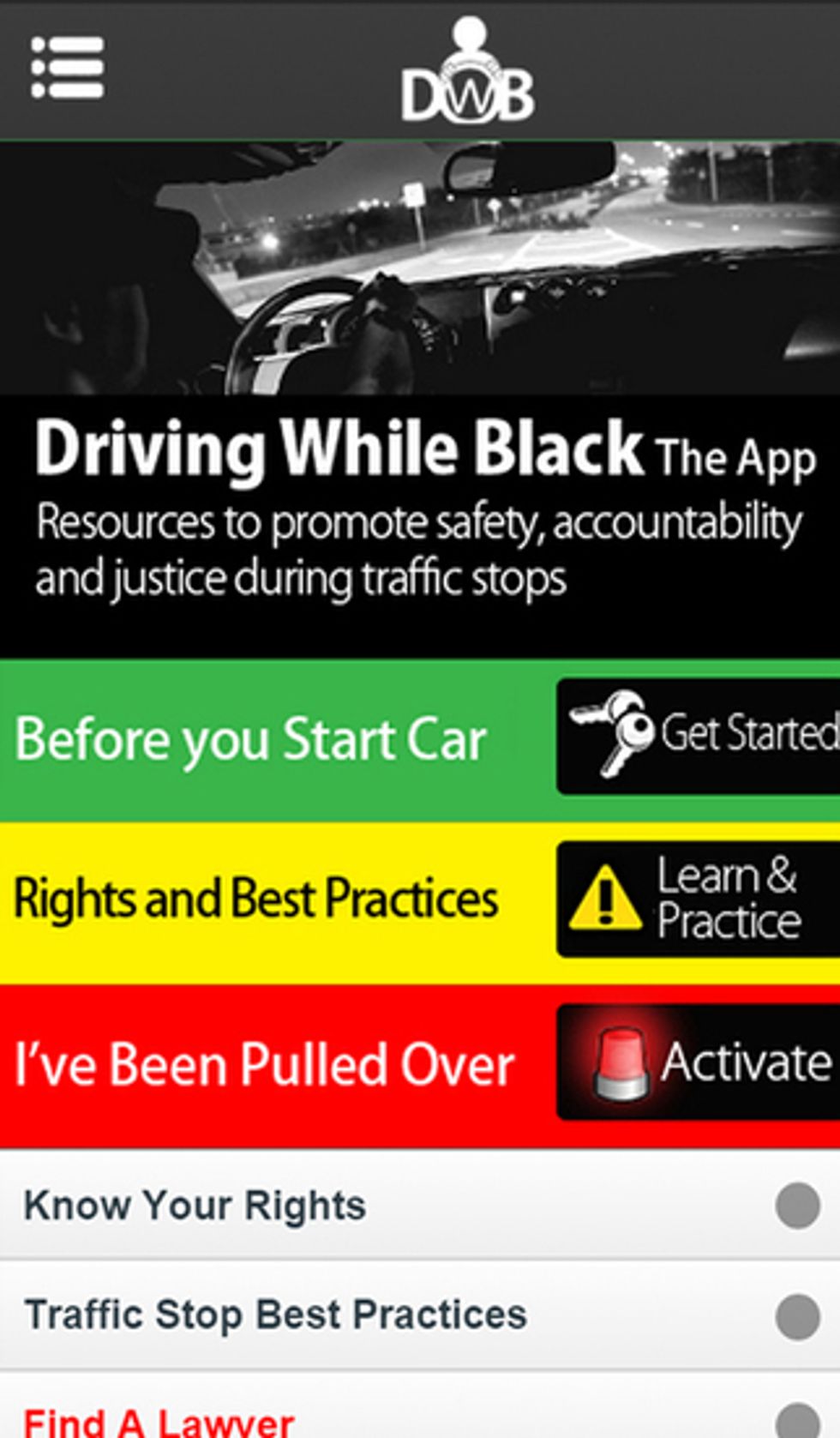
The people with DWB The app believe an officers job is to protect and serve first. The creators understand that the officer and driver have stress and fear approaching the situation. The resources this app provides helps ensure a better experience. The knowledge you learn could even save you from a ticket.

Sandra Blands' family and friends remember her as a "courageous voice" for social justice, and for her videos she posted on social media promoting the movement black lives matter. She believed that it was hard to be black in America, and that black people had to learn how to interact with white people. With this we must learn how to also interact with the police. We must all contribute to be the difference we want to see. Becoming more knowledgeable and preparing yourself for instances like this is a good way to start.


http://dwbtheapp.com/

Cover Image Credit: http://3.bp.blogspot.com/-_aieAk2rpoc/U8FMMUeWh1I/AAAAAAAAXF0/Vd4jVJVwbL8/s1600/DRIVING-WHILE-BLACK-e1333508527306.jpg

Popular Right Now

Your Wait time At Theme Parks Is Not Unfair, You're Just Impatient

Your perceived wait time is always going to be longer than your actual wait time if you can't take a minute to focus on something other than yourself.

40971
views

Toy Story Land at Disney's Hollywood Studios "unboxed" on June 30, 2018. My friend and I decided to brave the crowds on opening day. We got to the park around 7 AM only to find out that the park opened around 6 AM. Upon some more scrolling through multiple Disney Annual Passholder Facebook groups, we discovered that people were waiting outside the park as early as 1 AM.

We knew we'd be waiting in line for the bulk of the Toy Story Land unboxing day. There were four main lines in the new land: the line to enter the land; the line for Slinky Dog Dash, the new roller coaster; the line for Alien Spinning Saucers, the easier of the new rides in the land; Toy Story Mania, the (now old news) arcade-type ride; and the new quick-service restaurant, Woody's Lunchbox (complete with grilled cheese and "grown-up drinks").

Because we were so early, we did not have to wait in line to get into the land. We decided to ride Alien Spinning Saucers first. The posted wait time was 150 minutes, but my friend timed the line and we only waited for 50 minutes. Next, we tried to find the line for Slinky Dog Dash. After receiving conflicting answers, the runaround, and even an, "I don't know, good luck," from multiple Cast Members, we exited the land to find the beginning of the Slinky line. We were then told that there was only one line to enter the park that eventually broke off into the Slinky line. We were not about to wait to get back into the area we just left, so we got a Fastpass for Toy Story Mania that we didn't plan on using in order to be let into the land sooner. We still had to wait for our time, so we decided to get the exclusive Little Green Man alien popcorn bin—this took an entire hour. We then used our Fastpass to enter the land, found the Slinky line, and proceeded to wait for two and a half hours only for the ride to shut down due to rain. But we've come this far and rain was not about to stop us. We waited an hour, still in line and under a covered area, for the rain to stop. Then, we waited another hour and a half to get on the ride from there once it reopened (mainly because they prioritized people who missed their Fastpass time due to the rain). After that, we used the mobile order feature on the My Disney Experience app to skip part of the line at Woody's Lunchbox.

Did you know that there is actually a psychological science to waiting? In the hospitality industry, this science is the difference between "perceived wait" and "actual wait." A perceived wait is how long you feel like you are waiting, while the actual wait is, of course, the real and factual time you wait. There are eight things that affect the perceived wait time: unoccupied time feels longer than occupied time, pre-process waits feel longer than in-process waits, anxiety makes waits feel longer, uncertain waits are longer than certain waits, unexplained waits are longer than explained waits, unfair waits are longer than equitable waits, people will wait longer for more valuable service and solo waiting feels longer than group waiting.

Our perceived wait time for Alien Spinning Saucers was short because we expected it to be longer. Our wait for the popcorn seemed longer because it was unoccupied and unexplained. Our wait for the rain to stop so the ride could reopen seemed shorter because it was explained. Our wait between the ride reopening and getting on the coaster seemed longer because it felt unfair for Disney to let so many Fastpass holders through while more people waited through the rain. Our entire wait for Slinky Dog Dash seemed longer because we were not told the wait time in the beginning. Our wait for our food after placing a mobile order seemed shorter because it was an in-process wait. We also didn't mind wait long wait times for any of these experiences because they were new and we placed more value on them than other rides or restaurants at Disney. The people who arrived at 1 AM just added five hours to their perceived wait

Some non-theme park examples of this science of waiting in the hospitality industry would be waiting at a restaurant, movie theater, hotel, performance or even grocery store. When I went to see "Jurassic World: Fallen Kingdom," the power went out in the theater right as we arrived. Not only did we have to wait for it to come back and for them to reset the projectors, I had to wait in a bit of anxiety because the power outage spooked me. It was only a 30-minute wait but felt so much longer. At the quick-service restaurant where I work, we track the time from when the guest places their order to the time they receive their food. Guests in the drive-thru will complain about 10 or more minute waits, when our screens tell us they have only been waiting four or five minutes. Their actual wait was the four or five minutes that we track because this is when they first request our service, but their perceived wait begins the moment they pull into the parking lot and join the line because this is when they begin interacting with our business. While in line, they are experiencing pre-process wait times; after placing the order, they experience in-process wait times.

Establishments in the hospitality industry do what they can to cut down on guests' wait times. For example, theme parks offer services like Disney's Fastpass or Universal's Express pass in order to cut down the time waiting in lines so guests have more time to buy food and merchandise. Stores like Target or Wal-Mart offer self-checkout to give guests that in-process wait time. Movie theaters allow you to check in and get tickets on a mobile app and some quick-service restaurants let you place mobile or online orders. So why do people still get so bent out of shape about being forced to wait?

On Toy Story Land unboxing day, I witnessed a woman make a small scene about being forced to wait to exit the new land. Cast Members were regulating the flow of traffic in and out of the land due to the large crowd and the line that was in place to enter the land. Those exiting the land needed to wait while those entering moved forward from the line. Looking from the outside of the situation as I was, this all makes sense. However, the woman I saw may have felt that her wait was unfair or unexplained. She switched between her hands on her hips and her arms crossed, communicated with her body language that she was not happy. Her face was in a nasty scowl at those entering the land and the Cast Members in the area. She kept shaking her head at those in her group and when allowed to proceed out of the land, I could tell she was making snide comments about the wait.

At work, we sometimes run a double drive-thru in which team members with iPads will take orders outside and a sequencer will direct cars so that they stay in the correct order moving toward the window. In my experience as the sequencer, I will inform the drivers which car to follow, they will acknowledge me and then still proceed to dart in front of other cars just so they make it to the window maybe a whole minute sooner. Not only is this rude, but it puts this car and the cars around them at risk of receiving the wrong food because they are now out of order. We catch these instances more often than not, but it still adds stress and makes the other guests upset. Perhaps these guests feel like their wait is also unfair or unexplained, but if they look at the situation from the outside or from the restaurant's perspective, they would understand why they need to follow the blue Toyota.

The truth of the matter is that your perceived wait time is always going to be longer than your actual wait time if you can't take a minute to focus on something other than yourself. We all want instant gratification, I get it. But in reality, we have to wait for some things. It takes time to prepare a meal. It takes time to experience a ride at a theme park that everyone else wants to go on. It takes time to ring up groceries. It takes patience to live in this world.

So next time you find yourself waiting, take a minute to remember the difference between perceived and actual wait times. Think about the eight aspects of waiting that affect your perceived wait. Do what you can to realize why you are waiting or keep yourself occupied in this wait. Don't be impatient. That's no way to live your life.

Cover Image Credit:

Aranxa Esteve

Related Content

Connect with a generation
of new voices.

We are students, thinkers, influencers, and communities sharing our ideas with the world. Join our platform to create and discover content that actually matters to you.

Learn more Start Creating

what An Average American Who Doesn't Read Twitter Every Second should know About Trump’s Tariffs

What they are and why they matter

96
views

The latest boondoggle to hit the airwaves: the Trump Tariffs. But what exactly IS a tariff, anyway?

Well, according to any dictionary out there, a tariff is simply a tax on a particular import or export. Historically, tariffs were enacted to foster income for the federal government and to insulate domestic industries; they were heavily enforced to protect the fledgling colonies by providing an immediate solution to an urgent need for revenue, as well as to balance the trade scales between England and America. Until 1913, when the Federal Income Tax was implemented, tariffs were the greatest source of federal revenue and pretty much the only thing that kept our government running.

This system of practice, known as Protectionism, was America's de facto policy until around World War 2 when the majority of America's industrial competitors had been effectively neutralized by the war, all but ending the need for such austere fiscal methods. Since the 1940's, America (and the rest of the first-world countries) has shifted to a free market trade structure, a.k.a. 'laissez-faire', relying very little on tariff revenue or governmental interference.

In 1962, the United States passed the Trade Expansion Act, which provides the legal basis for the most recent tariffs imposed by President Trump. Section 232 of the Act allows tariffs to be imposed by the president, via the US Secretary of Commerce, if "an article is being imported into the United States… as to threaten or impair national security." Not only is this section rarely used, but it hasn't even been invoked in over 30 years.

Further, Trump has enormous discretion under this law; he is able to unilaterally decide on the size and form of the restrictions without needing Congress' approval, as well as to whether or not the restrictions can ever be terminated. On June 9th, 2018, Trump tweeted that American tariffs targeting Canada "are in response to [Trudeau's tariffs] of 270% on [American] dairy!", unmistakably positioning at least a portion of these tariffs as retaliatory, rather than as a threat to national security.

Not only are some retaliatory, but the particular Canadian tariffs in question are massively misunderstood, contextually, by the President — the admittance of US dairy products into the Canadian market, which relies on a supply-management system with quotas and restrictions rather than that of the heavily subsidized system the US employs, would absolutely decimate the Canadian Dairy Industry, putting thousands of Canadian farmers and families out of business… but that discussion is for another article at another time.

According to Anna-Lisa Laca of AgWeb.com, farmers will be the group most impacted by this escalating trade war, with US soybean farmers and pork producers bracing for one of the worst markets to date. Now, you may be asking, "how does that work? Trump only imposed tariffs on steel and aluminum, how can that affect our farmers?!" Well, the EU, Canada, Mexico, and most predominately China, having been hit hardest by these taxes, are planning hundreds of billions of dollars worth of their own retaliatory tariffs on US agricultural goods exported to those respective countries.

For example, the US exports over $14 billion worth of soybeans to China. Due to the Trump Tariffs, China is expected to cancel ALL soybean shipments for the rest of the year, affecting well over 300,000 soybean farmers. Welcome to your first ever, home-grown Trade War, Gen Z! (And you too, my fellow millennials.)

Now, onto what the experts are saying about the Trump Tariffs: almost 80% of the 60 economists surveyed by Reuters said the tariffs, specifically on steel and aluminum imports, would be a net harm to the US economy, with the remainder of those economists saying the tariffs would have little-to-no effect.

So, let's be clear: none (0%) of the economists surveyed said that the tariffs would benefit the US Economy in any way. In other words, the majority of economists believe that these tariffs will do more harm than good, and since I am in no way, shape, or form a trained economist (I would rather break the same toe in four different places that have to take Intro to Macroeconomics again), I'm obliged to listen to the experts in this matter.

But why would the president do harm to the country that he is sworn to protect? Is it sheer ignorance? Egotistical pride? Personal financial gain? A way to pay for the recent tax cuts? Only time will tell, and at this time, I can only be certain that Protectionism is back in full force.

While it served our country well once upon a time, global politics and trade policies have changed drastically and irrevocably since the early 20th century; the global markets are more intricately connected than ever, and returning to policies of old may not be the most prudent long-term decision. Let's just keep our fingers crossed that the majority of the nation's economists are wrong and that this Trade War will be nothing more than yet another passing news headline.

Cover Image Credit:

i2.cdn.turner.com

Related Content

Facebook Comments