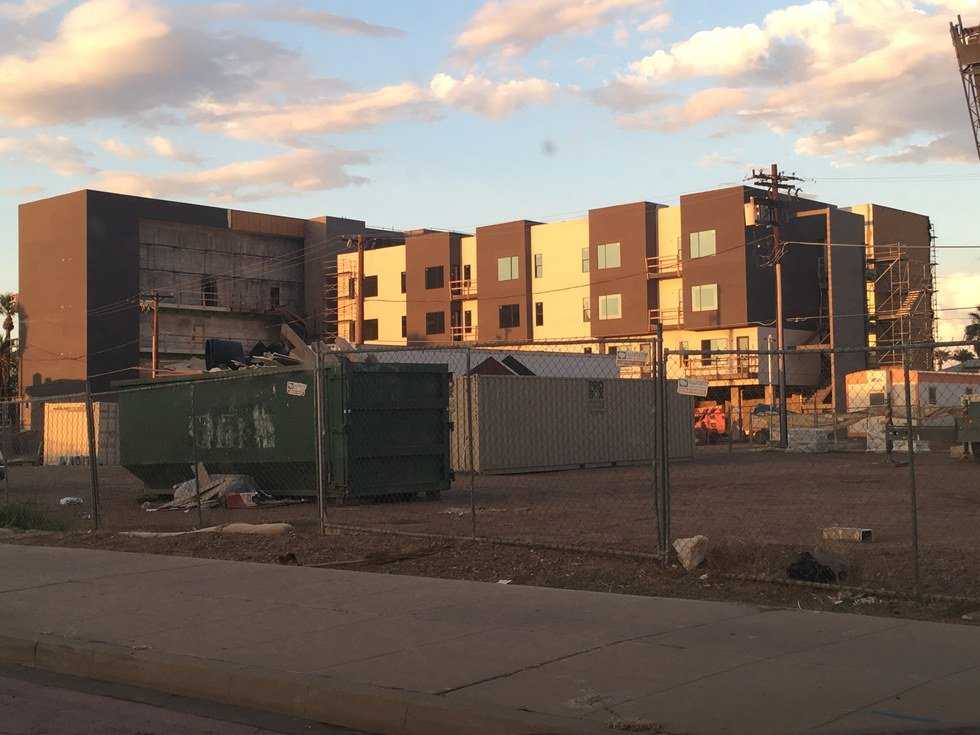
As downtown Phoenix begins to increase in urban popularity, the desire for sustainable residences is on the rise leaving it in need of eco-friendly and sustainable developments and countermeasures.
When people flooded into downtown, a variety of issues began to arise. Of these issues was the problem of housing and how to expand the amount of residences available in the downtown area that would also benefit the city sustainably.
According to the City of Phoenix, on April 12, 2016, the Phoenix City Council passed eight new goals which are referred to as the 2050 Environmental Sustainability goals. These goals were put in place to help aide the city toward more sustainable habits that would eventually lead to “long-term environmental outcomes.” Of these eight goals is a specific goal related to eco-friendly developments which benefits those looking to find a residence in downtown.
With Phoenix striving to achieve one of its eight goals by implementing more sustainable urban housing, more people are becoming attracted to the trend, therefore more people are moving into the urbanized downtown area.
This is becoming a problem as only so many residences currently exist. With more people finding their way into downtown Phoenix, the demand for sustainable residences is increasing.
Roberta Candelaria, Designated Broker of Phoenix Urban Spaces, said she saw the interest for more urban and sustainable residences in the downtown area almost a decade ago.
“I actually saw it back in the last sales cycle in about 2006,” Candelaria said. “A few small communities were built for energy efficiency and they offered community gardens, reduced parking spots, and a small footprint. Others were in the early planning stages. I feel the concept was just catching on when the market crashed.”
One of the current projects she is working on is the condominiums named en Hance which is located in the heart of downtown. These condominiums were designed on the premise of aiding downtown in the areas of, “efficacy,” “connectivity” and “responsibility.” In addition to wanting to be closer to the community, this complex is striving to become more eco-friendly and sustainable.
As demand for one good increases, the supply decreases. With a line of residents waiting to move into downtown, the amount of available parking spaces are depleting in addition to the amount of available residences. Although this is currently an issue, Candelaria does not see it as an unresolvable problem.
“When I first started working on en Hance and found out we only had one parking spot [per condominium], I was really nervous, but, I’ve been pleasantly surprised to find that many of our buyers are starting to see the vision for the area and making the move to reduce gas powered vehicles and embrace alternative forms of transportation,” she wrote.
“It takes time,” Candelaria said.
Hans Balazs, a construction management major at Arizona State University Tempe, has been focusing on residential housing in a variety of areas in Phoenix. From his time spent looking into the upcoming residential structures in downtown Phoenix, he said that although they are greatly on the rise, they will not benefit the city environmentally when it comes to electrical power.
“Typically, buildings are connected to grid power, a lot of which is wasted in forms of heat and other off-puts that don't benefit the building or the people inside of it,” Balazs said.
With the downtown area gaining popularity, Balazs is hopeful for both himself and his future colleagues that new methods for powering both residential and commercial structures will be discovered and utilized.
As a previous resident of the downtown Phoenix area, Malik Shelp, a student at the University of Arizona, says that he can see where the city needs sustainable improvements to benefit the city both environmentally and structurally. He says that there is almost a divide between downtown which separates the more advanced side from the less advanced.
“Urban downtown Phoenix, the more developed modern side, could effectively utilize sustainable improvements and save lots of energy and possibly promote nature integration in buildings to help counteract carbon emissions,” Shelp says.
However, there is a flip-side to this statement. The more modernized side of downtown may be advancing as the cashflow to the area is improving as the popularity of the area rises, however, the less popular side is still in limbo.
“The more neglected downtown Phoenix faces hardships every day and needs to improve its infrastructure as well as focus on developing the areas to focus on improving the lives of the population that lives there,” he said.
As the downtown area increases in popularity, Shelp is hopeful that more will be done to benefit both faces of downtown Phoenix as he believes that the people should come first, but integration would be best alongside of the upcoming structural developments in the area.
Within the next several months, the downtown area’s development will receive an eco-friendly facelift that will hopefully allow for more residents to join the sustainable and urban neighborhood that is downtown Phoenix.