
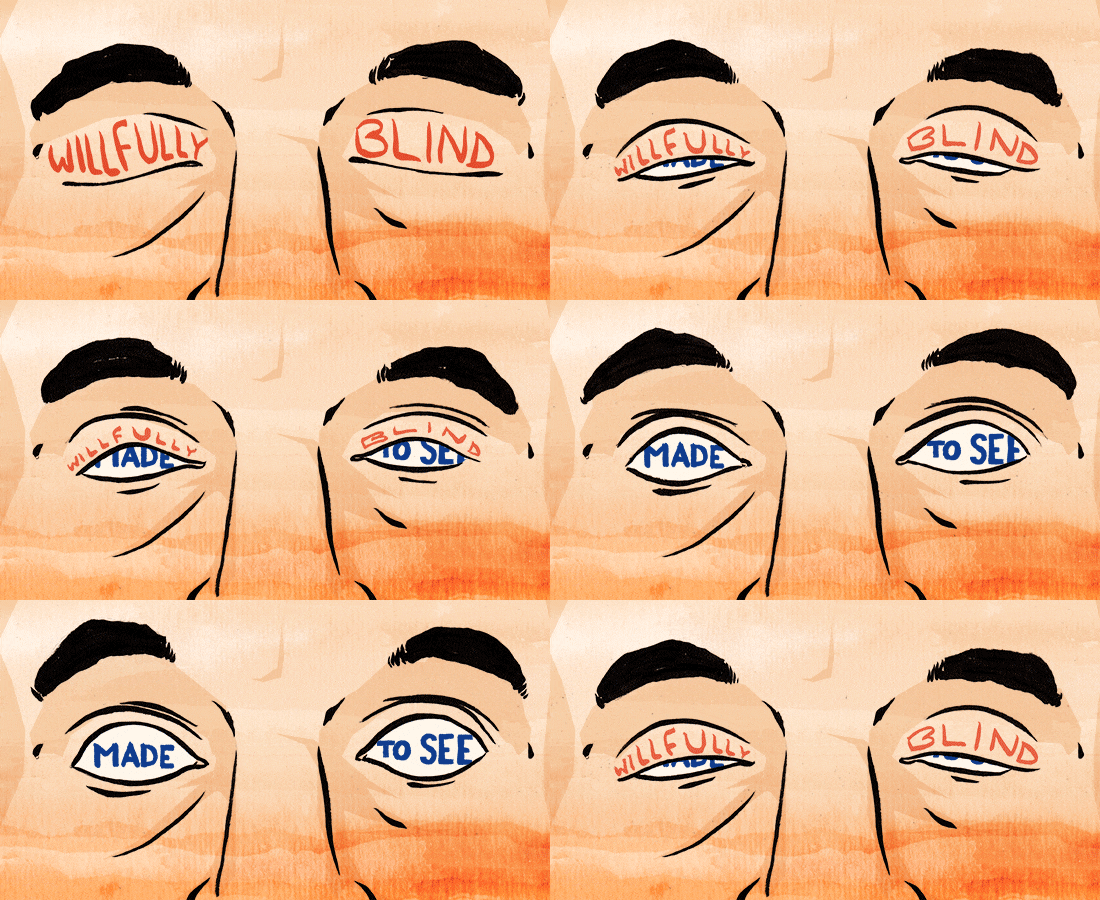
Throughout my years of experience in one of the South’s more progressive cities, I’ve frequently run into people who are proud to call themselves “colorblind.” By this, they do not mean that their eyes freak out when trying to differentiate between red and green, nor do they see the world in only black and white. In fact, they’d be happy to proclaim the opposite. For years, in a country that is desperately aiming to call itself post-racial, we have been selling this notion of “colorblindness” as the progressive way to approach race. Not sure how to navigate the tough issue of race? Easy. Just don’t see it at all.
I’d like to say this once and for all. Ignoring the issue is never a good solution.
In the New York Times bestselling novel Americanah by Chimamanda Ngozi Adichie, the main character has just left her home country of Nigeria to finish college in the United States. She is at a shopping mall with her friend who moved to the United States years before and has already assimilated into American culture. When the sales associate at the register tries to figure out which of the two ladies on the floor (one white, one black) helped them with their shopping, she dances around the easiest identifier, choosing instead to try to identify them by other attributes like hair or height. Ifemelu, the protagonist, is left baffled at why the woman didn’t just ask if the sales associate that helped them was white or black. Her friend flippantly replies, “Because this is America. You’re supposed to pretend that you don’t notice certain things.”
Most people who call themselves “colorblind” mean no harm, usually following the statement with something like “I don’t care what race they are, all people are equal in my eyes, so they’re all just people, no color attached.” Everything but those last three words is great! By no means should someone’s race determine how you treat them. But today’s idea of post-racial “colorblindness” has gone beyond equality and pushed us into a newfound fear of race. I treat blondes and brunettes the same. But if you ask me which sales associate helped me out, I’m going to say “the blonde one” if I don’t know the person’s name. There is no reason that should change when it comes to race. It implies that race is something to be afraid of. We teach that diversity is great because it celebrates difference but cower in fear when it stares us in the face.
Louis C.K. has a famous bit in his standup routine that states that “Jew” is the only word that is the polite thing to call a group of people and a slur for the same group. He claims that the same word with a little “stank” on it turns a totally innocuous identifier into a means of demeaning a group of people. Whether or not you believe this is true of that specific word, it certainly is how race in general works. Skin color is not something to pretend doesn’t exist out of fear of being racist. Just don’t be racist. Don’t be colorblind, please. Acknowledge color, talk about color (respectfully, please) if you must. See color, there is nothing wrong with that. Just don’t let that change how you see the person behind it.