
"Curiosity" finds water on the red planet, but we don't need NASA’s space robot to explore the possibilities that Mars gives. For centuries, we have been taking Mars as a model to explore our own curiosities.
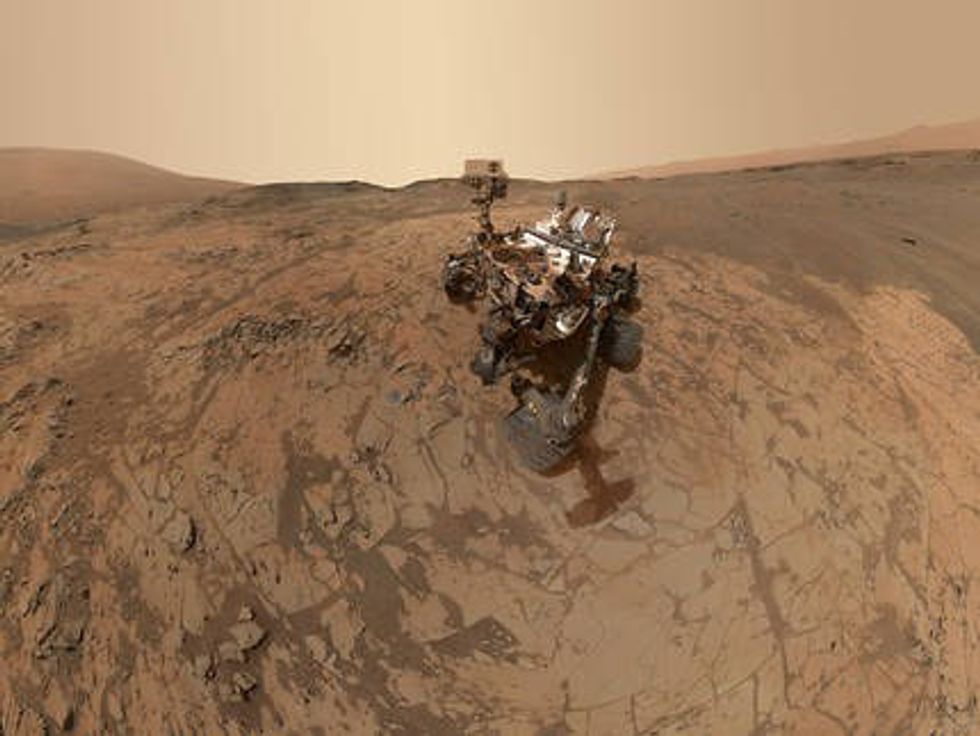
Mars, the fourth planet, has been a muse for centuries for creators. From ancient mythology to modern day science fiction, storytellers have used Mars to create new civilizations—or second civilizations—on a new Earth. Mars has given creative storytellers a landscape to start fresh and explore humanity’s desire to reach the impossible.
Countless legends, stories, novels, movies, TV series, etc. are devoted to the possibility of outer space. Below are only some images from Mars-inspired work.
C.S. Lewis, "Out of the Silent Planet"
The second book in Lewis’ "The Space Trilogy" takes us to Malacandra (the native name for Mars) to explore the divine order between the planets and the silence in between.
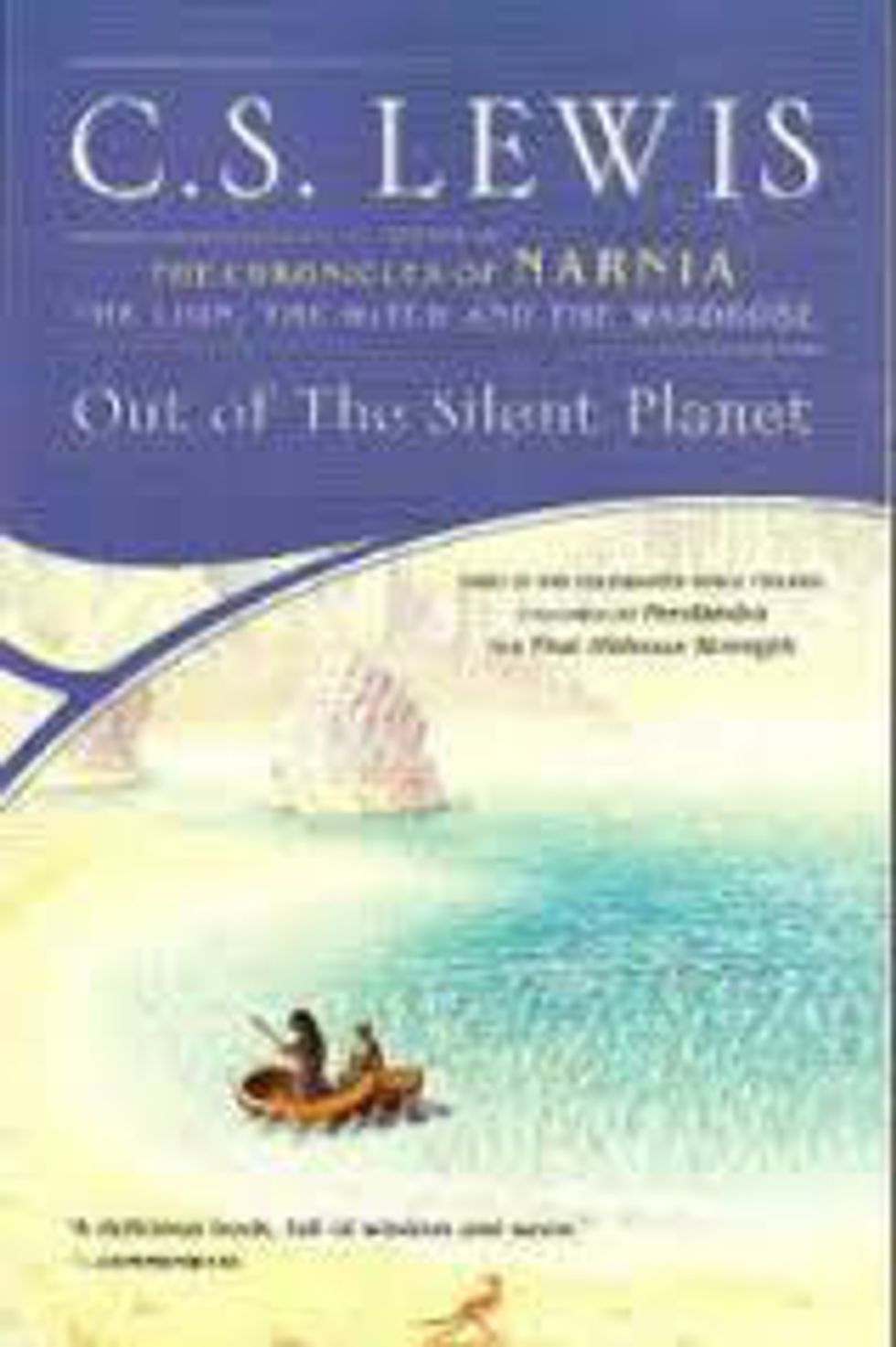
“Now that he was navigating, his celestial mood was shattered. Wild, animal thirst for life, mixed with homesick longing for the free airs and the sights and smells of earth—for grass and meat and beer and tea and the human voice—awoke in him.”
“And I say also this. I do not think the forest would be so bright, nor the water so warm, nor love so sweet, if there were no danger in the lakes.”
Mary Doria Russell, "The Sparrow"
A novel that takes us to the musical planet, Rakhat. A diverse mix of characters travel to this new planet in order to preach their own belief systems: faith, science, language. The intelligent life on Rakhat adopts the travelers in their own way, shaking up the humans’ belief in what is human and what is divine.

“When my people search for a name to give to the truth we feel at those moments, we call it God, and when we capture that understanding in timeless poetry, we call it praying.”
"Doctor Who, Waters of Mars"
Though the British television series "Doctor Who" has been around for decades, it often explores planets outside our solar system. But in "Waters of Mars," we do see the TARDIS landing on the red planet.
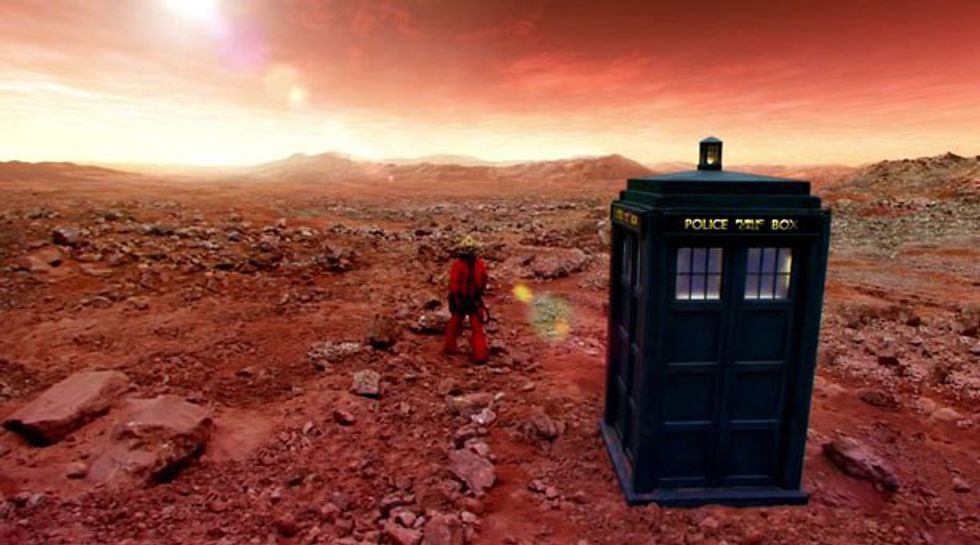
“Water is patient, Adelaide. Water just waits. Wears down the cliff tops, the mountains. The whole of the world. Water always wins.”
Think about that, Mars.
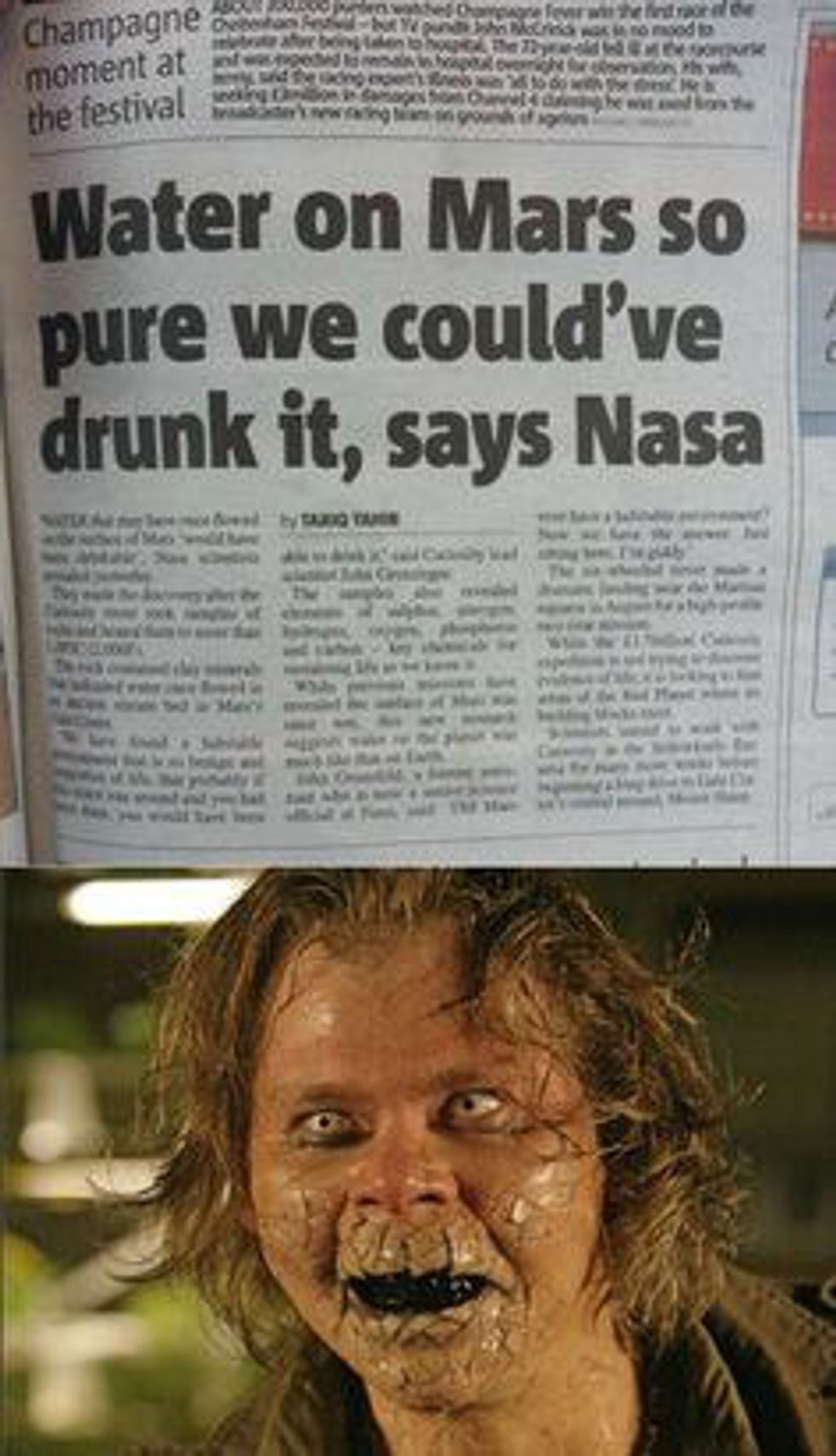
And also, if we’re actually considering drinking Mars’ water, it might be important to note that in "The Waters of Mars," the water ended up being contaminated, turning the crew into gurgling water mutants.
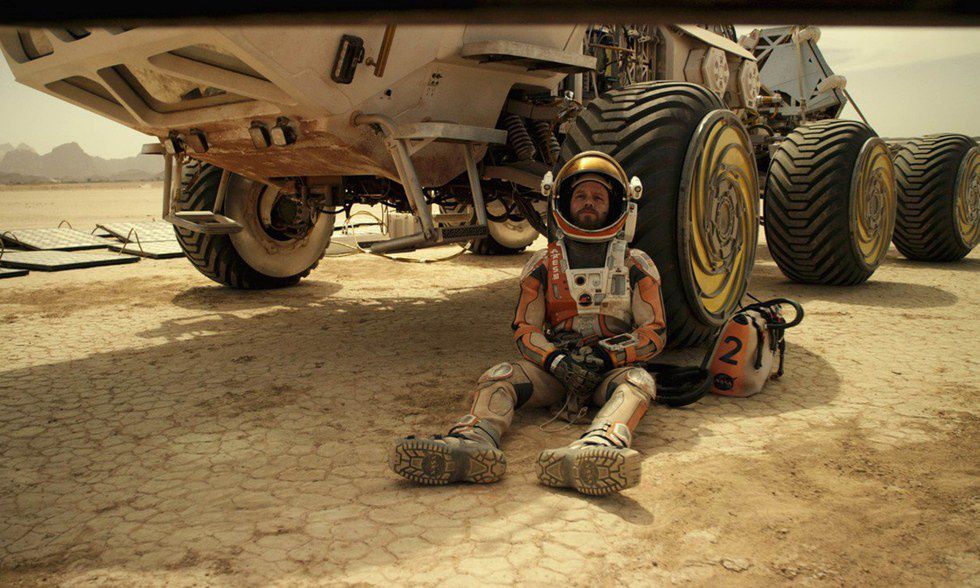
"The Martian"
During this age of information, it would be pointless to produce a movie that didn’t accurately portray scientific advancement. For the reason, we get the new film "The Martian."
The timely film "The Martian," staring Matt Damon, released Friday, Oct. 2, 2015. According to NASA: “The film takes the work NASA and others have done exploring Mars and extends it into fiction set in the 2030s, when NASA astronauts are regularly traveling to Mars and living on the surface. NASA has collaborated on this film with 20th Century Fox Entertainment, providing guidance on production design and technical consultants.”
Interesting how science and entertainment have joined hands. When these technological advancements are so tangible, is it even fair to label it science fiction? Will the day come when this will be realistic fiction?
Mars will continue to be the environment of possibility, giving us the ability to create worlds unimagined. It has given us space to create new landscapes to narrow in on our humanity, our own spirituality.
Yes, finding liquid water on the red planet will affect the blue planet. The desire to travel to Mars has increased after finding the water, making human travel to Mars more reasonable and less impossible. Yet we have already been to Mars countless times, thanks to storytellers. I trust Mars will continue to play a role in reaching the impossible.
Want More?
Want to go on a field trip to Mars with Bill Nye the Science Guy? (Yes)
Did you know there is a Google Mars?
Want to meet NASA's Curiosity?
Want to have a tea party on Mars?