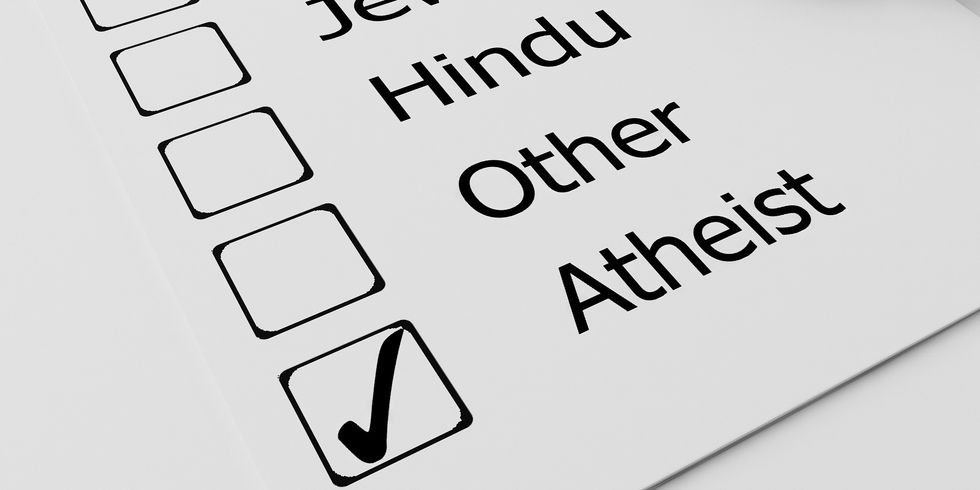
The term atheism means different things to different people. For most, the word suggests the lack of belief in god. Sometimes this means that one is agnostic, other times it means that one is confident that no one created the universe. It could just mean that someone is confident that the gods that people believe in are fake, whether or not something else exists. You could place me in that last category, but for me atheism is much more.
Atheism as a Rejection of an All-Encompassing Solution
Atheism, for me, is a rejection of the false confidence that comes with absolutism. I don’t know how the universe ultimately works. I happen to have some ideas as to how it doesn’t work, but will readily admit that those are probably wrong too. I don’t have the solution to all of our political problems, and I’m confident that anyone who says they do is full of it. Atheism, though, isn’t just the rejection of absolute knowledge. It’s the rejection of the all-encompassing solution. It’s the rejection of the hope of salvation for humanity, not only the salvation that might come from faith in a god, but in any salvation whatsoever.
To put it differently, you’re a human. Together we are humans. Our nations are made up of humans, etc. And humans, you have probably noticed, are a beautifully messed up bunch. They do wonderful things. They give their time and money not only to their friends, but also to strangers. They sacrifice themselves for the undeserving. They show astonishingly powerful love. Then they do the absolutely unspeakable things that keep the cable news business operating. Concerning the latter, and the fact that all of us do both good and evil (even those you’d think were too lazy to do either), people are often trying to offer a solution.
The thought process generally goes like this: If everyone would just believe such and such. Or, if everyone would just treat their spouses this way. If everyone would vote for this group and not that group, then everything would be wonderful! Whatever the recipe, the result is always some kind of utopia. This is, by the way, one of the ways I’m sure the world doesn’t work. All of these solutions (these salvations) are gods. Maybe the god is a political figure. Maybe it’s a moral value, or a set of them. Maybe it’s a religion or an economic system. Maybe it’s gluten free bread. Whatever it is, atheism rejects that salvation.

(Jesus promises peace of mind in John 4:14; Image: Pixabay: Hans Benn)
It is, most importantly, in this sense that there is no god. Jesus may claim that those who drink his living water will never thirst again (John 4:14), but the Christians still thirst for more. They don’t have any more peace of mind than anyone else. I don't mean to be critical: it’s not like they’re the only ones making false claims and then believing them. It's not like their the only ones claiming to hold some belief or be a part of some group that makes them superhuman, and then goes about watching the same Netflix shows and eating the same garbage as everyone else.
I don’t believe in an ideal world towards which we are striving. I don’t think perfection is possible. Therefore, I don’t think I ought to take imperfections too seriously.
This fog is everywhere. It’s so pervasive that even when one discovers that one god (salvation) isn’t real, the assumption is that there must be another god (metaphysical or otherwise). This is obvious in religion, where Christians bounce from one version of Christianity to another. Young Christians notoriously reject whatever horrible way their parents’ generation loved Jesus, and instead adopt a version of Christianity they can be proud of. Their version will in turn be ridiculed by their children. But it’s not just that we seek to worship something and that the object or manner of worship changes, it’s that we seek salvation from our own humanity, and if it’s not coming from Jesus or artificial sweeteners, then it just has to come from yoga or green tea.
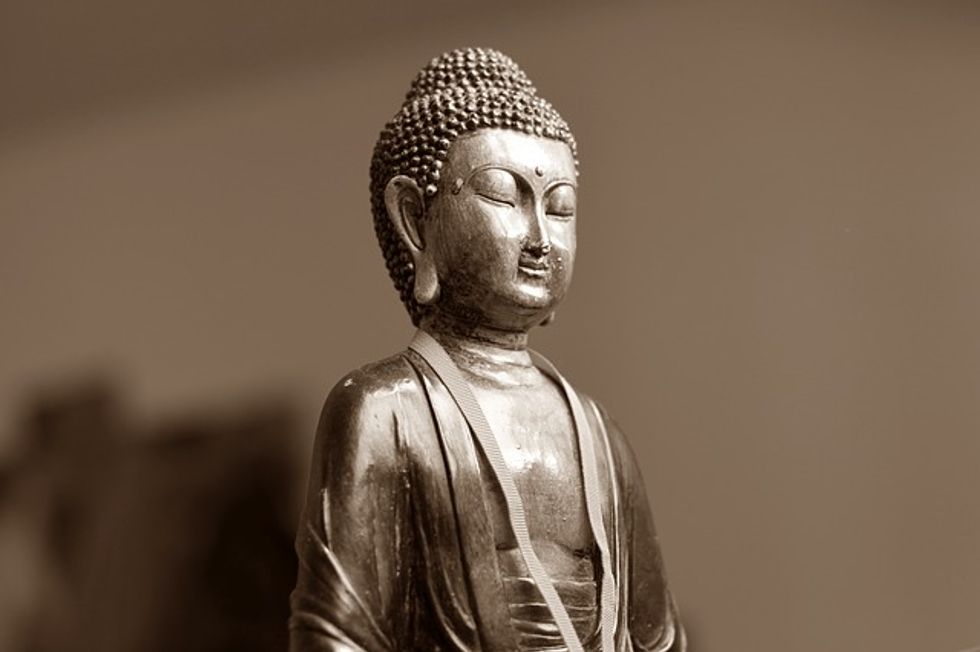
Source: Pixabay; Alexis 2017
Atheism, on the other hand, is the knowledge that none of the pills are going to work - at least not as well as all that. True, some forms of treatment will probably be better than others. Confession to a priest has had historical problems, but its record is better than crystal meth. Whatever the treatment, you’ll still be human when the dose wears off. You’ll need more morphine. You’ll want to say the sinners prayer again. You’ll need “just one more hit” of Doctor Who or whatever your fancy happens to be. Nothing in this mall of ideas is going to give us absolute peace. If everyone had the same logo imprinted on their souls, the world would still be more or less as screwed up as it currently is. I don’t know what provides more comfort or moral development, Buddha or New Coke, but I am confident that neither is going to solve the world’s woes. Are woes still a thing?
I don’t believe in an ideal world towards which we are striving. I don’t think perfection is possible. Therefore, I don’t think I ought to take imperfections too seriously. Everyone I’ve ever met has believed in stupid things and behaved in stupid ways. Everyone I've known who has died has died still full of imperfections. I don't know anyone who has been saved in the sense that we seem to be striving for. I'm not even sure that salvation can be found in calling off the pursuit, but that does at least seem worth considering.