
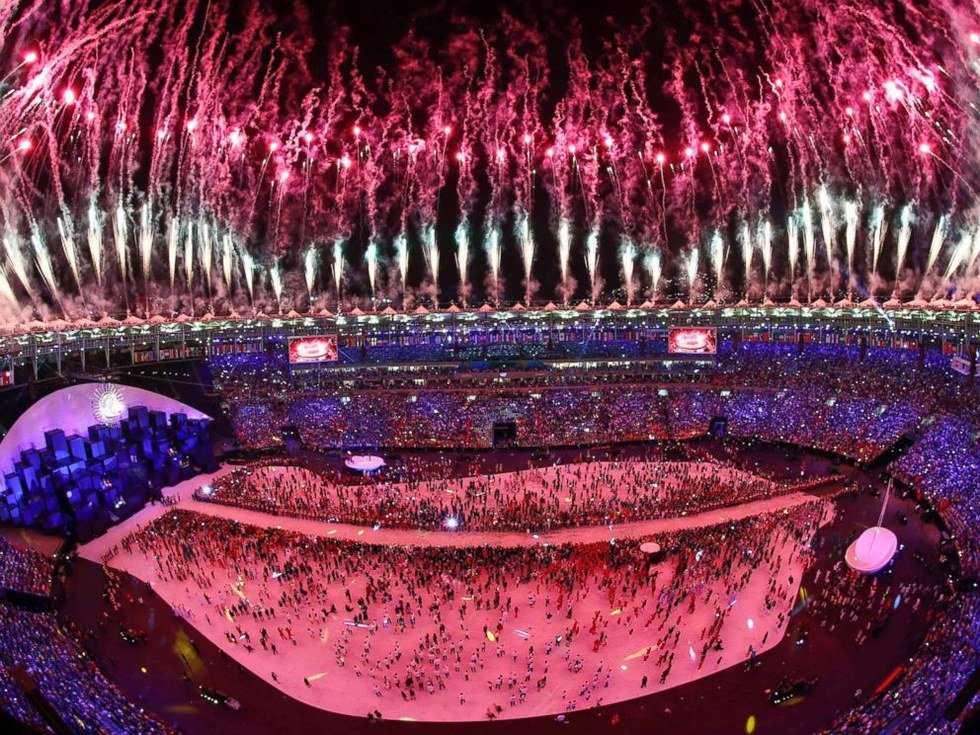
I’ve always loved watching the Summer Olympic Games, and when I tuned into the opening ceremony on Friday night with anticipation and excitement, I wasn’t disappointed.
The production before the Parade of Nations, when over 11,000 athletes enter the building, was beautiful, moving and expertly executed by directors and performers alike. It told the story of Brazil, while also encapsulating overarching themes of human interconnectedness.
The show celebrated the creativity and exuberance of Brazilian culture, but it didn’t shy away from the more negative moments in history, showcasing themes such as global warming, slavery and a division of people based on race, religion and wealth.
The ceremony opened with a spectacular depiction of the genesis of the Amazon Rainforest, inhabited first by the Indigenous Brazilians. It was lush and untouched, though not for long. The Amazon Rainforest was omnipresent throughout the night, especially when issues of global warming were worked into the show. One of the crucial messages conveyed in the opening ceremony was the impending danger of global warming and the threat it poses to Brazil’s rainforests, from which the country originated. Images were also shown of different countries around the world that are being affected by the effects of global warming, with particular emphasis on the quickly-melting polar ice caps and the hazard this poses to our planet.
The importance of including a message about global warming in the opening ceremony cannot be overstated. Billions of people watching the ceremony were urged to care for the earth, protect wildlife, plant seeds and become aware of the dangerous effects of pollution and environmental unawareness, not just in Brazil, but everywhere else, too.
Moving from a sequence of the Amazon Rainforest, the show advanced into a period of colonization by the Portuguese entering Brazil by boats. A sequence that captured my attention was when a native Brazilian and a Portuguese colonist stood face-to-face and stared at one another— a scene that depicted the unfamiliarity, and oftentimes fear, that accompanies meeting people who are unfamiliar and different than us.
From there, the show moved to the arrival of African slaves to Brazil— not a particularly shining moment in their history, but one that has deeply impacted and shaped the birth of their nation as African dance, art and music are now important aspects of modern Brazilian culture. Then came a representation of urbanization, with the emergence of cities and buildings, and with that the influx of many people from countries all around the world, creating a cultural melting pot. Assorted styles of Brazilian music and dance were also celebrated throughout the show, with appearances by famous Brazilians such as Gisele Bundchen, Caetano Veloso, Elza Soares and Gilberto Gil.
Overall, the ceremonies exposed me to the history of a country I didn’t know that much about. Not only that, they highlighted and emphasized issues that transcend all of human history -- slavery and exploitation, environmental issues and division amongst people -- while simultaneously celebrating Brazil’s unique and beautiful culture.
I was reminded that while it feels as though we are living in a time where our world is constantly being divided by borders, politics, war, race and religion, a common thread can always be rediscovered. As the whole world watches The Olympic Games - the world's premiere sporting event where thousands of athletes from every corner of the world come together - hopefully we can be reminded of the issues, and the victories, that unite us and connect us to one another, rather than those which divide us.
In the words of President Obama, “The Olympic ideal of every country sending its best to compete in a spirit of good will — yeah, it's not going to end war, it's not going to eliminate poverty or some of the tragedies that we see every day — but it builds a sense of common humanity, a sense of empathy.”