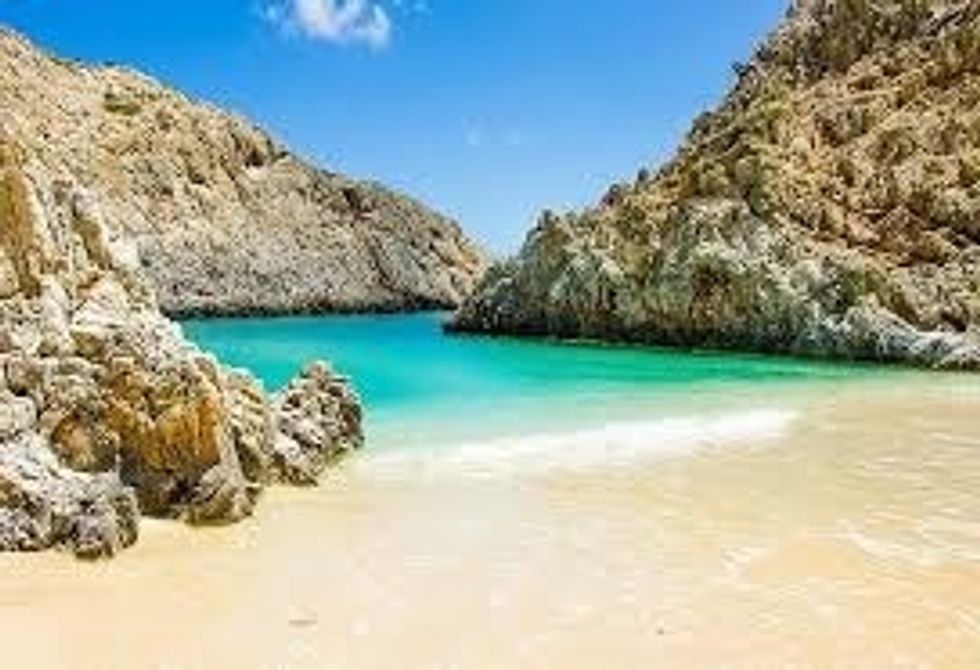
Crete is located in the southern part of the Aegean Sea with a subtropical Mediterranean climate. It is the largest and most popular island in all of Greece that draws millions of tourists each year from all over the world. The gorgeous island of Crete is an ideal location for summer holidays featuring sun, sea and sand along with secluded areas for relaxation as well as crowded areas to party. It basically provides everything a tourist expects from a Greek island including breathtaking views, amazing beaches, picturesque villages, delicious Cretan cuisine and exceptional hospitality.
Things To See
Natural History Museum in Heraklion
The Natural History Museum in Heraklion Crete: The Natural History Museum of Crete is located near the port of Heraklion, at Sofokli Venizelou street, and it is dedicated to the natural environment. The museum was established in 1980 under the aegis of the University of Crete.
Phaestos Palace in Heraklion
The Minoan Palace of Phaestos in Crete: The Palace of Phaistos is located on the east end of Kastri Hill, the end of the Messara plain in South Central Crete. It is considered to be one of the finest of all Minoan palaces. The preserves of the old and new palace can be seen until nowadays. Excavations in the area began in 1884 and were carried out by F. Halbherr and A. Taramelli. After the declaration of the Cretan State as independent in 1898, continued by F. Halbherr and L. Pernier between in 1900-1904.
Venetian Loggia in Heraklion
The Venetian Loggia of Heraklion Crete: In the center of Heraklion Town, on the square of Saint Titus and along 25th August street, you will find an impressive building of the Venetian times that has survived and functions till today: the Venetian Loggia, a typical construction of the Venetian rule, has been renovated and hosts today the Town Hall of Heraklion.
Egyptian Lighthouse
The most famous landmark in Rethymnon, the Egyptian Lighthouse sits in the middle of the Venetian harbor. The different names of the lighthouse and harbor may seem confusing, but the Egyptian Lighthouse was built during the 1830s during the time when the Ottoman Empire controlled the island and gave it to the Egyptians. The Venetian harbor, which already existed, might have had a lighthouse there previously but it is no longer standing.
Heraklion Archaeological Museum
The Heraklion Archaeological Museum is currently undergoing renovation so the full collection is inaccessible. However, to avoid disappointing visitors who want to find out more about the Minoan civilisation, a temporary exhibit hall has been constructed next door. In some ways this is preferable as they have selected the most beautiful or important pieces from the reduced collection meaning that you don't have to trawl through hundreds of objects to find items of interest.
Lake Kournas
For natural beauty it's hard to beat the view out over Lake Kounas, surrounded by lush fields and forests and with the stunning White Mountains as a backdrop. Kounas is the only natural freshwater lake on Crete. There are a number of tavernas lining the shore of the lake and you can take a refreshing swim here in the summer months. Nearby is the ancient site of Lappa where the Romans built baths. There's also a Roman aqueduct in Upper Lappa.
Anogia & Zoniana Cave
Anogia has a sad history for here in World War II the occupying German army razed the village to the ground and killed all the men of the village in retaliation for the kidnap of the German leader on the island. Today, a memorial in the village marks the tragic event. The village is also famous as the birthplace of Nikos Xilouris a legendary Cretan musician who died in 1980 at the age of 43. Each year the village hosts the Yakintha Festival in July in memory of Xilouris. The festival is dedicated to the celebration of music, theatre, and art. Nearby is another fascinating cave, the Zoniana Cave which is the best one on the island for stalagmites and stalactites.
Loutro
For an unusual and very peaceful day out, take a boat trip to Loutro village. The village isn't accessible by road but the fit can walk to it too. It's a typical Greek village with white and blue painted houses and the lack of motorised transport gives it a set back in time feel. There's not much to do there apart from enjoy the tranquillity, sip a drink and swim from the pebbly beach but you're on holiday so that should be plenty!
BeachesChrissi Akti beach
The Golden Beach Hrissi Akti is located 2.5 km south of the town of Chania and a few meters south of Agii Apostoli. It actually comprises of two sandy beaches separated by a few rocks. The west cove is the primary Golden Beach, and the south cove is called Aptera Beach. The most famous western bay is very well structured with umbrellas, lifeguards, showers, cafes, water sports, etc. It has good golden sand and shallow waters, making it perfect for young kids. There is also a playground nearby for children.
Kokkini Hani beaches
Kokkini Hani is 15 km south of Heraklion, south of Vathianos Kambos. It is a very well established resort, surrounded by many plants grown in the area's fertile plane. The site's name implies "Kokkinis ' Inn" and is taken by someone called Kokkinis after an inn that worked here in the early 1900s. This inn was popular with tourists who stopped at this stage to spend their night on their trip to Heraklion
.
Paliokastro beach
Paliokastro is located 14 km south of Heraklion, on the west coasts of Heraklion Bay. It is a scenic beach with rocks, formed at the end of a green valley that is passed by torrents coming down from the village of Rogdia. Paliokastro cove is well shielded on both sides by high cliffs and south faces. There is a enormous calcareous rock east of the beach, on top of which once dominated the Paliokastro Venetian fortress that guarded Heraklion's bay from enemy assaults. The castle, portion of which survives, is thought to be constructed on the ancient town of Kytaeon's acropolis.
Gouves beaches
Kato Gouves is a popular holiday resort located 18 km west of Heraklion, on the foothills of Mount Ederi. In the past, the Kato Gouves Valley was grown with vegetables, olives and cereals by the village inhabitants Ano Gouves; today harvests have provided their place to hotels and tourism. Unlike the nearby crowded resorts of Malia and Hersonissos, Gouves provides peaceful holidays, perfect for families with kids and the elderly. Here you will discover mostly families enjoying the lovely sandy beaches, close to all the required amenities.
Voulisma beachIstro(n) is located 12 km east of Agios Nikolaos and 22 km south of Ierapetra, very close to the village of Kalo Chorio. It is a quiet settlement located in a lush valley complete of olive groves and springs developed over the last centuries. However, the development was luckily gentle, primarily owing to the archeological findings due to the regional construction constraints. Istron's primary growth driver is certainly the emerald beaches that are scattered in three neighboring bays.
Kalamaki beach
Kalamaki is the westernmost part of the long beach that starts 1 km east at Agii Apostoli. Kalamaki's lovely beach has good sand and shallow water. It's very well organized, with umbrellas, showers, lifeguard, accommodation and food services, beach bars, water sports, etc. Moreove, beside the western edge of the beach, a separate small cove is formed, separated by a narrow strip of sand from the main beach.
Ammoudara beach
Ammoudara is located 6 km southwest of Agios Nikolaos, on the old road that connects Agios Nikolaos to Sitia and Ierapetra. The region is well developed and there are several hotels and rooms to let, taverns and restaurants. There is a beautiful sandy beach with light blue water color in front of the tourist settlement. The ocean surface is primarily flat due to the orientation of the beach to the east. While winds blow primarily from the west in Crete. The beach is organized with umbrellas, sunbeds and water sports.
Matala beach
Matala is located 68km southwest of Heraklion, where the plain Messara meets Asteroussia Mountains. This is one of the most popular tourist destinations of Crete and certainly the most famous beach of south Heraklion prefecture. It is famous for the carved caves in the rocks and the hippies of the '70s. It is located close to Phaestus, the second largest palace of the Minoan civilization. Matala served as a port of Phaestus, and on the Roman Times, it became a port of Gortyn.
Kitroplatia beach
Kitroplatia is located 200 m west of the picturesque Voulismeni Lake, in the heart of the town of Agios Nikolaos. There's a tiny stone–paved square that hosts some of the city's best taverns. There is a tiny beach with sand and pebbles in locations in front of the square's large tamarisk trees. You will discover umbrellas and showers here. There are plenty of choices for housing, food and drink next to it. It's a ideal option for kids and anyone looking for a lovely and clean beach, close to all the facilities of a town.
Hersonissos beaches
Hersonissos is one of the most popular tourist resorts in Crete, just 28km east of Heraklion. The main growth driver of the area is the beaches and the calm sea, which is rare in the northern coast of Crete due to regular north winds. The calmer beaches are located west of the port and are protected by Cape Sarandaris. East of the port there are the most popular beaches of the area, about which we discuss here.