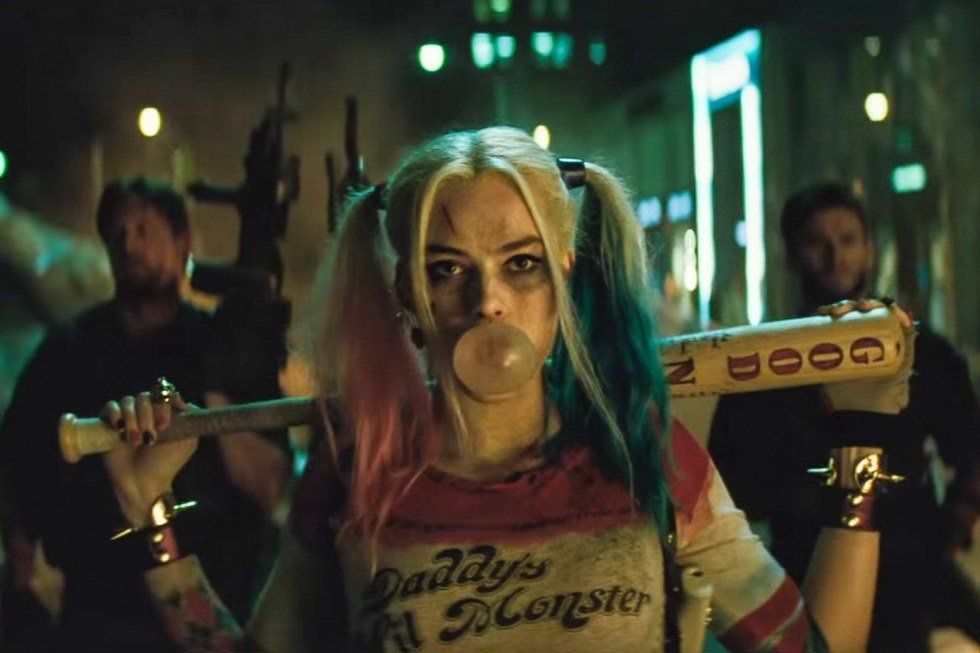
Like everybody else, I went through a Hot Topic phase somewhere in middle school and early high school, and at some point in that Evanescence-fueled nightmare, I made the mistake of giving them my email address. Now, five to seven years later, I’m still getting brightly colored inbox horrors declaring flash sales and asking me if I’m ready to “Free the Mermicorno” and give them my hard-earned minimum-wage dollars. But this article isn’t about the annoying persistence of online retailers. It’s about one particular email, and all the baggage that comes with it. "'Suicide Squad' Fashion Collection is here, puddin’,” it declares. There are other female characters in "Suicide Squad," of course, but let’s not fool ourselves; this collection is all about Harley Quinn, everybody’s favorite anti-hero. I suppose it’s not hard to love Harley Quinn. She’s attractive, she’s devoted to her sociopathic boyfriend, and she’s just so crazy! Isn’t she great? Isn’t she?
If we ignore for a second the hideously unhealthy model of relationships that Harley Quinn and the Joker present, Harley Quinn herself is problematic all on her own. Not because she’s violent. Not because she’s sexy. Not because we’re expected to treat her as empowered in a film that hypersexualizes its female characters. Harley Quinn is problematic because she is a symbol of the fetishization of mental illness, and in a society like ours, we can’t afford to ignore the harmful effects of such characters any longer.
How do we show that a character is crazy? Well, first off, we give the viewers a typical pop-culture coding for crazy: in the promotional materials for "Suicide Squad," Harley makes a reference to the voices in her head telling her to kill people during her first appearance. Of course, she’s quick to walk it back. She was just kidding – isn’t it cute? Honestly? No, it isn’t. Our society undeniably associates mental illness with violence. When there’s a mass shooting in the U.S., the aftermath inevitably includes a discussion of mental illness. And while it’s true that some of the mass shooters in recent history have been mentally ill, the vast majority of mentally ill people are more likely to be the victim of harm than the perpetrator. Harley Quinn, and her crazy-is-cute, wielding-of-her-baseball-bat personality, serve to enforce an image that’s already ingrained in our society – an image that’s factually incorrect.
In "Suicide Squad," Harley Quinn is described as being “even crazier than the Joker." Of course she is. Men can be crazy, but women are always crazier. They’re always more emotional, less rational, and more likely to break down than male characters in similar situations. Current practice in society is to treat any woman who challenges the status quo in any way as “crazy,” and none of them benefit from it in the slightest. Meanwhile, there goes Margot Robbie as Harley, prancing across the screen and showing society that all their nightmares of “crazy” women are true.
Of course, Harley Quinn isn’t even the worst thing about "Suicide Squad" – the prize for that goes to Jared Leto’s horrendous follow-up to Heath Ledger’s take on the Joker. Most reviewers and viewers will praise Robbie and her crazy-cute take on Harley Quinn. But while you’re watching the movie, think about where crazy-cute leaves the people who suffer from mental illness. In the real world, crazy isn’t cute. And in the real world, we make people suffer for being sick. So have fun with "Suicide Squad." Just remember, it’s not real.