You see it in pretty much every Western period drama. The woman leans forward, takes one last breath in, and winces as someone tightlaces her corset (think Rose from Titanic). This recognizable scene is meant to be a sign of the times, an object of female oppression so barbaric that us modern people wouldn't even think twice about it. But the true history of corsets is more practical than one might think.
It is commonly thought that only wealthy women wore corsets, but that wasn't always the case. From the 1500's to the late 1800's, these undergarments were a staple in shaping garments across the classes and even occasionally worn by men and children. One might think that wealthy women wore corsets as a fashion choice, but the garment was actually popular and sometimes deemed necessary by working-class women as well. These women, while wearing a much lighter and looser version, wore corsets and stays in their daily lives while doing their daily tasks. Another iconic image of the corset is the wearer being a relatively thin woman. With its supportive function, they were worn by women of all sizes while not necessarily for thinning the waist.
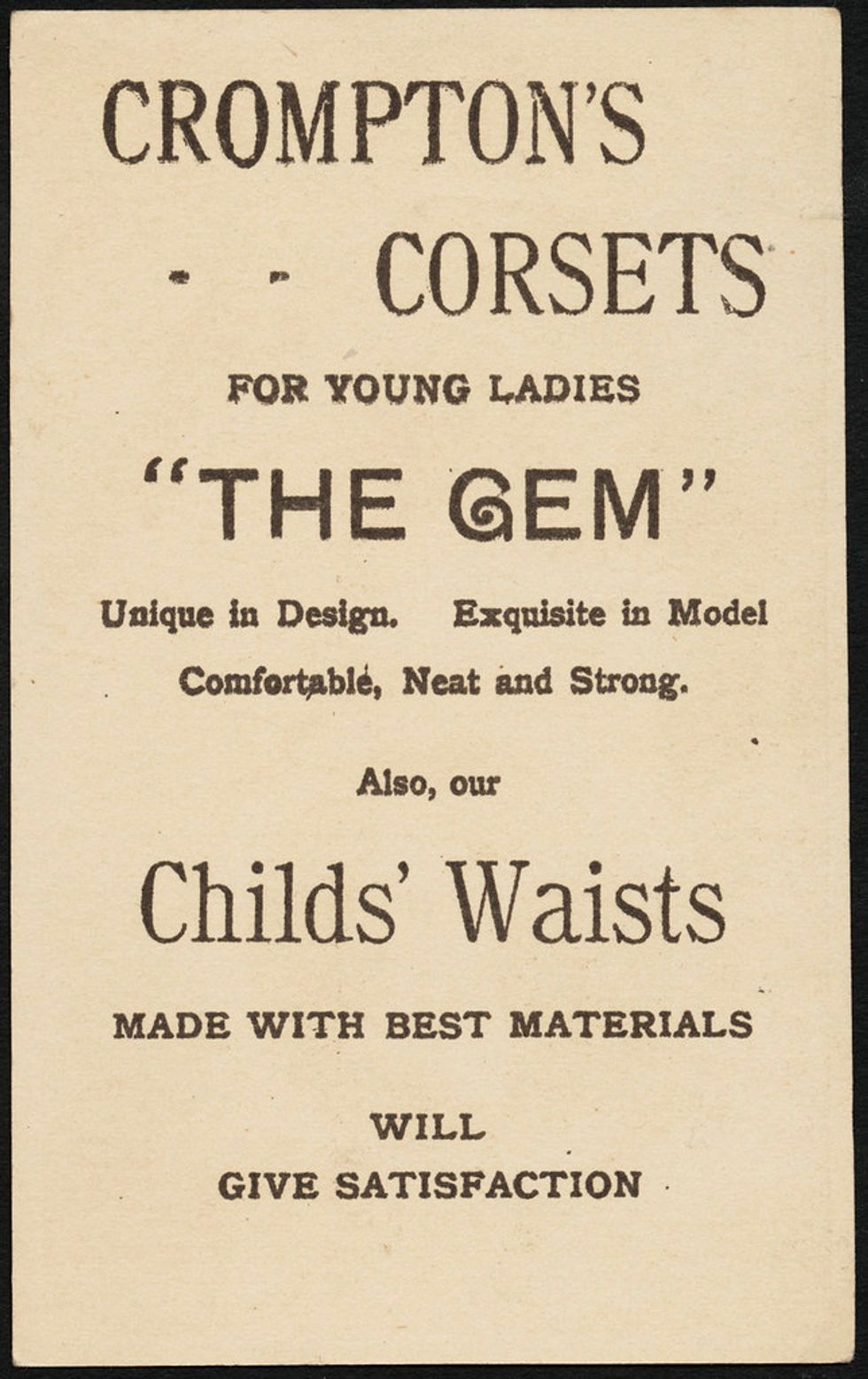 "Compton's Coraline corset. Ahead of them all. [back]" by Boston Public Library is licensed
When someone hears the word corset, its easy to immediately think of uncomfortable-looking 16 inch waists and arched backs. But their primary function is less about appearance and more about function. What we know as bras, girdles, spanx etc. today all derive from the corset, which was meant to support not only the breasts, but also support the back. When laced properly, they should be snug enough to straighten the back and support the chest without too much discomfort.
Even without a literal lace-up corset, many individuals opted to wear some sort of boned undergarment or boned clothing to keep a straight posture. The iconic and restrictive exaggerated tiny waist doesn't come around until roughly the 1830s, when tightlacing the corset to achieve a slimmer figure becomes more popular.
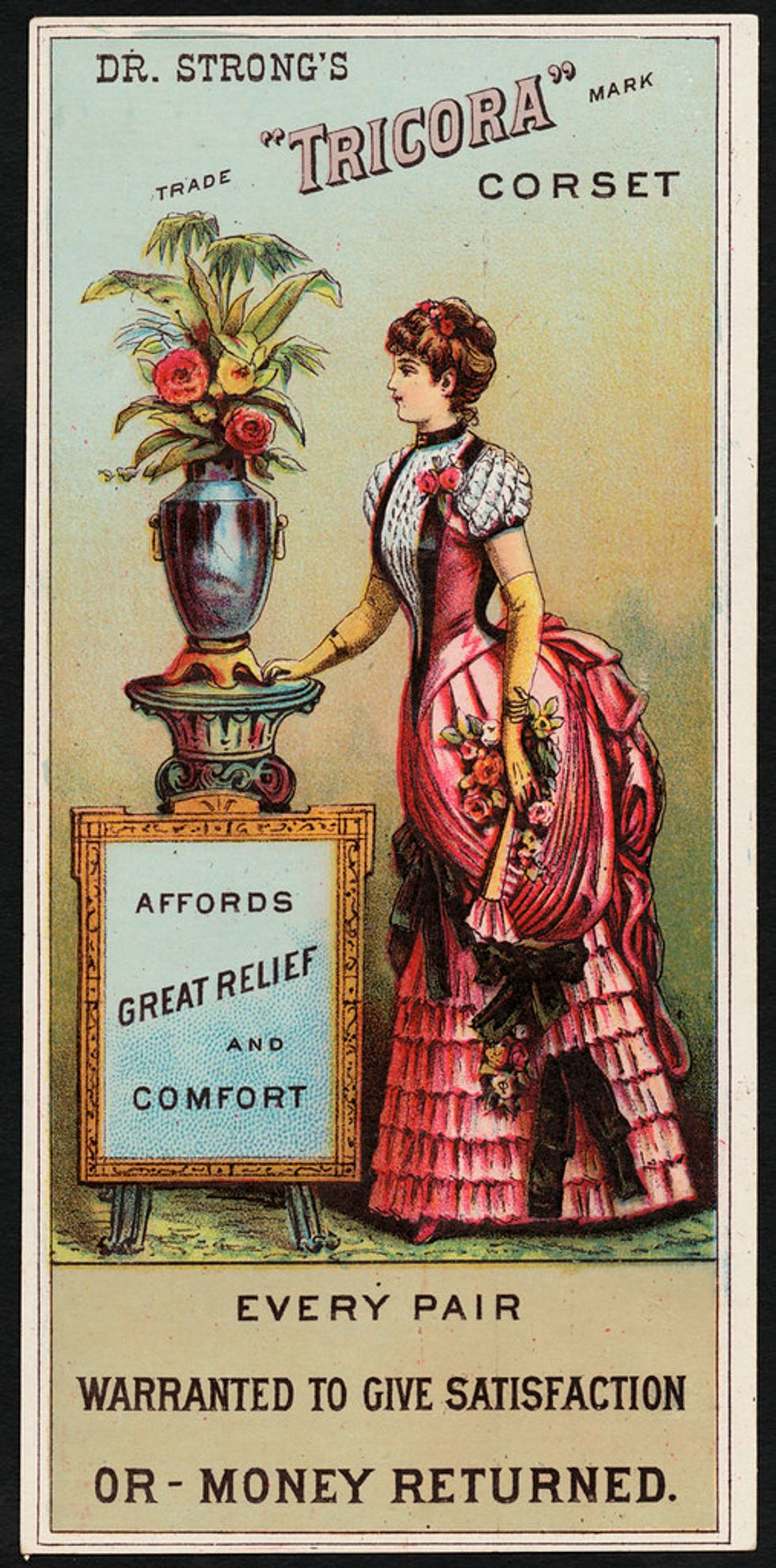 "Dr. Strong's 'Tricora' corset affords great relief and comfort. Every pair warranted to give satisfaction or money returned. [front]"Boston Public Library
The corset has long been deemed an item forced upon women, when in fact women of the time embraced it as a physical necessity. Many garment businesses in the mid-1800s were owned by women who employed women. At the peak of the women's suffrage movement, men claimed that corsets caused serious physical deformities and ridiculed women who wore them.
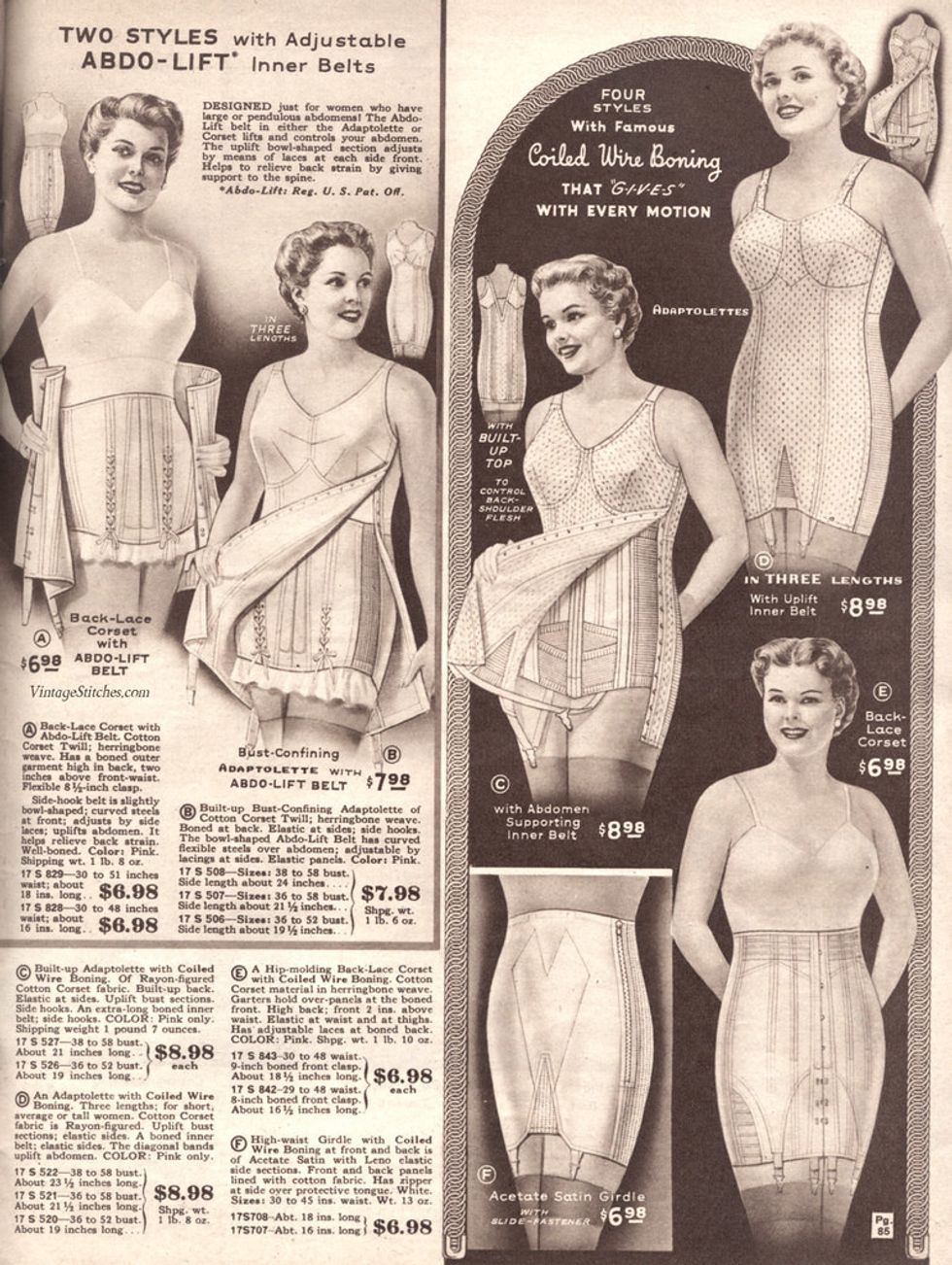 "Spring and Summer 1955 Lane Bryant" by vintagestitches is licensed under
The typical corset stereotype is that its function is lost in stereotype. Their commonality is lost to the idea of their harm to the body. It's easy to assume they were medieval torture devices of a bygone era, when actually there is little evidence to suggest they had such effects. While their shape suggests drastic shift in organs and skeletal structure, most women were not fainting, breaking their ribs, having organ failure etc. This undergarment was worn by many individuals of all walks of life for centuries, and yet their ill-effects were not popularized until the latter half of the 19th century.
Corsets served a legitimate purpose at their time in history and evolved into the modern undergarments we wear today. The stigma against them is largely rooted in sexism and sensational science myths that give little credit to women of the past.
So the next time you think of a corset, think not of the oppressed woman unable to breathe, but simply a different undergarment non unlike the ones we use today.