
Memes have been around for around a decade now and since then, the meme community has exploded with popularity; overflowing sites like Reddit, 4chan, and even Facebook and Twitter. I don’t think I have to explain to anyone reading this what a meme is, or how broadly encompassing they are. They can be anything from cat or dog photos to very niche, inside joke-esque political critiques.
That latter category is important, as it became surprisingly prevalent in the 2016 presidential election. Memes were used across the political spectrum, from your average Facebook user to pages like Bernie Sanders’ Dank Meme Stash, but arguably the most popular and influential group was the subreddit r/theDonald. Believing in what they call “meme magic”, these users co-opted figures like Pepe the Frog, gave him a MAGA hat, and spread their memery throughout the web. It was even picked up by figures like Milo Yiannopoulos and Mike Cernovich.
Traditional media, and those unfamiliar with Internet culture at large, haven’t quite been able to adapt. Sure, some common memes (known as “normie” memes in these communities) have been appropriated by corporations or politicians; Hillary Clinton cringingly tried to appeal to young people with her Pokémon Go comment. At times, they’ve tried to understand the community and ended up falling face-first, like when Pepe the Frog was branded a hate symbol.
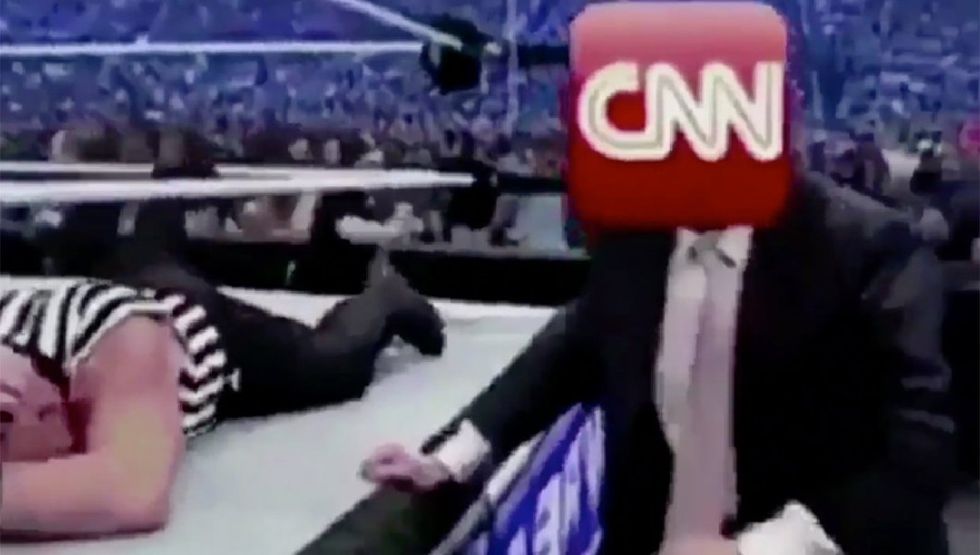
This became an issue at the forefront of our politics again when President Trump tweeted out a video he found: a clip from his appearance at the WWE where he clotheslined Vince McMahon, only this time CNN’s logo was superimposed over McMahon’s face. The caption read: “#FraudNewsCNN”. This came on the heels of his back-and-forth with MSNBC hosts Joe Scarborough and Mika Brzezinski. An incredibly stupid and childish thing for the President to do when he should be paying more attention to the growing North Korean threat, among other things.
Obviously the President did not create this GIF himself, and it was discovered that the meme was originally posted on r/theDonald, likely picked up by Dan Scavino, the WH Director of Social Media. So CNN decided to do an investigative search and found the original poster, HanAssholeSolo. Once his identity was found out, CNN reported that he apologized and deleted the post. On one of the articles, however, they said this:
“CNN is not publishing "HanA**holeSolo's" name because he is a private citizen who has issued an extensive statement of apology...
CNN reserves the right to publish his identity should any of that change.”
Oh boy, that sounds like a threat. And the Internet promptly went haywire.
People on this corner of the web are very protective of their memes and, by extension, their privacy. On the surface, it appears that a large corporation is making a blackmail threat against an anonymous poster about content they don’t like. In CNN’s defense, the poster has also posted several racist and anti-Semitic memes, and Reddit is not a private forum. That still doesn’t justify any sort of threat though, legal or not.
The fact of the matter is that this highlights the problem with traditional media and politicians: they aren’t prepared for this new subculture. It’s relatively young on the pop-culture scene, it appeals to people generally outside of these traditional groups’ demographic range, and it’s largely found on platforms traditional users don’t go on.
Are there parts of the Internet that are brimming with hate? Sure. Are there blatantly offensive things being shared under the guise of humor? Yes. However, instead of a heavy-handed approach that maligns internet users with a broad brush (think Gamergate controversy), traditional media needs knowledgeable people who know how these mediums work and can explain them better to the general public. And definitely don’t make threats to an army of memers.
















