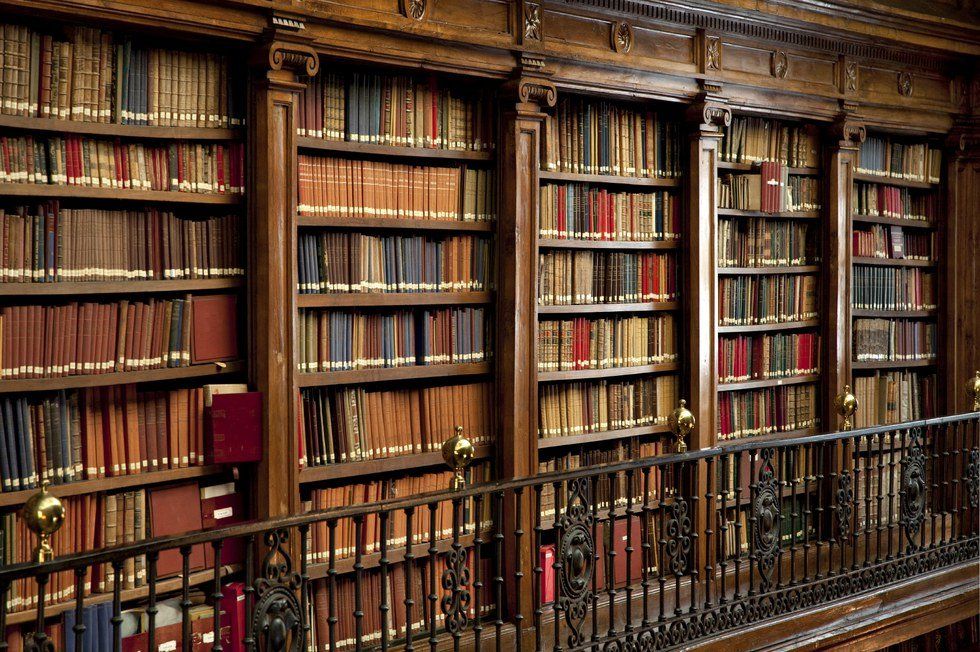
Usually when someone has a book by Dickens or Huxley on their lap, or perhaps they occasionally play Beethoven or Mozart in the background, people either assume that person to be insufferably pretentious and/or terribly boring. Either of those statements can be true, but neither statement correlates with the art form being discussed. Classical art of any forms is important because it can ground us in our very distorted and twisted way of seeing things, a concept understood by ancient Greek philosophers and stoics. Essentially, everyone feels their own emotion and plays with their own thoughts, but we can only see into our own minds. The whole point of art is for you to try to picture yourself as the artist, seeing whatever he felt he should share. Art sometimes only makes sense when you can understand the events occurring around the artist as to make him experience the emotions that contributed to what he made. It is far more complicated than that, but that's besides the point. Why should everyone be reading classic literature? Because, if you take the time to read, you may find protagonists that you love, antagonists that you enjoy to hate, and perhaps a newfound wisdom on why you should empathize more with both of them.
Leo Tolstoy, one of the greatest writers of the 19th century, wrote in a way that made readers question their judgement of others and their actions. For example, in Tolstoy's Anna Karenina, the protagonist Anna Karenina, has a husband who seems cruel and unforgiving. She later has an affair with a handsome, charming Russian cavalry officer. But, later in the book, she is impregnated by the officer and finds out his true intentions. In her deepest moments of regret and sorrow, assuming her husband will be angry at her, he forgives her for having an affair and says he will take care of her and the child. Throughout the book the reader naturally assumes they know the characters well based off their actions, but as Tolstoy reveals, actions don't necessarily always reflect the person.
Another Russian writer of the classical period, and probably one of my favorites, is Fyodor Dostoyevsky. Fyodor is an amazing writer who was admired by many people, including Albert Einstein. His writing is dark, unforgiving, and almost certainly not for the weak hearted. One of my favorite book by him, Crime and Punishment, reflected on an isolated man's quest to be what he thought he was. Rodion Raskolnikov is a very intelligent and attractive man in 19th century Russia, living in a poor area, something that reflects him as he is very poor and often has to borrow money. He thinks being a man means being harsh and unsympathetic, much like Napoleon and schemes up a plan to murder a cruel old pawnbroker woman and steal all of her money and jewelry. He carries it out, but as he leaves he also murders the old woman's younger sister who he didn't expect to be there. He suffers throughout the book due to his actions, and only in the end has the weight removed off his shoulders by the prostitute daughter of a pathetic alcoholic man he helped earlier in the book. Like I said, very somber stuff.
Even though the Russian classics are among my favorites, pretty much every language has its own greats and they should all be properly explored by those who care to. Reading old literature is not unlike drinking fine wine, as though it may not be new and its cover may not be seemingly relevant to you, opening it up may show you differently.