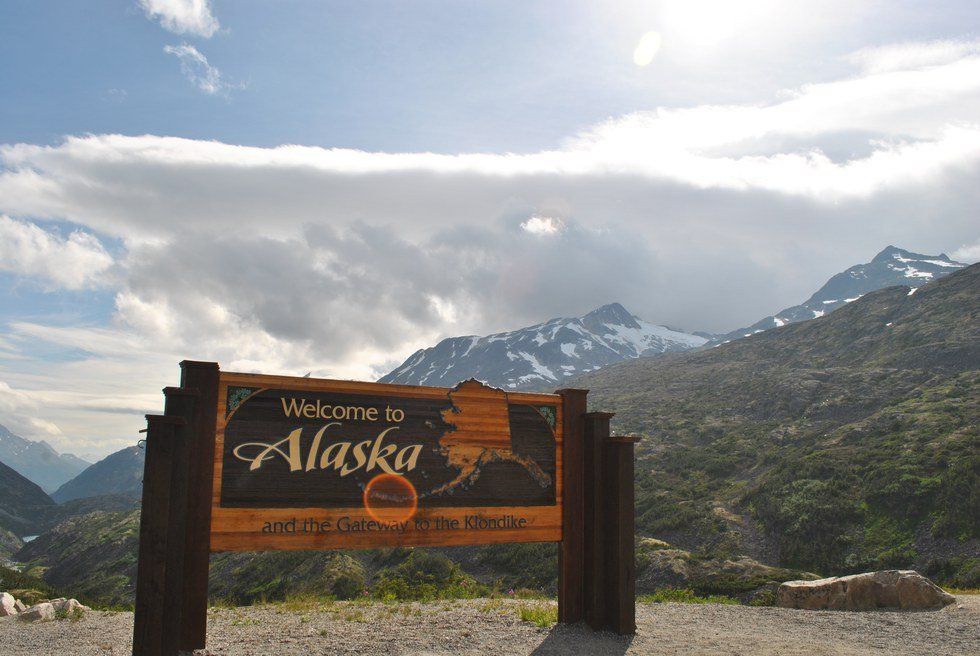
I’m used to rushing on avenues and looking up to see buildings scraping the sky, but as I roamed the (sometimes unpaved) paths around Alaska, I gazed up at immense mountains and ancient waterfalls. Often, I had to second-guess myself because the scenic backdrop almost looked Photoshopped — the contrast in sheer size between the houses, shops and people and the looming mountains too striking for me to comprehend.
There are two things my parents said while on our cruise to Alaska a couple weeks ago that pretty much sum up the Alaskan experience as first-time visitors from the urbanized New York Metropolitan area. Looking out at the Alaskan mountains from the cruise ship, my Dad said, “It’s nice to know there’s so much land that hasn’t been taken by people yet.”
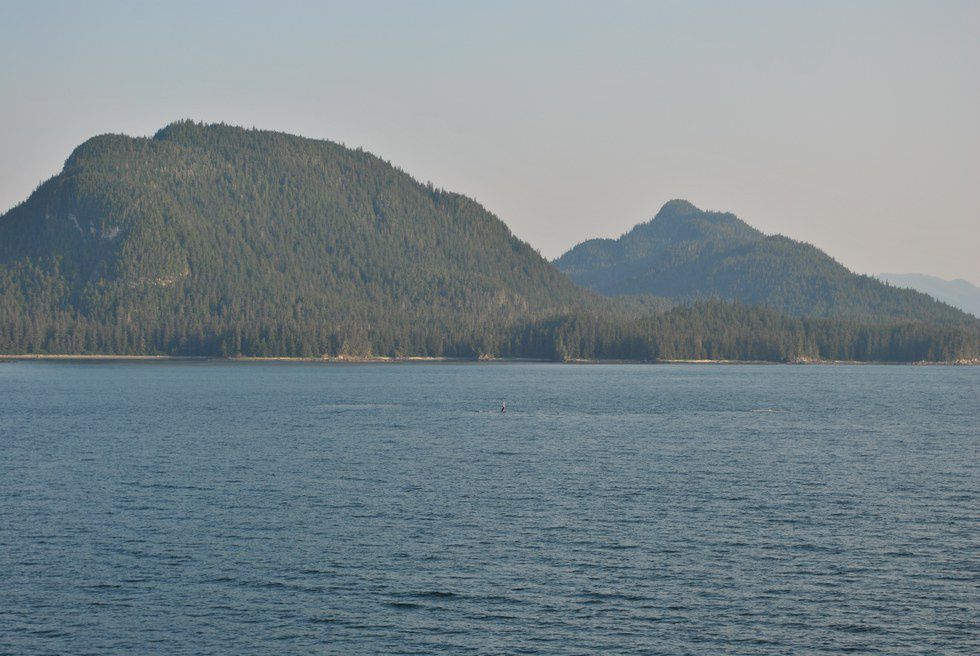 Spot the whale!
In a smaller boat, pulling up to the South Sawyer Glacier in the Tracy Arm Fjord, my Mom stammered, “This is unbelievable."
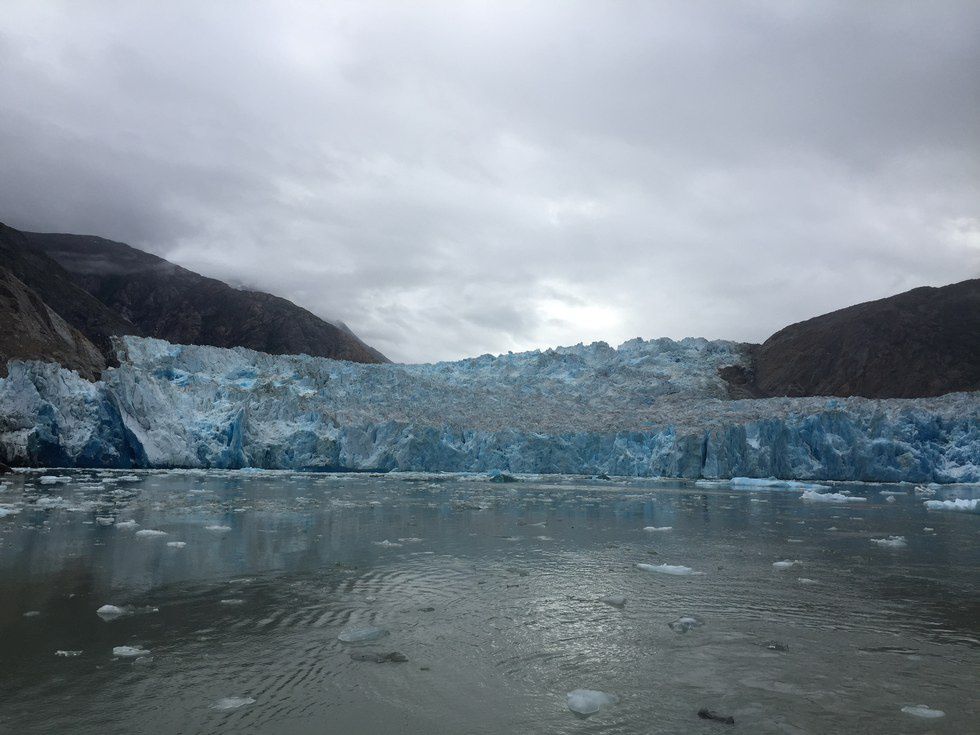 South Sawyer Glacier
The biggest realization I had during the trip was how I’ve never been to such a naturally beautiful place, one where nature dominates. Coming from a place where people (and everything we created) dominate the landscape, I definitely felt some culture shock. Instead of driving past shopping malls on highways, I passed Alaskan wooden staircases built over long, steep hills and up mountains — staircases so long they have their own street names. The staircases were built around nature rather than through it. Nature dominates the last frontier, and even though the people do make their mark, it seems to be done pretty minimally.
Approaching the South Sawyer Glacier, the entire fjord was left completely untouched. Bears and mountain goats sprinkled the scenery, and fearless harbor seals lay on icebergs as the boat glided between ice floes the color of robins' eggs. I felt guilty. Who were we to disrupt their home just to indulge ourselves with such unbelievably spectacular sights? My Mom thought the same thing and said it aloud as we got closer and closer to the glacier. We’ve never really considered ourselves environmental activists, but something about this encounter was unsettling because we felt like we were intruding (but it's SO AMAZINGLY GORGEOUS).
As we got close enough to see the detail in the different hues of bright blue, and how they grew more opaque as the sun hid in the early-morning fog, I decided that the ferry slightly disturbing the fjord was a concession worth taking part in. How else would I have been able to realize that such a natural wonder existed in such an impactful way?
The deep blue area of the South Sawyer Glacier that resembled the inside of geodes, I felt, were too intricate in the way the light bounced off of each ice crystal to be captured in pixels and how the waterfall that would definitely crush me was thunderous in Mendenhall Valley. These are the things that made me realize just how powerful nature is — especially when it remains virtually untouched by people. When I went through all 3,309 pictures I took from the seven-day trip, I felt that my pictures were only the shell of my memories because they don’t reflect how it felt to be a speck of dust in a valley that seemed to just roll on endlessly. Or the mountaintops that were so high up they still had snow on them although it was 80 degrees Fahrenheit where I stood, and some looked as though they continued to the end of the atmosphere — the clouds were closer to the ground than the mountain peaks
Alaska was not only the farthest I’ve been from home geographically, but despite it being a part of the United States, it was the only place where I felt like I was on a whole other planet. A planet where I can look out for miles and not see a single car or wire — only trees coating mountains that seemed larger than life, bodies of water so naturally clean I actually drank from it and where nature still dominates.
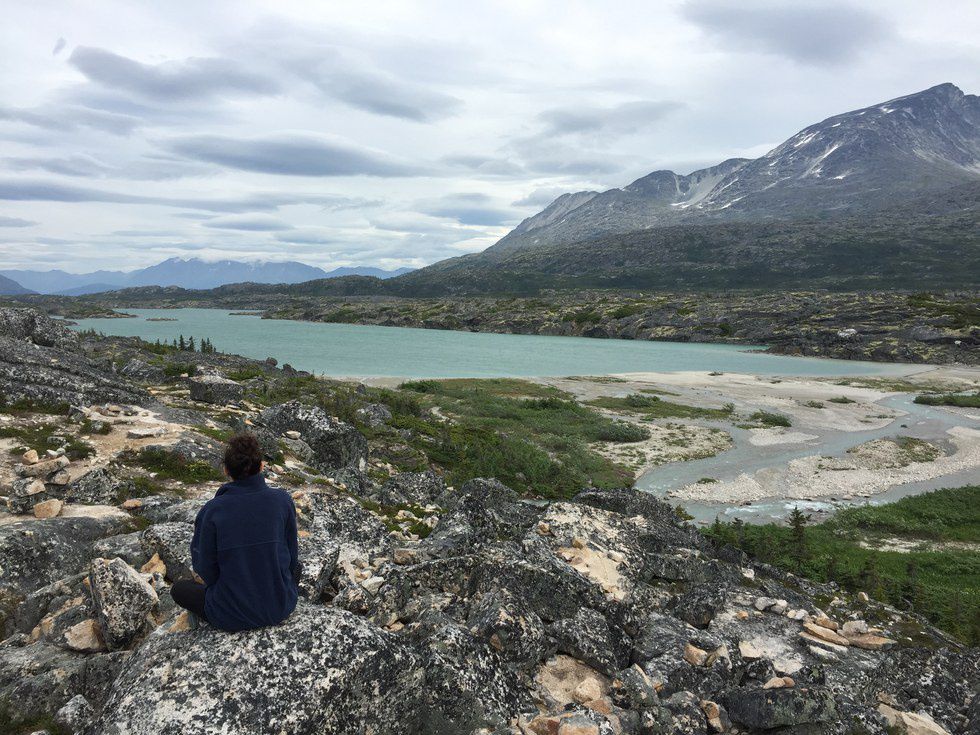 Me in Tormented Valley