


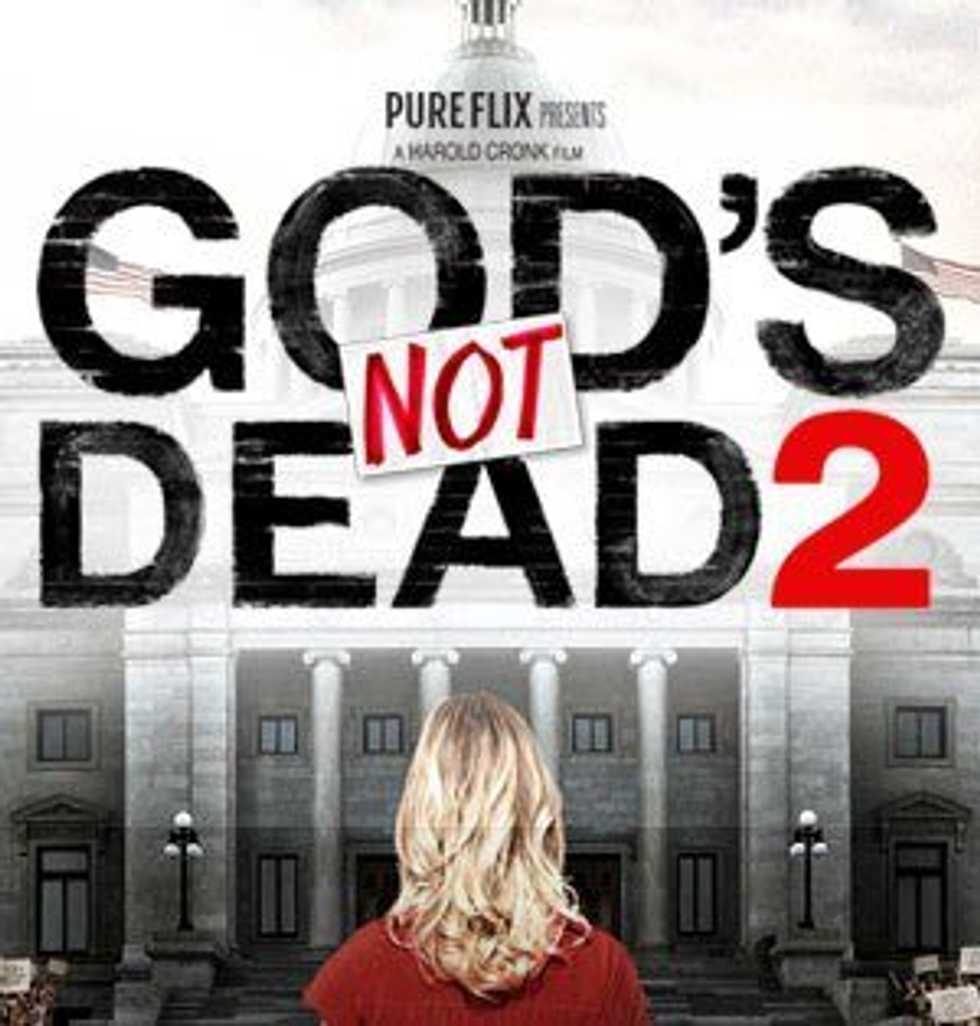
In the summer of 2014, film makers and movie goers were hit with a major surprise. The Christian feature God’s Not Dead placed fifth in the box office and made $8.6 million dollars. Christians were quick to celebrate this as a victory against the evils of secular Hollywood even though the movie was poorly reviewed, receiving only 15% on Rotten Tomatoes. Contrary to what these Christians believed, it was not the audience’s love for the movie that gave God’s Not Dead the boost it needed to do well. Rather, it was the ideal of timing of its release and its poor competition. If the movie had been competing with something other than the weak openings of Divergent and Muppets: Most Wanted, and if it had come out at a time other than the Bible movie craze of the summer, it probably would have made the usual $6 million and received much less attention. Nonetheless, its success has caused Christians to think of their movies as relevant, entertaining pieces of cinema when in actuality they are mostly ignorant, unreasonable and boring.
The 2006 film, Facing the Giants, is a classic example of how oblivious Christian movies are to harsh realities. Facing the Giants was infamously rated “PG” by the MPAA for having more adult themes than family entertainment had been accustomed to. While some saw this as an act of discrimination against faith-based media, others saw it as a way to for the movie to broaden its audience. The supposedly relevant, “PG”-worthy theme in the film is the main character’s struggle with infertility. While this could be a relatable scenario, its overly romantic and optimistic treatment crushes any sense of reality. By the end of the movie, the failed high school football coach’s unwavering faith in Christ not only cures him of his inability to rear children, but also helps him pull off some pretty unrealistic plays. And Giants is not the only Christian to finish of with a patronizing, unfair "Happily Ever After." This is a part of the formula that most Christian films follow.
This may sound like overly cynical thinking, but honestly it's perfectly fair. Christian movies are not romantic comedies. They don't have the luxury of promising a world of all smiles and perfect endings. If they have a point that they're trying to get across, they have to do so well. The reality is that Jesus isn't always going to provide you with miraculous blessings to fix all your problems and it's when things continuously get harder without any sense of relief that we prove what we believe and what we don't. I would dare any of these writers who are creating Christian films to tell a story about a guy who does all the right things and still has to suffer in the end. After all, isn't that what happened in the ultimate story at the cross?

















