Driving across the high plains of Wyoming reminds one of just how close he is to nature. Even driving down the Interstate, moving quickly and securely, one sees a wild space, seemingly endless grasslands that are suddenly interrupted by young and steep mountains, the same mountains that winding highways climb, switching back and forth barely within control. Yet, even in Wyoming, with the wild so close, we are separated, whether by car or small town or the ever encroaching cosmopolitan influences of Denver and the more populated surrounding states.
Nevertheless, we feel a call of deep magnetism to the wild places; at least, I believe there is an inherent need for this connection from which we often intentionally isolate ourselves. Those with sense, both present and past, London, Muir, Krakauer, even the current Pope, recognize this reality. But, we run the risk, in our isolation, of forgetting this connection and losing the importance of wild spaces.
In this way, I am reminded of the idiotic attempts to save baby bison in Yellowstone, the death of tourists in hot springs and the recent, tragic death of a child by an alligator in a Disney resort. I do not bring up these tragedies as an attempt to jump on the bandwagon of tourist/Yellowstone bashing, nor Disney bashing, nor to pick up the cry of the need for better warning signs, but as examples of the importance of the wild. These three situations, which in regards to Yellowstone seem to be just part of a growing number of similar instances, appear to me a huge warning against the danger of our insulation from the wild.
At the risk of sounding romantic, I want to say, the wild, its danger, its promise, its challenge, is the thing that makes us human, makes us whole. Without the standard of nature we are not part of it, nor separate from it. The wild has permeated my existence. Growing up in Wyoming, following sheep into the hills, fishing forgotten lakes, participating in that beautiful and life-altering sport of hunting have all impacted my life and my understanding of it. The wild has weighed in all the more recently as I've attempted to cultivate a flower garden with my girlfriend, read Hemingway's "Old Man and the Sea" and London's "To Build a Fire," listened to "Into the Wild" on my commute to work, and have tried to capture the idea of survival in poetry. These have challenged my understanding of Wild places, their wonder, danger and necessity.
To borrow from Krakauer's "Into the Wild,"
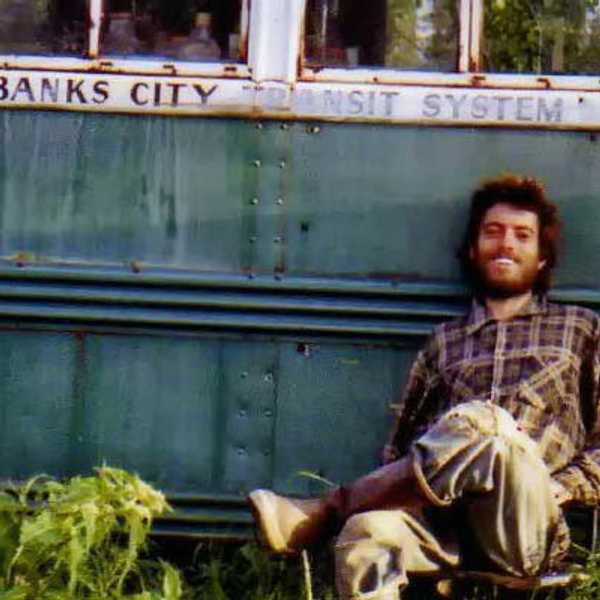
“So many people...will not take the initiative to change their situation because they are conditioned to a life of security, conformity, and conservatism,...but in reality nothing is more dangerous to the adventurous spirit within a man than a secure future. The very basic core of a man’s living spirit is his passion for adventure. The joy of life comes from our encounters with new experiences, and hence there is no greater joy than to have an endlessly changing horizon, for each day to have a new and different sun.”
This desire is inherent in man. This need is ever present to make us look inward as we look outward into the beauty of untouched creation. Whether it is Yellowstone, other National Parks, mountain trails or scenic byways, these things are necessary and need to be used, experienced to the fullest.
As "Laudato Si" espouses,
"Our insistence that each human being is an image of God should not make us overlook the fact that each creature has its own purpose. None is superfluous. The entire material universe speaks of God’s love, his boundless affection for us. Soil, water, mountains: everything is, as it were, a caress of God."
This implies responsible use, an understanding of the realities of nature, and the life altering challenges the wild creates. This is not to claim an environmentalist bend. I am all for responsible use of the land, whether that is public land grazing, sustainable logging or even touring Yellowstone. Yet, this means understanding the significance of the land, understanding that all things have a purpose. Bison aren't made for minivans, and geysers are hot.
Some may be made of the metal necessary to walk into the wild and survive, while some may be more inclined to stay on the marked trail within sight of a park ranger's cabin, but all must take the time to stop and admire a neighbor's xeriscaped yard, the large oaks in a city park, the mountains beckoning in the distance. It is the wild that makes us human, whether in our defiance or deep understanding of it, it is the wild that is our companion, it is the wild that defines us, as the saying goes "Dime con quién andas y te diré quién eres. / Tell me who you walk with and I'll tell you who you are."
The wild cannot be lost, but it can not be taken away from us. I don't foresee a closure of Yellowstone because the media decries its dangers, yet the potential is there when we forget our connection to nature and don't see the wild for what it is, our defining companion. As we walk together, under the trees, in the shadow of the mountain, recognizing beauty and danger and challenge, to placate those legends of the past, don't be afraid to take the road "less traveled by" because it may make all the difference.