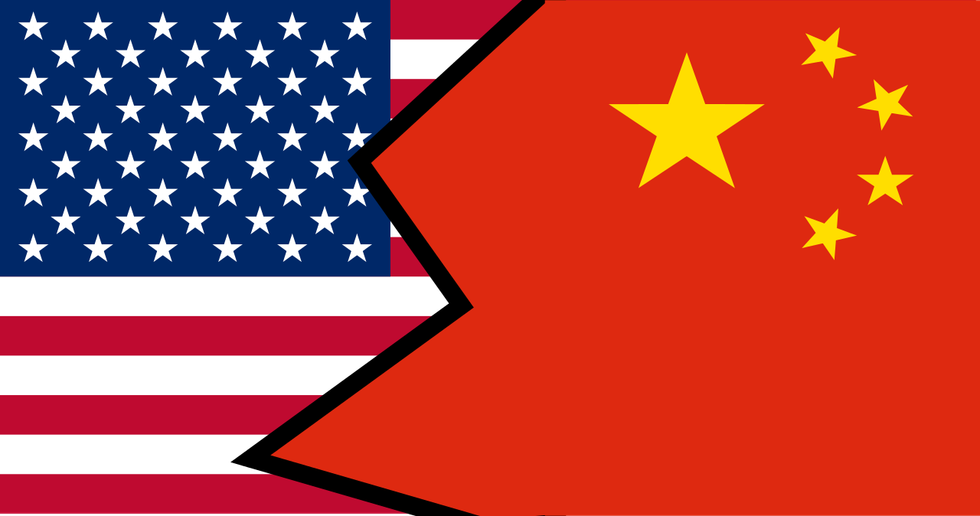
Having lived in China for 18 years and been studying in the US since 2015, I have been aware of the cultural differences between these two great countries, including those in diets, lifestyles, mindsets, systems, customs, etc.
In this article, I am going to talk about five relatively noticeable and important differences that I have observed and experienced during my early life in China and ongoing college life in the US.
1. Pessimism vs. Optimism
Chinese people are always “worried” about the future, even though they are having a good life now, which is why they like to save money, a lot of money, in their bank accounts in case of emergency. Americans, on the other hand, spend money as fast as they can, since they are the ones who live in the present and it is important to enjoy the moment. The differences in life attitudes might be due to the different lengths of their history. China, with a history of over 5000 years, emphasizes a lot on learning from past lessons to dictate today’s actions and avoid bad consequences, while America, with a young and carefree spirit, places more value on trials and errors, adventures and innovations.
2. High Context vs. Low Context
Chinese rely on a lot of nonverbal cues to communicate information. In other words, spoken words only account for part of the interpretation process, because background info and contextual factors also play important roles. For example, if A tries to tell B what C said the other day, it might not be surprising for A to tell B, or B to ask A, about C’s facial expressions, body language, what and how C was doing at the moment, when and where they were speaking, and even the weather of that day. Chinese are known for being non-straightforward, and oftentimes you need extra patience and attention to know what they really mean. On the contrary, Americans are easier to understand. They try to convey a large amount of information through verbal communication in a relatively short amount of time. There is no ambiguity or vagueness – the goal is to be quick and simple.
3. Materialism vs. Spiritualism
Chinese are big on food, clothing, daily necessities, and transportation tools (ancient Chinese phrase: 吃穿用度). What that means is they are willing to spend a lot of money on eating good food, wearing good clothes, using good products and driving good cars. Material life is critical to their happiness. However, their enjoyment of material life does not go to the extreme of indulgement. Due to the limitation of resources and a large population, they have to work hard to gain access to a better life – the hard work counterbalances with material rewards. Americans, on the other hand, are less obsessed with the brands or quality of the things above, and they spend more money on entertainment, such as music, theatre, fitness, trips, religious services, philanthropic events, etc.
4. Individualism vs. Collectivism
One of the first things I noticed in the States is the distance between houses. Almost each household owns a house and a garden with signs saying “no trespassing” which feels a bit cold and distant. Family members might be the closest to an individual, but even they can be kind of indifferent when the individual grows up and has one’s own family. Each individual minds one’s own business; nobody seems to care about what is really going on other people’s lives. It is a good thing for Americans who pursue independence, freedom, and privacy, but not necessarily for the Chinese who put so much emphasis on the unity of family and the harmony of society. To them, each individual is not distinctly separate from one another; one can only live a good life when the people surrounding one are happy too. The idea is comparable to the Buddhist term “interdependence”, that every living being is interconnected as a web.
5. Positivity vs. Negativity on Sexuality
The average age of losing virginity in the US is 17-18 years old, while in China it is 22-23 years old. Americans are free to talk about sex in the public; parents and/or teachers explain sexual behaviors and birth control to children; adolescents explore their sexuality as early as middle school; women can enjoy sex as much as men do, etc. On the other hand, China is making the term “sex” a taboo to talk about in the media, in classroom, and in families. It is embarrassing, secretive and sometimes even immoral to bring it up with someone other than your married partner. Schools prohibit boys and girls from dating and relationships and punish those who do, so that they could concentrate on school work and get good grades, which apparently, could not stop many students from having “underground” relationships. Women, no matter their ages, are discouraged from enjoying sex and even if they do, it is inappropriate to share their opinions with others.
As an ending note, this article is not aimed to shine a bad light on either country/culture. I just want to share some things I saw, heard, felt and experienced in both countries, without judgments or criticisms, though I do think China should work on the equal rights of women. There is no good or bad culture, only those that are alive or dead, and there is a reason why some cultures can stand for such a long time, which is that they should have worked and worked well for the people who live in them. Observing other cultures than the one I was raised in always gives me new and fresh perspectives on how to live my life and, more importantly, sets me free from the old traditions that have been suppressing who I am and what I feel.