


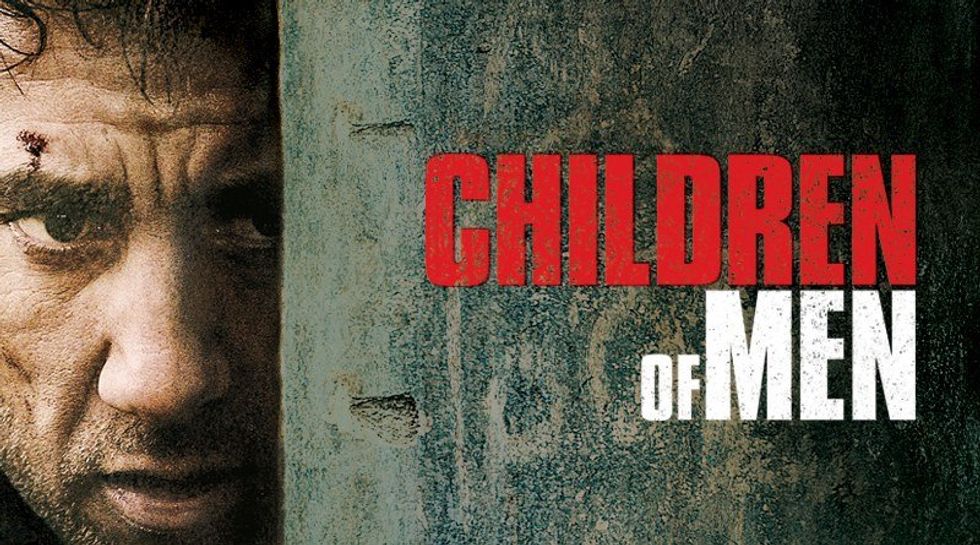
In 2006, Alfonso Cuarón released his breakthrough hit, "Children of Men." The film centers around a post-apocalyptic world where the lack of pregnancies has led to the collapse of the world and modern society as we know it.
The film focuses around Clive Owen and his band of refugees that try to get the first woman to get pregnant is 18 years to safety so that she can have her child. They have to escape their current situation that includes Britain, which has become the most militarized country in the world that now wants to exterminate refugees.
The film also stars Julianne Moore as an American who is killed off in the beginning while the group is trying to escape from a band of savages. Chiwetel Ejiofor plays a leader of a group who put together the murder of Moore's character. Clare-Hope Ashitey plays the first woman to be pregnant in 18 years, she spends the majority of the film being used as a pawn for the political system that has become a product of the destruction of society.
Upon its release, much like the rest of the films and TV shows that I cover in this series, it was not heralded as much as it should have been. After all, it was released in the same year that films like "The Departed," "Letters From Iwo Jima," "Babel," and "Little Miss Sunshine" were released.
But with scenes like this, it's hard to not stick out and become a classic piece of modern cinema.
Looking back on it, this film started Hollywood's mainstream love for the long and continuous tracking shot that became so popular with the films "Birdman" and "The Revenant." Both films are directed by Alejandro Inarritu, who also directed "Babel," which was nominated for Best Picture the same year that "Children of Men" received its three Oscars: Best Adapted Screenplay, Best Film Editing, and Best Cinematography.
This film has single-handedly changed the way that we all look at movies and how we expect them to be shot. It opened up a door that had been closed shut. The continuous shot has been something that is only good when it is done the right way, and this opened the door for long shots from Cuarón and other filmmakers.
The film was a refreshing break from all that we, as viewers, were used to seeing and was something so original, even so much that even the first time I saw it, I wasn't really ready for it. But it conveys an actually realistic way of the crumbling of the world and the highly-touted society that we all claim that we have made, and it realistically portrays the human mind and how it would have resounded to the same situations. "Children of Men" is something that had never been seen at the time, and has rarely been seen since.
















