


The city of Chicago is world recognized for its structural styles and designs. Its architecture has influenced and inspired American architecture for years. Chicago houses prominent buildings designed by many important architects. Due to the Great Chicago Fire in 1871, most of the buildings in downtown were destroyed except for the Water Tower. This allowed Chicago’s future architecture to be known for its originality rather than antiquity.
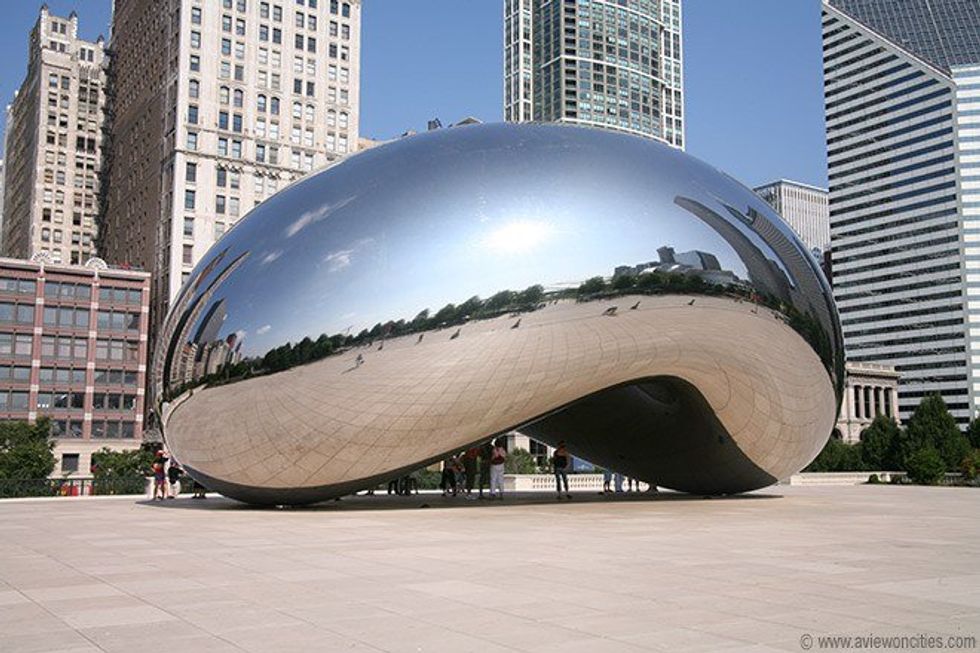
What are some of the most famous buildings to see, one may ask? It is no surprise that the main attraction to see when in Chicago is the Willis Tower. Previously known as the Sears Tower, which is still what many Chicagoans refer to it as, was the tallest building in the world up until 1998. It is still the tallest building in the Western Hemisphere until the One World Trade Center in New York is completed. The Willis Tower was designed by Skidmore Owings and Merrill, and it stands 1,450 feet tall. The structure is made out of black steel and glass, and it embodies the “City of Broad Shoulders.” Marina City, located at 300 N. State Street, is another Chicago staple. It is best known for its twin cylindrical towers. Marina City was designed by Bertrand Goldberg, and it contains a hotel, restaurants, bowling alley, and the House of Blues. Then we have one of the city’s most famous location for both tourists and locals: Millennium Park. Millennium Park is a 24-acre addition to Grant Park built over an active commuter railway. It features several different aspects within the park. People can watch performances at a concert band shell and walk a serpentine footbridge, both designed by Frank Genry. It includes the Cloud Gate, which most people refer to as The Bean, which was designed by Anish Kapoor. The Bean reflects the skyline in a single structure. Also found in Millennium Park is the Crown Fountain. The fountain has water cascading into a reflecting pool from a pair of five-story glass and brick towers with LED screens. These screens project a changing rotation of faces. The Crown Fountain was designed by Jaume Plensa. Another remarkable structure is the Aqua Tower located at 225 N. Columbus. It was designed by Chicago’s own Jeanne Gang and her firm Studio/Gang. This tower contains sustainable features including a rainwater collection, energy conserving lighting, and a green roof. The unique shape of the balconies were designed to capture sunlight, allowing residents to be even more energy efficient.
A unique and artistically thought-out building is only as good as the person behind the project designing it. Art comes in all different types of forms and architecture is definitely one of them. It takes a keen eye to be able to design and develop something as grand as a building and start it up from scratch. Although it’s good to look at buildings and architects when interested in the city’s architecture, sometimes it’s best referring to a professional who covers Chicago architecture for a living. I contacted Wayne Lorentz from The Chicago Architecture Blog and had a short interview with him. The Chicago Architecture Blog is an online publication that has a focus of the downtown areas and it reports on urban life and development in Chicago. The following is my interview with Lorentz:
Q: What about Chicago’s architecture differentiates it from other cities?
A: It’s not that Chicago is different from other major cities; it’s that other major cities are like Chicago. Chicago is the place where many of the most important architectural styles of the last hundred years were invented, perfected, or deployed. When you see the glass megatowers rising in places like China and the UAE, are those buildings designed by local architects? No. The plurality are designed in Chicago by Chicago architects. A number of architects have told me that to developers in South Korea, China, the Middle East and the richer –stans, having a Chicago architect is a symbol of status and quality.
Q: What would you say are the top five must-see structures here in Chicago?
A: It depends on what you’re into. But if I had to choose, I’d say the John Hancock Center, 35 E. Wacker, Holy Name Cathedral, Tribune Tower, and Aqua.
Q: When covering architecture, does it ever get difficult finding a story since the same buildings have been around for so long?
A: I am fortunate that we never seem to run out of stuff to publish, in part because Chicago is a very dynamic city. Sure, there are lots of old buildings, but there are also lots of surface parking lots waiting to be turned into the next Trump Tower. Look at the Pickwick Stable, one of the oldest buildings in the Loop. It recently became a coffee house: 122-years-old, and still making headlines.
Q: What are some highlights you think everyone should know about Chicago architecture?
A: Think of Chicago as an architecture museum. Don’t be afraid to look at the architecture. Visit the city’s churches. The inside of Saint Chrysostom's could pass for Hogwarts. The new Cabrini Shrine is magnificent. And while you’re in that area, stop by the Elks Memorial, which is so massive and intimidating that it’s often overlooked.
Q: Are there any buildings you feel should have never been demolished?
A: I haven’t been here long enough to witness any outstanding injustices. But everyone in the local architect community laments the demolition of the Chicago Stock Exchange. It must have been magnificent; I saw salvaged parts of it on display at the Seattle Art Museum as recently as 2010.
Q: Do you have any personal favorite architectural structures in Chicago?
A: I like my buildings old and crappy. They have a soul and history that modern buildings don’t. Thirty-five E. Wacker, while not crappy, is very old and has a lot of hidden history. It’s my favorite building. I'm also partial to the Monadnock Building’s interior, the impossible skinny Singer Building, and some of the old former apartment hotels in Uptown and Edgewater.















