
There's been a great deal of media material about racism during the past few years. It's hard to stop talking about and people are still asking plenty of questions. Is it real? (...yes) Can we get rid of it? (yep) How do we fix the problem? (still working on that)
The overwhelming majority of the material deals with the systematic mistreatment of black people. The media soon had a heyday and so much of the coverage and speech about the matter has become black people vs. white people. While this issue of institutional racism towards black people is an extremely important topic to grapple with, one minority group has fallen by the wayside, at least in my opinion. That group of people is the Native Americans.
Before school began this semester I went with my family to Cherokee, North Carolina. We always have a family outing in the mountains right before school begins just to decompress and enjoy ourselves. This was, of course, meant to be a relaxing, fun break for us, but not exclusively that. This year, we wanted to learn something.
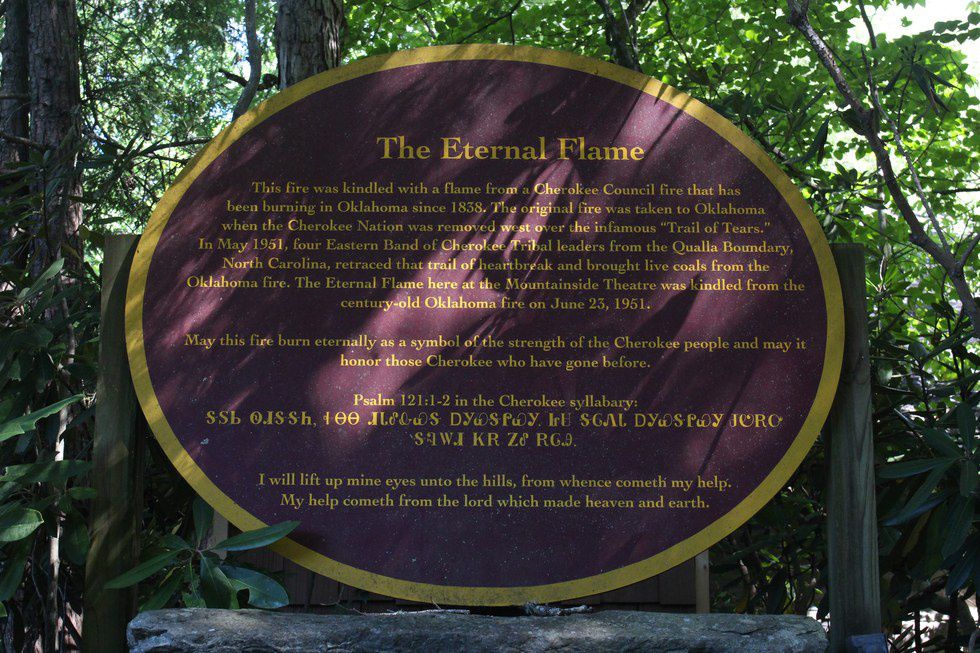
Day one of exploring Cherokee was visiting the workshop of the only Cherokee Master Silversmith, hiking to waterfalls, poking around the touristy part of town, and trying to see Harrah's through the trees surrounding the casino. It felt very odd to be so close to a casino in the mountains, but tourism and Harrah's are really how the Cherokee generate their revenue. We also passed by where Unto These Hills is performed. Unto These Hills is the Cherokee's story translated into a theatrical setting. It goes all the way from their origin to the Trail of Tears to where they are today. By the time my family and I arrived they'd closed down the production for the season. But, we still got to read the unbelievably stirring story behind the Eternal Flame that still burns in the theater.
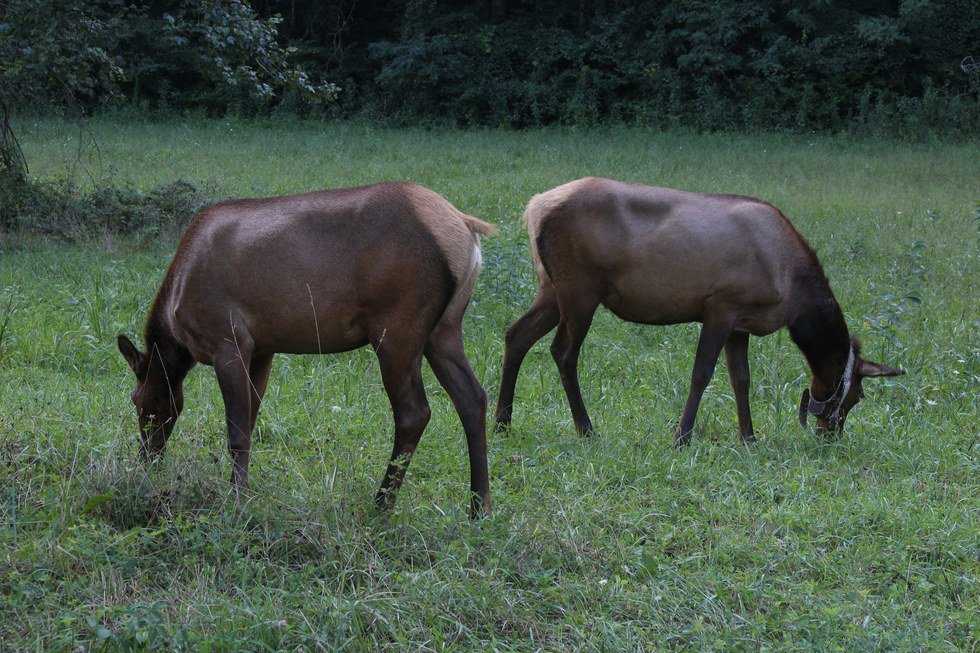
We also saw turkeys, what seemed like hundreds of wild elk, and a baby bear (!!!!!!).
Day two was what really clinched the point of the trip, though. Our first stop was the Qualla Arts and Crafts Mutual: a center for Cherokee artists to display and sell their work. Inside they had everything from traditional blankets to beaded necklaces, bracelets, and earrings to clothing and dolls and finger-woven belts. To add to the already amazing experience, we'd walked in on a day where several Cherokee women had made traditional food for visitors to try and ask questions about. Of all days, we'd walked in when the history was most alive. The women told us stories about them learning the syllabary as children to their parents hunting for ramps and greens to eat. One older woman told us about her grandmother hiding from the government in the mountains and that's why she was standing there speaking to us.
The last excursion was a mere few streets away. We drove past Unto These Hills again and drove into the Oconaluftee Village. This was a model of what a real Cherokee village would have looked like. (They've lived in wood and mud huts since they called the Great Lakes region their home and continued to do so when they moved to the Blue Ridge and Smokey Mountains. Believe it or not, not every Native American tribe lived in tepees. Those were the Great Plains tribes that moved from place to place. Not the Cherokee.) A guide took us from hut to hut, explaining the ins and outs of Cherokee crafts.
Something special about how they made their possessions was that no crafts were gender specific. A woman could carve arrowheads just as a man could make pottery. Each gender was given the utmost respect and honor. Everyone learned everything and each was allowed to operate in their gifting.
We were given the opportunity to speak with many full-blooded Cherokee, listen to stories from their past, and were treated to several of their traditional dances. By the end of the solid three or four hour visit I didn't want to leave. I felt so enthralled by the stories I'd heard and admired each and every Cherokee that I'd met and their passion for their people and their history. Many times they spoke of the trails their ancestors had been through and the abuse their tribe had weathered. But throughout the whole visit, not one word was spoken in bitterness. They showed no resentment for their oppressors, only love for their traditions and tribe. If I heard one thing the most during that trip, it was the desire that my family and I go home and share what we'd learned with our friends.
That said, it's time to admit something: we have done Native Americans a great disservice. The United States has done Native Americans a great, great disservice. This country has trampled this rich set of cultures and wonderful peoples. We have acted like they don't exist. We've monopolized their culture and style for music festival couture and it is cheap, inexcusable behavior. Meanwhile, the Standing Rock Souix (and Lakota tribe) are being bitten by police dogs while trying to save their land and water in North Dakota. This is one of many struggles American Indians are facing right now. But all the while tribes like the Cherokee urge us to remember the history they've imparted to us and share it.
They are all the original residents of this country. This is their home. No matter how long our ancestors have lived here, we are living where Native Americans used to. Let us begin to have a new respect for those who really did come before. We may not live the same way or have the same stories, but we share a home. They deserve far better than what they've been given.
Let us begin to be better neighbors.