
This past week, I was visiting a friend down in Texas, and the very first day I arrived she made the suggestion that we go see the new Marvel movie, "Captain America: Civil War" in theaters. Now, I will be honest, even though I love movies and would consider myself a dedicated cinephile, I have never been a huge fan of superhero films. The most simple reason I can give as to why is because they all seem so cut-and-paste. The earth is threatened by an evil corporation or an alien hoard or a super villain, and an individual or group of genetically mutated or highly skilled people must fly in and save the day. There is a series of fight scenes, usually some major plot twist, and often multiple references to other movies or characters in the franchise who I have never met or seen before. In short, the same formula repeated over and over again, just with a different array of powers and costumes each time. Now, don't get me wrong, it's not like I hate superhero films, it's just that if I had a choice they would not be my first pick. So, when my friend made the suggestion to go see this movie, I was hesitant, especially since I had forgotten the plot of the first Captain America movie and hadn't even seen "The Winter Soldier." However, since she wanted to see it so badly, I halfheartedly agreed to go.
And I loved it. Absolutely, 100 percent loved it. We went back a few days later and saw it a second time because we couldn't stop talking about how fantastic it was. And while I might not be an expert on the subject, from the handful of superhero films I have seen (since then I have gone on to re-watch "Captain America" and "The Winter Soldier" among others) I could argue that "Civil War" is the best movie Marvel has produced to date. The plot is complex, the characters are nuanced, and the morality is ambiguous. There is a relatability and significance felt between the characters and the audience that can sometimes get missed in other superhero films. But more importantly, it shows a world where there are no villains or heroes, where the pain and struggle comes from the characters' own interactions among themselves. By crafting the plot in this way, the movie creates an empathy that can be felt for the cause of every single character, and makes a dynamic connection between what is fantasy and what is real life. Since this article will be discussing these different elements, there is of course a spoiler warning. If you have not seen the movie yet, stop what you're doing, go watch it, and come back. It is definitely worth your time.
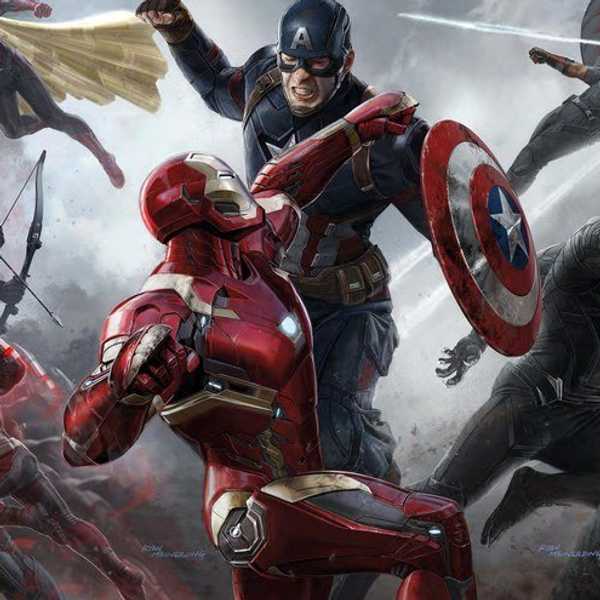
The main plot of the movie revolves around Iron Man and Captain America and their different reactions to the Sokovia Accords, a government document intended to check the actions of the Avengers in order to reign in their destructive tendencies. Tony Stark feels responsible for the innocents who have lost their lives because of the mayhem caused by the Avengers and thinks that, without limits and boundaries, they are no better than the bad guys. Steve Rogers, on the other hand, believes that having the freedom to make their own decisions during their missions is safer than leaving such choices up to the government and feels that to compromise the ideals of liberty and justice foregoes everything that he stands for. When an attack on the UN is pinned on Steve's lifelong friend and former slave of Hydra, Bucky Barnes, Steve goes against Tony and the Sokovia Accords in order to protect Bucky and to find the real criminal behind the attack. Now a puppet of the government, Tony has no choice but to hunt Steve down and stop him for his now illegal actions. Frustration ensues, friendships are tested, chaos reigns. It's all a mess. And yet, despite everything that happens, the audience (if they are anything like me) cannot decide on which side of the argument to fall on. On the one hand, Tony Stark seems in the right to want to check the Avengers. Civilians have died, damage has been done, and lives have been ruined because of the Avengers' actions. But on the other hand, Steve Rogers also seems in the right for wanting the freedom to ask questions, to question authority, and to protect his friend no matter what the cost. By the climax of the movie, it becomes clear that there is no real villain present at all and that the real conflict comes from within the very characters the audience has grown to love throughout the franchise. Both sides are right, both sides are wrong, and you can't be sure who deserves the blame for what.
At first glance, the most antagonistic character who could be considered a villain seems to be Helmut Zemo, the man intent on destroying the Avengers from the inside-out. He is the one who bombs the UN, causes Bucky to revert into a killing machine, and does all he can to create enmity between Tony and Steve. However, when the audience finally discovers his true motivations, it is hard to fully blame him for his actions and calls into question who is really at fault for the entire ordeal. Zemo's family is killed in Sokovia, due to the interference of the Avengers during Age of Ultron. His desire for vengeance stems from his anger and pain at the loss of his family, and causes him to work towards turning the Avengers against each other. This then calls into question Zemo's true role in the movie. Is he a villain? Arguably, no. He only misguidedly seeks justice for those he lost, just as Tony Stark seeks justice against Bucky when he learns that he killed his parents. Because the Avengers are responsible for Zemo's suffering, a vicious circle begins in which Zemo pours out his suffering on those who wronged him, causing more suffering and breakdown in the process. The audience finds that it cannot truly hate or blame Zemo and empathizes with him and his struggle. This demonstrates how the movie breaks down the structures of good and evil, because in this case the Avengers are at just as much fault as the supposed antagonist is. They have created a world of chaos that is compounded in Zemo's quest for revenge. Right and wrong are flipped on their head; there is no easy answer or easy person to blame. Such a brilliant conundrum is a twist on the normal superhero narrative arc. There is so much ambiguity between the characters and their motivations that it is hard not to empathize and respect their positions, no matter what they do or where they are coming from.
The reason this ambiguity is important is because it shows a new side of the superhero genre as a whole and helps connect to the audience on a completely different level. Look at what each character struggles with in its simplest form. Steve struggles with the ethics of what his job demands of him and what he knows to be right. Tony tries to do his job in the light of adversity from both his peers and his bosses, and is finally torn apart at the end by his grief over the death of his parents. Bucky is haunted by his past, Black Panther and Zemo mourn the death of their families, Black Widow is stuck trying to be the peacemaker between her feuding friends, Vision wants to protect his friend from those who cannot understand her, and Wanda wants to prove that she is capable of more than people expect. Don't these motivations and situations sound familiar? Don't these sound like the issues we face on a day-to-day basis? Whether it is proving ourselves to our peers or overcoming the loss of someone close or making a difficult ethical choice at work or living with a past mistake, all of these issues are things that everyone faces and struggles with. And that is what makes this movie so relatable. There are bad acts and good acts in this world, but there are rarely purely bad or purely good people. People are ambiguous, they act out of the places they have lived through. Their actions play upon other people and inspire different reactions, causing a whole web of interconnections that mirrors the interconnects between the characters of this movie. Admirably, each character seems to hold a respect and admiration for the other. Steve still respects and cares for Tony despite Tony's actions. Black Widow and Hawkeye are still friends even though they stand on different sides. Vision and Wanda still care for each other even though they disagree on certain points. Again, this shows how there is no black and white, only shades of gray, which seems much more true to life than what other superhero movies generally portray. This film is not about an alien invasion or a being striving to take over the world; it is about human interactions and the consequences of those interactions. It is about humanity facing and fighting both the ugly and beautiful parts of itself, and there is power in that.
While it is important to note that good and evil are true forces in this world, it is also necessary to recognize that each person has an origin story, each person has a place they act from, whether hurt or loss or hope or anything else. Things are not always what they seem; even the best decisions can be made from terrible motivations and vice versa. What is necessary to realize is that respect and care should still be demonstrated in all human interactions. In one of the most redemptive moments in the movie, Black Panther chooses to let go of his anger and lets the murderer of his father live rather than kills him. He also takes Bucky, the person he hated for most of the movie, and provides a sanctuary for him, acknowledging him as the victim he truly is. Even though Bucky had murdered and done terrible things in his past, Black Panther recognizes his circumstances and chooses to judge Bucky based on his character rather than his actions. That is what "Civil War" demonstrated most poignantly to me and why it made the superhero genre suddenly more important to me. The fantasy of this film and others like it hides deep truths about humanity beneath its action-packed and flashy exterior and demonstrates the nuances of human interaction. It shows that forgiveness is possible and that respect and empathy can triumph over pain and hatred. That is why I'm so glad I let my friend take me to this movie and why my whole outlook on a genre has changed for the better.