
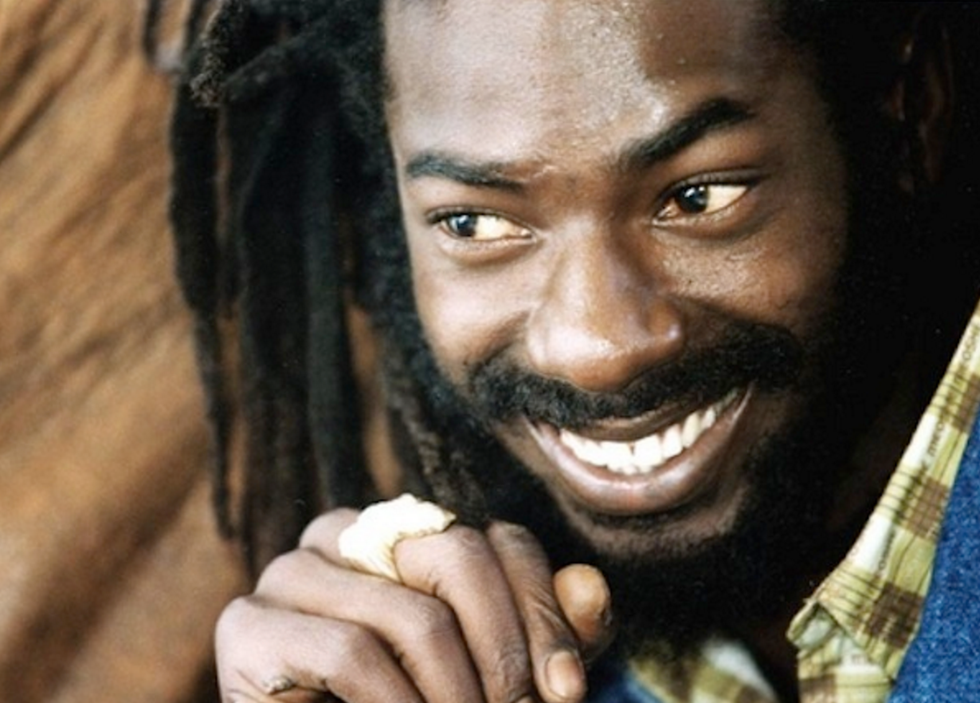
Released in the summer of 1995, Buju Banton’s "Til’ Shiloh" remains one of the most empowering and important dancehall reggae albums ever created. "Til’ Shiloh" not only brought Buju Banton and Jamaican culture to the forefront of international music, but it also brought the ideas of black empowerment, Rastafari, and pan-Africanism in a way unseen since Bob Marley. However, to adequately understand the impact of this album, it's necessary to understand both the socio-political context surrounding it and the meaning behind some of the most impactful songs on the album.
In the early 90s, Jamaican youth was under attack. An increase in violent crime leads to a surge of police raids and curfews that made it much harder for young people to cut loose and party. Not only did this increase tensions between the government and the youth, it also paralleled a larger cultural divide between the young and the old. Dancehall reggae, notorious for its slackness -- or use of sexually explicit language and activities -- came to dominate the clubs and parties of Jamaica. This sound stood in stark contrast to the political, religious and socially conscious nature of earlier reggae acts such as Bob Marley, Peter Tosh, and Jimmy Cliff. Buju Banton’s "Til’ Shiloh" combined dancehall production with the social consciousness of earlier reggae, attracting young and old alike.
In this turmoil, Buju Banton -- born Mark Anthony Myrie -- was a unique voice; however, he was hardly the first conscious dancehall reggae artist. Working alongside greats such as Garnett Silk, Pan Head, and Mickey Simpson -- of which, the latter two tragically became victims of gun violence -- Buju Banton’s influences for "Til’ Shiloh" can be clearly seen in the heartfelt lyrics and social commentary of these artists. So disturbed by their deaths, Buju Banton released the single “Murderer” in 1993 to critical acclaim. The third song of "Til’ Shiloh," “Murderer” is Buju Banton at his most vulnerable, both a scathing attack on the perpetrators of gun violence and a message of solidarity amongst its victims. It is this tone of solidarity in the face of pressure that defines Til’ Shiloh’s enduring greatness.
"Til’ Shiloh" begins with a three-song stride that thematically lays the foundation for the remainder of the album:
Strangest feeling I’m feeling
But Jah’s love we will always believe in
Though you may think my faith is in vain
Til Shiloh we chant Rastafari’s name
The first of these three, “Shiloh” acts as an invocation for black and Rastafari strength and unity. Here, Buju Banton does not explicitly say who he’s talking to or who he represents, but this ambiguity is precisely what allows the album to be so powerful. In leaving these characters ambiguous, he conveys both the diversity of black identity and the fundamental struggle against oppression within. These ideas are further articulated in the following song, but the Rastafari movement Banton evokes espouses great spiritual and emotional connection to Africa amongst all black people. Such an overt, political, religious -- and importantly, expositional -- message was not common of a dancehall reggae artist at the time. Listeners expecting traditional dancehall reggae, or even traditional Buju Banton, were in for quite a surprise.
The next song, “Til I’m Laid to Rest,” arguably one of the highest points of the album, is an even greater surprise.
Till I'm laid to rest, yes
Always be depressed
There's no life in the West-uh
I know the East is the best
All di propaganda dem spread
Tongues will haffi confess
What could a bad so bout di East
Everybody wants a piece
Africa fi Africans
Marcus Mosiah speak
Unification
Outnumber defeat
What a day when we walkin down
Redemption Street
Here, Buju Banton expands upon “Shiloh”, articulating the internal, emotional division between the West and the East -- the West signifying past colonial powers and the East representing the colonized countries. As experienced by countless Caribbean expats, life in the West is often a constant struggle against racism and classism that leaves many people lonely, depressed, and unconfident in themselves and their native countries. Buju Banton here suggests that one should look past the negativity perpetrated by the West and instead see strength, beauty, and empowerment in unity with one another. The drum-laden production of the song further celebrates this theme of pan-African unity; however, with events like the Rwanda genocide most certainly on the mind of he and his listeners, the message of" Til’ I’m Laid to Rest" resonates that much stronger.
“Murderer” closes the exposition of "Til’ Shiloh" with a promise of vindication. This idea of divine judgment and accountability coincides nicely with the division between East and West, and victim and victimizer established in these past songs. Here we see both the promise of redemption and the deference to a power outside of human flaw. On that note, "Til’ Shiloh" shines at its brightest rhetorical point.
From here, Buju Banton begins to unwind from the steady build -- never once losing his empowering voice -- but rather allowing listeners to sit back and continue to enjoy that special, nurturing blend of dancehall reggae he is famous for.

















