Last week, twenty-five people were arrested in the lobby of Trump Tower while protesting the President’s immigration and border control policies. Demonstrators chanted, “No raids, no wall!” before they were taken into police custody. From assemblies in Washington Square Park against the mistreatment of Islamic Americans to the highly publicized Women’s March on Wall Street, New York City has become the home of countless political demonstrations. And now it seems that even Broadway is joining in the protests. The Great White Way is staging its own kind of resistance against our government’s recent efforts to constrain democratic freedoms by electing Stephen Sondheim, one of musical theatre’s most recognizable and influential figures, to act as the voice for the current revolution.
Broadway’s spring season has seen the opening of three different Sondheim shows that are often regarded as the composer’s most divisive and challenging works. "Sunday in the Park With George", "Pacific Overtures", and "Sweeney Todd" all battled accusations of being too dark and complex for general audiences when they first opened over thirty years ago. Yet, within the past two months, these shows were thrust back into the public spotlight with a popular revival and generated runs of sold-out performances both on and off-Broadway. So what’s caused this sudden shift in public attitude towards gritty, philosophical theatre? Why are venues suddenly looking to put on all these stories now, when for decades they’ve opted for upbeat musical classics to draw in the crowds?
The answer may be that the issues these particular works explore such as dwindling free expression, foreign exploitation and extreme abuse of authority, are no longer of interest to only a niche group. While in the past people were quick to label Sondheim productions as purely academic and lacking “heart”, there is no other composer who could better capture the state of cynical cultural disillusionment and crisis of American identity that’s occurring all across the country.
Theatre is a powerful tool of political discussion because it merges real people and fiction together and attempts to offer new perspectives on how we see both our world and ourselves. As Sondheim writes in "Sunday in the Park with George", “There are only two worthwhile things you leave behind when you depart this world. Children and Art.” The reminder of our own lasting impact and the legacy we leave behind for the future is an especially important message for people to hear right now since for so many, the state of the world appears bleak and divided.
"Sunday" tells the story of the famous French artist George Seurat’s struggle to break from his own obsessive vision and connect to those around him. The 2017 production starring Jake Gyllenhaal at the Hudson Theatre masterfully highlights Seurat’s desperation for intimacy outside of his career, mirroring the character’s emotional turmoil in strategic lighting choices that shift the saturated primary colors of a paint canvas into cool, subdued shadows. Nowhere is this transfusion between the real and the fictional more apparent than in the final moments of Act 1 when the entire cast comes together and poses in a brilliant tableau, literally recreating the image of Seurat’s “A Sunday on La Grande Jatte”. When writing "Sunday", Sondheim wanted to explore how we use art to shape our own perspectives of the world and argued that the most impactful works of art are those that depict a true sense of humanity. With the Trump Administration’s ongoing threats to eliminate The National Endowment For The Arts, the need to protect the humanities and people’s ability to express themselves without bowing to the pressures of commerce is perhaps even greater now than it was during Seurat’s life in 19th century France
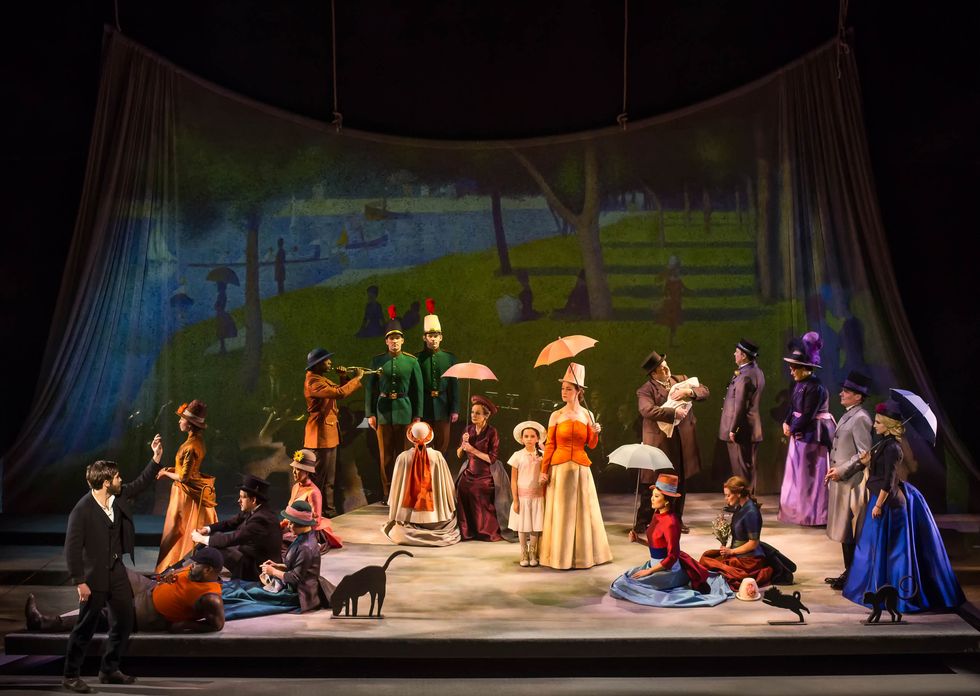
"Sunday in the Park" was initially panned by many theatergoers when it first opened in 1984 for being dull, overly-complex and pretentious before it was rescued from obscurity by respected New York Times theatre critic Frank Rich. However, the most recent revision of the show needs no torchbearer for crowds to immediately recognize its brilliance, with the Times saying that this version offers up something “deeper than love” and “closer to religious gratitude”. Just as "Sunday" demonstrates the power of art to imitate reality by bringing a painting to life, Broadway’s entire current Sondheim lineup serves as a theatrical reflection mirroring the present real-life disgruntled national consciousness and feelings of unrest under the Trump presidency.
The latest revival of "Pacific Overtures", which opened off-Broadway on April 5, examines the impact of the U.S. invasion of Japan and Westernization of East Asia during the mid-1900s from the perspective of a struggling Japanese fisherman and samurai. Rather than frame the events as a patriotic triumph, the musical presents a tragic look at the consequences of imperialism on the native Japanese citizens who struggle to watch as their cultural traditions and natural resources are violated and extorted by fleets of American sailors. The show both serves as a reminder of our nation’s unpleasant history and a harsh parallel to our unfortunate present involvement in the Middle East. As audiences listen to the thundering drums of the orchestrations as the atomic bomb drops over Hiroshima moments before the first curtain call, it’s not hard to imagine that they are also hearing echoes of the bomb strikes that rained down over Syria this past March.
This latest revival stars Star Trek alum George Takei, a lifetime civil rights activist who has led numerous campaigns throughout his career to spread awareness for both LGBT discrimination and the mistreatment endured by Japanese-Americans in internment camps during WWII. Takei is one of many notable names that have used Sondheim’s songs as a way to express their feelings about the current political climate. At a benefit for the Hillary Victory Fund last September, Barbra Streisand put her own spin on the well-known ballad “Send in the Clowns.” Streisand’s parody, deemed “Who Is This Clown?” took aim at then Republican nominee Donald Trump and featured lyrical jabs like: “Something’s amiss, I don’t approve/If he were running the free world, where would we move?”
Sondheim himself was one of 65 writers and artists who signed PEN America’s open letter to Donald Trump in February asking the President to rescind his executive order on immigration. The letter, which also included signatures from authors like Margaret Atwood and John Green, argued that the order “hindered the free flow of artists and thinkers and did so at a time when vibrant, open intercultural dialogue is indispensable in the fight against terror and oppression.”
While many may struggle at first to believe that a white 87-year-old successful Broadway lyricist can ever truly explain the fears and anger of the mistreated minority classes, Sondheim musicals have always strived to represent the voices of the outcast. As a creator, Sondheim has always valued integrity over profit or corporate approval. He’s repeatedly refused requests from critics and executives to stick to more comfortable Broadway conventions and just write a pretty “plain old hummable melody.” Instead, he presents audiences with challenging material that forces them to critically examine both their own understanding of the past and the larger American legacy.
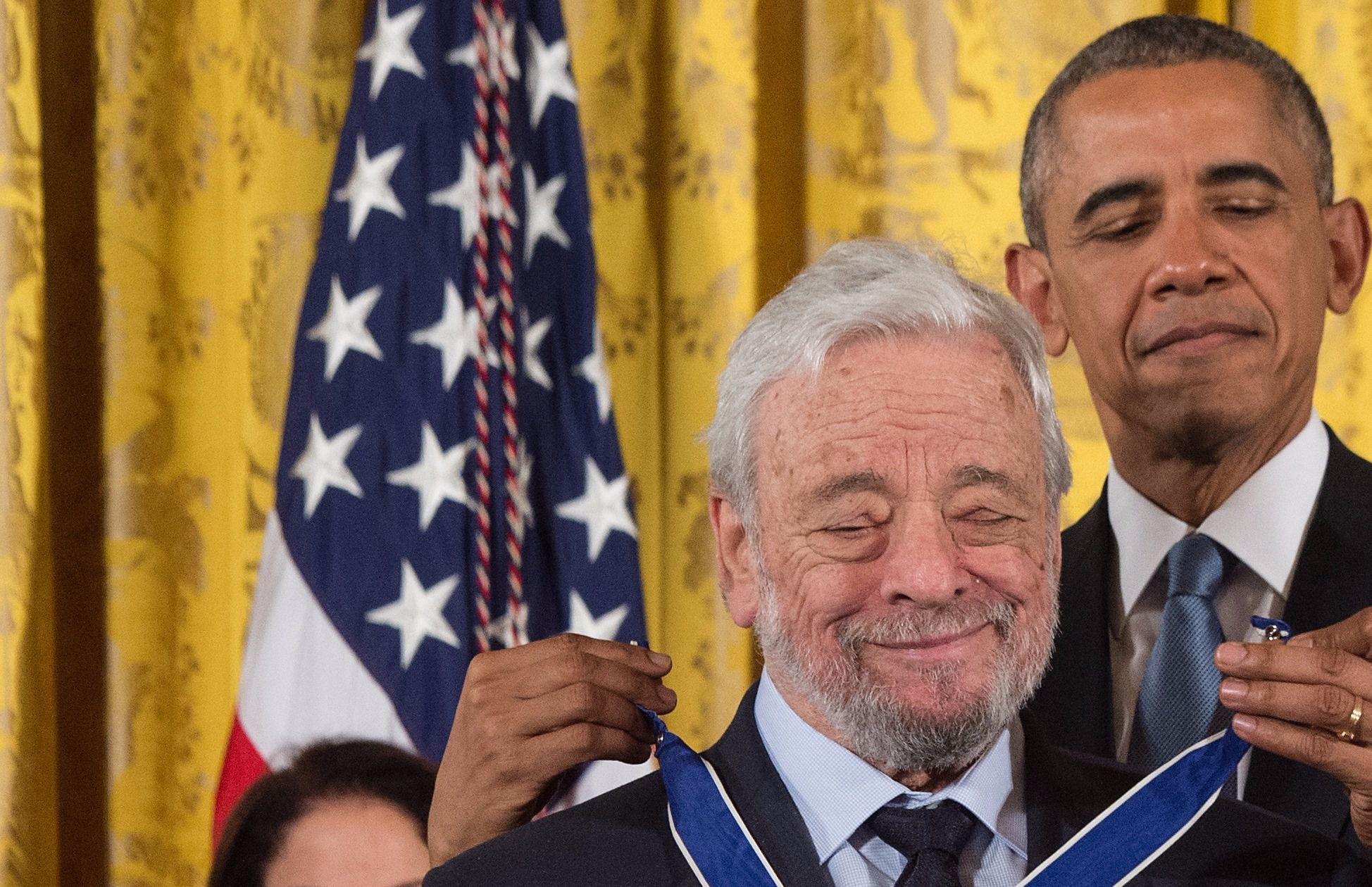
Despite claims that his shows are pretentious and inaccessible to those outside the “theatre elite,” Sondheim’s message usually deals with resisting authority and not succumbing to corporate greed. The main characters from "Sunday in the Park" as well as other works like "Merrily We Roll Along" are artists battling against wealthy executives telling them to dumb down and commercialize their work for higher profits. The antagonist in each of these shows feels that the public is only interested in art that is safe, pleasant, and uncomplicated. However, as both musicals go on to prove, this philosophy is both misguided and outdated. Today in society, many people are searching for something to watch that will allow them to better express and understand the anger and resentment they’re feeling about the wrongful actions they see taking place all around them.
Thankfully, the latest production of "Sweeney Todd", Sondheim’s dark comedy based on the Victorian myth of a vengeful murderous barber who turns his victims into meat pies, expertly satisfies viewers’ cravings to fight injustice. The latest production, which opened March 1st at the Barrow Theatre, also seeks to combine theatrical absurdity with real-life experience by cleverly bridging the gap between a fantasy version of Victorian London and our own 2017 America. This most recent revival transformed the entire theater into a fully operational pie shop where modern audiences can purchase authentic 19th-century meat pies before each performance. But the interactive menu might not be the only slice of life audiences take away after attending this particular "Sweeney" tale.

The show’s scriptwriter George Furth has said that he views "Sweeney Todd" as a story about the dangerous consequences of class inequality and abuses of power. Sweeney may be a madman and a murderer, but the show’s villain is undoubtedly the repugnant Judge Turpin, a corrupt legal official who uses his wealth and influence to get a man sent to prison in order to rape his wife. Turpin later kidnaps Sweeney’s young daughter Johanna and raises her as his ward, secretly lusting after her and later attempting to force her into marriage once she turns 15.
Hmm… so here we have a powerful political figure manipulating the justice system for his own gain, shamelessly objectifying women, and displaying a disturbing attraction towards his own daughter? It’s not difficult to see why watching Turpin on stage would leave a familiar…taste in some viewer’s mouths.
If Broadway continues on with this trend of theatrical protest it seems a safe bet that the next Sondheim show to be rebooted will be "Assassins", Sondheim’s carnival-style deconstruction of the American Dream told from the perspective of real-life presidential assassins could provide some secret catharsis for viewers as they watch a charming balladeer bait crowds with the taunt “Hey pal-feelin blue? Don’t know what to do? C’mere and kill a president…”
And while of course all the talk of assassination should stay firmly within the script, it certainly appears that New York and the rest of the world are desperate to start singing “Another National Anthem.”