

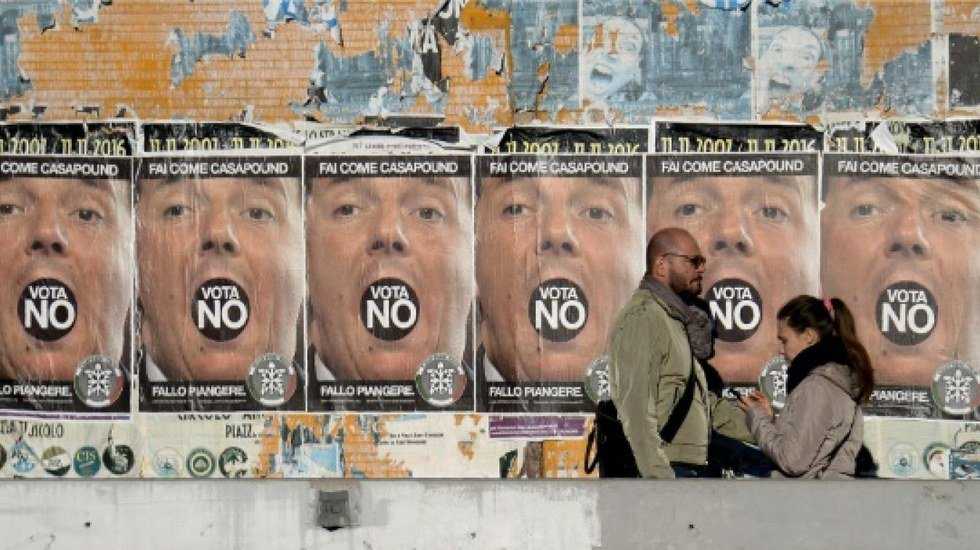
From Donald Trump's election to Brexit's passage, 2016 has been a year full of political shake ups, turning the most impossible events into the reality of the political landscape in which a politically inexperienced President will reside in the Oval Office and the British kingdom has finally withdrawn from the European Union. Within so short a period of time, the political leadership of two countries in Europe have stepped down, opening the opportunity for greater changes in national and international politics. On December fourth, yet again the fate of another nation could be at stake: the Italian government is holding a constitutional referendum, the prime minister's all-or-nothing initiative. If the referendum fails to pass, the President has already promised to resign his position.
A collection of constitutional reforms, the referendum, introduced by Matteo Renzi, will reduce the power of the regional government and the size of the Senate, dropping the membership to one third of its original size which would dramatically decrease the power of the legislative house. In addition, as the advocates of the referendum purport, the referendum could make the Italian administrative more efficient and productive, driving legislation through the government, which could, in turn, encourage economic improvements which Italy desperately needs.
Along with its growing national debt, Italy faces 36 per cent unemployment among young adults, and 97% of those holding jobs have not seen an increase in their salaries for nearly 10 years. And for nearly twenty years, Italy's GDP has not experienced much luck either, remaining relatively stagnate.
Unfortunately, with the ban on public polls since the 18th of November, it is extremely difficult to predict in which direction the public will lean, but the last polls show that those against the referendum were ahead. The Five Star Movement, one of Italy's political parties, has adamantly opposed the referendum's passage, comparing the policies to a "dictatorship", according The Telegraph.
CNN Opinion's predicts the consequences if the referendum falls short of support. Diplomatic relations with other nations will suffer; Italy will send an image of stubborn refusal to amend its bureaucracy which could eliminate potential relations and aid from other countries. Already, with its poor economic state, Italy could further sever the economy, and the Italian and European Central Banks recognize the wake of a "No" victory, saying that they are preparing to stabilize the markets after the votes. Mostly alarmingly, if the Prime Minister upholds his promise to leave if the referendum does not pass, political stability could likely ensue as different parties push their own candidate forth. In addition, a new Prime Minister could withdraw from the European Union, as a potential candidate from the Five Points Party has advocated.
On December fourth, the Italian public faces a decisive moment which could set up the second country to leave the EU, the beginning of the end of the Union. This could be the new "Brexit".