
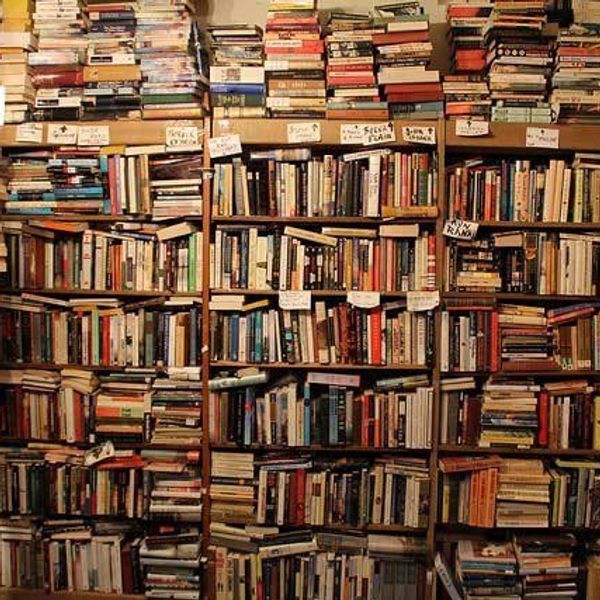
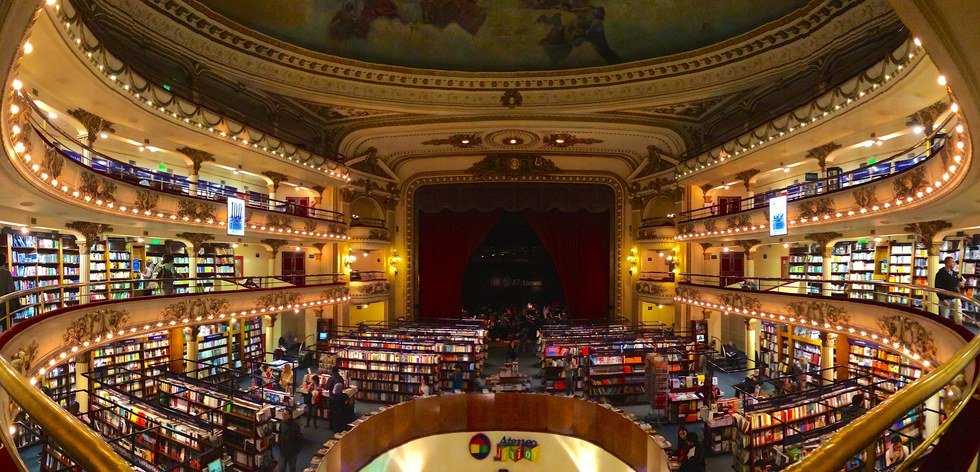
When prompted to envision a city steeped in literature, most people find their minds instinctually drifting toward gothic-spired London, the old stomping grounds of Shakespeare and Dickens. In reality, however, Buenos Aires, Argentina has the most bookstores per capita in the world, dwarfing London’s 10 to 100,000 bookstore-to-person ratio with a whopping 25 bookstores for every 100,000 people.
Renowned Argentine wordsmith Jorge Luis Borges once said, “Siempre imaginé que el Paraíso sería algún tipo de biblioteca” (I always imagined that paradise would be some type of library), and in a way, his beloved city has become just that. Declared 2011’s World Book Capital by UNESCO, Buenos Aires fervently boasts its literary roots, with words flowing from authors’ pens at the city’s interminable pace and finding their way into Buenos Aires’s every cobblestoned corner.
As an English major, creative writer, and lifelong bibliophile, I was overjoyed at the prospect of spending Summer 2015 immersed in such a thriving literary scene. Nothing, however, could have prepared me for my first subway ride, when I found myself sandwiched between two book jackets. In that moment, I learned one of Buenos Aires’s seemingly paradoxical quirks: it may be the city that literally never sleeps and yet, when not tangoing into the wee hours, its inhabitants always seem to have their noses in a book. Even in spots as bustling as the San Telmo Sunday market, amongst trinkets and mate, there are always bookstands peeking out. And not only are there stands, but there are buyers. The demand for books in Buenos Aires is as refreshing as the city’s name itself. It reminds us that Argentina is a country embedded in culture, and that its residents insist on eternalizing their city—both the good and bad—through words, the immortal extensions of man. As Borges once said, “When writers die they become books, which is, after all, not too bad an incarnation.”
During my time in Buenos Aires, I ducked in and out of more bookstores than I could possibly count. Perhaps my favorite experience with literature in Argentina, however, was something entirely serendipitous.
While browsing through titles at a street fair on Avenida Santa Fe one afternoon, I stumbled upon a mural that literally stopped me in my tracks:
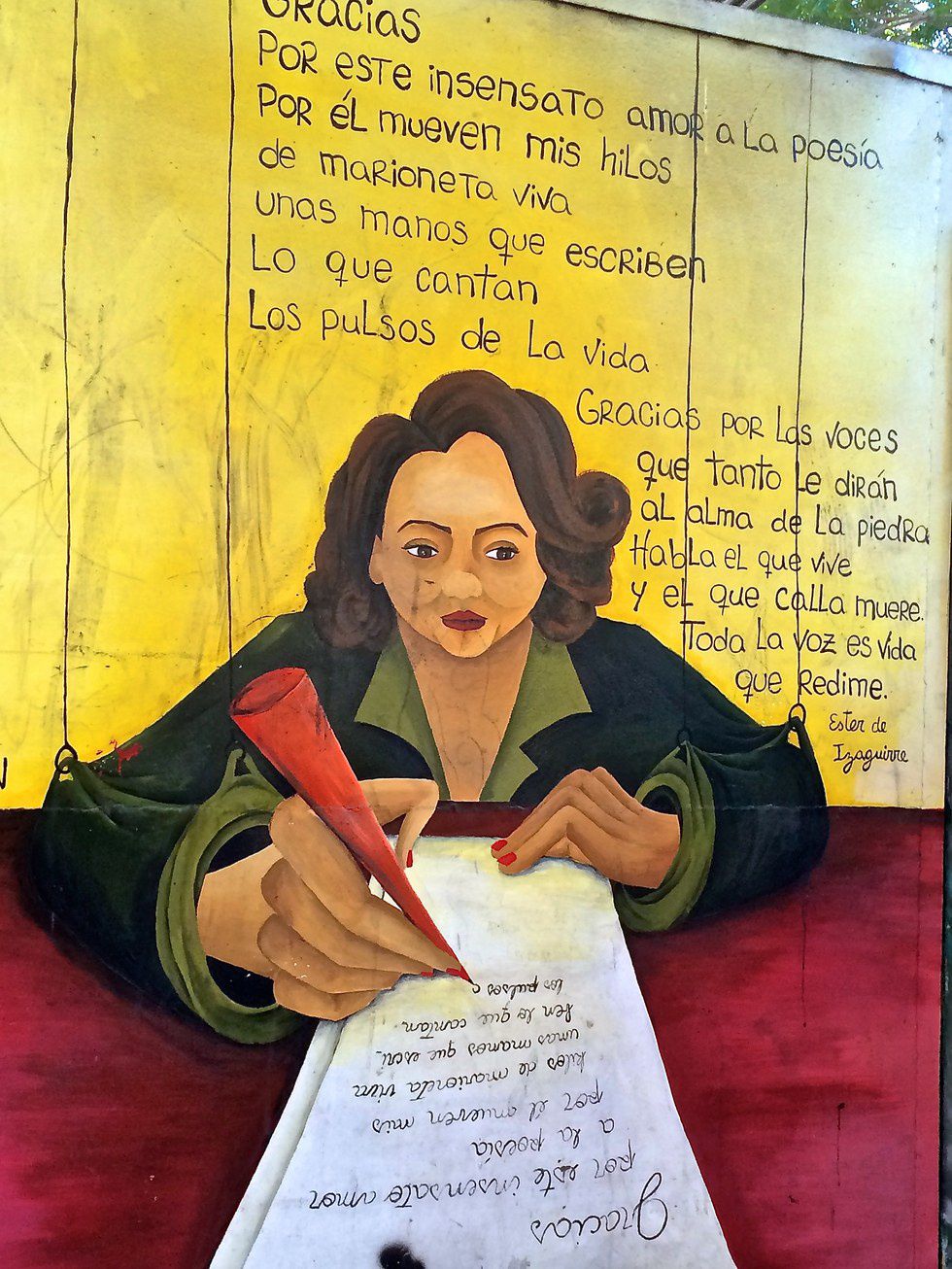
As I looked from the work of street art to the right and left, where there lay stacks of overflowing paperbacks, I was hit by the transformative power of literature. The poem that graced the wall wasn’t penned by a literary great like Borges or Julio Cortázar, but rather by a lesser-known poet named Ester de Izaguirre. This, however, was perhaps what moved me the most. Amidst the chaos of the street fair, the mural’s message entranced me: one penned by a woman who writes not out of aspiration, but simply because it is her nature—someone driven solely by words that, like blood, course fervently through her veins. And though her words may not be recited by heart or reprinted for global distribution, among the hustle and bustle of the city, they spoke directly to me.
That’s the magic of literature in Buenos Aires.