I don't like the idea of boycotting books based on content.
The same goes for movies, as long as cast and crew were treated humanely. And if a film makes you think deeply, that is not a bad thing.
Art is a way to grapple with tough topics and challenge readers to think from a different perspective. Stories have the power to influence your thinking. Plus, there's freedom of speech.
Problematic ideas should not be muted, but addressed.
That being said, "Me Before You" is a bit of a problem.
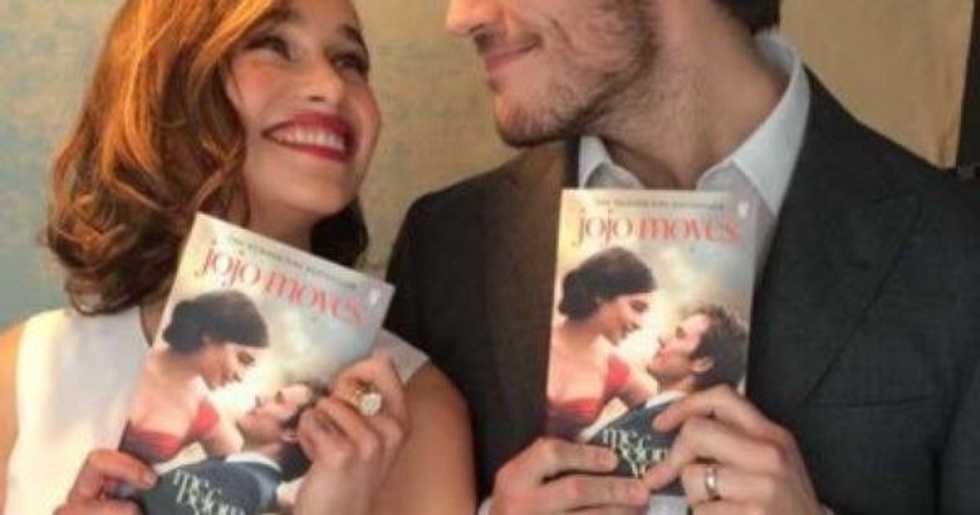
The film, based on a book, is a fabricated romance between two 20/30 somethings, Louisa Clark, a chipper, upbeat caretaker and Will Traynor, the cynical young man she looks after, who was left paralyzed after a motorcycle accident. She finds out that Will has plans to go to Switzerland to kill himself legally.
Spoiler: He goes through with those plans, with family and Louisa by his side, and is euthanized.
A "heartwarming love story," WarnerBros says.
Right.
The story both applauds and mourns Will's act, painting it as selfless and selfish, advocating for the right to choose assisted suicide.
I first heard of Me Before You from posts of friends sharing the trailer on Facebook excitedly, and Instagram posts featuring shots of movie tickets and the book. Then I saw #MeBeforeEuthanasia and #MeBeforeAbleism take off on Twitter, valid complaints from the disabled community about the ending.
So here are my thoughts regarding the controversy, quotes are from the book unless otherwise specified.
To writers who write stories -
Please stop romanticizing suicide
"He tilted his head sideways and gazed at me. His voice was soft, his eyes gentle. 'Louisa, nothing was ever going to change my mind.'"
Depression isn't lovely or cute or tragically romantic. Depression is desensitizing, isolating, and incendiary. Suicide has been romanticized by storytellers for years, from modern Tumblr posts to 20th-century poetry to Romeo and Juliet. I get it, you want to write cathartic stories that are interesting and captivating. But suicide is not a plot device to take lightly.
The same goes with utilizing any disability such as quadriplegia as a trope. Respect the voices of people who have the condition, and the weight of reality in your imaginary situation.
To those paralyzed or in a wheelchair -
Disability does not inhibit you from living a spectacular life.
You probably already know this, but apparently the media has some misconceptions.
"He can't move. Of course he's miserable," Louisa's sister says. People are miserable for many reasons. Conventional mobility is not an indicator of happiness.
I am just going to go ahead and apologize for this book/movie. I'd hate if seeing a film like this makes you feel misunderstood, or unwanted. I hope you're comfortable in your own skin and know that you have an abundance of life to offer.
“I’ve worked tirelessly to show people that being quadriplegic isn’t the end of your life, it’s another beginning,” said Francesco Clark, whose book, Walking Papers, was mentioned in the movie without his consent. "I feel compelled to express that I am angry to be unwittingly associated with a storyline that suggests the only option for those who sustain injuries like mine is death.”
In response to the film, famous speaker Jodi Eareckson Tada, also quadriplegic, released a statement, saying, "I can say for certain that my husband and I have a deep and satisfying relationship, mostly because of – not in spite of – my severe disability."
To those whose loved one has struggled with depression -
It's not your responsibility to be the reason someone wakes up each morning
"Sometimes, Clark, you are pretty much the only thing that makes me want to get up in the morning," Will says to Louisa.
Louisa makes it her mission to teach Will how to love to live again. Her intentions are good. I admire couples that take on depression together. Supporting friends struggling through thoughts of suicide is important. But sometimes, the burden you place on yourself to be the hero does more harm than good. You're no one's savior, but you can be a friend. I think this might be one thing the story gets somewhat right. However, that does not justify assisting with suicide in any way.
To those who have had suicidal thoughts -
You are not bettering anyone's life by killing yourself.
"I don’t want you to be tied to me," Will explains his desire to die after Louisa says she loves him. "I don’t want you to miss out on all the things someone else could give you."
That's dangerous. Depression is different for everyone, but common lines of thinking include: no one would miss me if I'm gone, I'm better off dead, I'd be doing the world a favor, etc.
For Will, near the end of the film he says, "The world will be a better place without me." He's wrong.
Depression dulls your perception of reality and personal value, making it hard for you to believe how loved you truly are.
To those who like the book or movie -
It's okay to like something that other people don't.
It's just a story anyway.
What matters is life, and that you respect and don't pity those physically different from you.
That you don't let sensationalized stories cloud your view of depression.
I challenge you to form real friendships with real people, whether we deal with a disability or depression or whatever tough stuff life throws our way.
Oh and one more thing.
I have a confession to make.
I only skim-read the book. I tried to stomach it all for the sake of this article, But I couldn't really.
It may be the extreme sappiness.
Or maybe it's the idea of accompanying a valuable human being to a suicide clinic.