

When I went grocery shopping at Price Chopper with my parents this week, I couldn’t help but notice distinct differences in our shopping habits now that I buy food for myself. My mom reached for a head of lettuce, leaving me to sigh loudly as an expression of my disapproval because I knew Dulli from Birdsfoot Farm offers a great salad green mix with signature fresh dill. Watching her pick between the six shelves of jams and jellies, I again shook my head knowing Mary-Ellen from Circle G cans the best strawberry-rhubarb jelly in St. Lawrence County. Then, I stopped myself. Was I becoming a food snob?
“Voting with your forks,” as Michael Pollan says, or changing the consumers shopping habits seems to be the only way we can alter the American style of eating. After all, large-scale farmers produce what the government subsidies (corn rather than broccoli, soy rather than kale). When one goes to the supermarket, the consumer is essentially foraging for energy. So naturally when one buys to keep essentially alive, stretching food dollars is a top priority. For example, one dollar spent in the processed section of the grocery store can offer 1200 calories. Conversely, spending that same dollar in the produce perimeter will get a shopper 250 calories worth of carrots. As a mother, feeding children snack packs after soccer practice then is much cheaper compared to a bag of carrots with a scoop of (organic) peanut butter. The decision is a no-brainer.
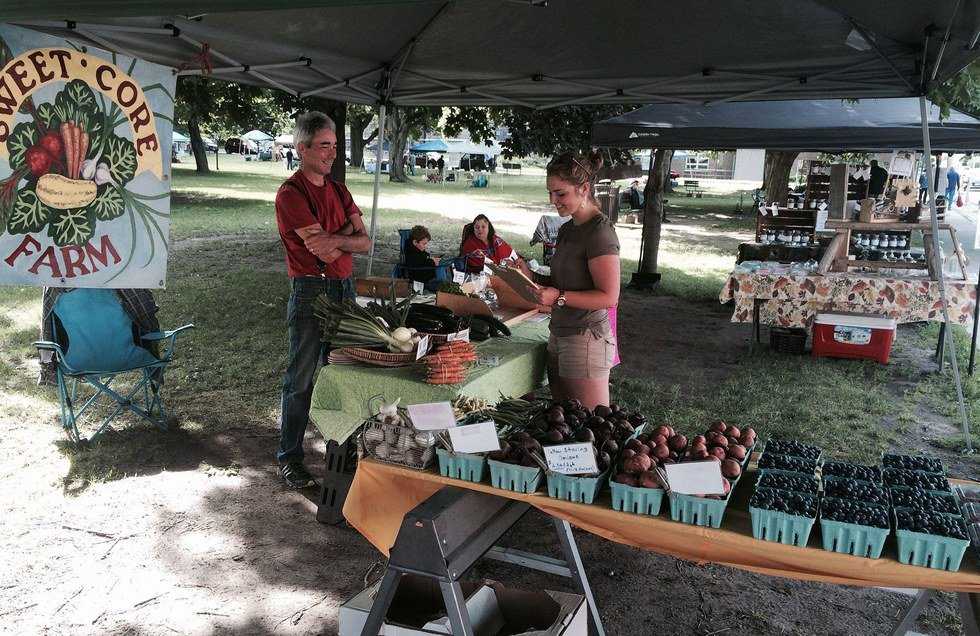
I thought back to my visit to Lay-Z Duck farm last week. Tragically, a lot of kids in St. Lawrence County don’t understand what real fruits and vegetables are as an upshot of opportunity expenditures. Not too long ago, owner Wendy brought carrots to her grandson’s sporting event. She offered the snack to other children, but they declined, claiming her carrots didn’t taste as good as the orange Cheez-its or fruit snacks they are typically accustomed to for a snack. Wendy and Phil have reared their grandson as a locavore. Every Friday, Wendy takes him to the Canton Farmers Market. He always makes a pit stop to see Jean Tupper for her famous homemade doughnuts, and he gets excited to pick their produce for the week. His taste buds salivate for a fresh vegetable. “Unless you have been raised to appreciate fruits and vegetables, you just don’t know,” Wendy commented.
Financial restrictions prevent many customers from purchasing local products, like Wendy's organic whole chicken for $3/lb. This cost is higher if the customer desires different cuts. For Wendy, her bottom line of healthy food outweighs the few extra cents. “I would rather pay full price and eat half a pound of high-quality food (fruits and vegetables), than three pounds of the nutritionally lacking counterpart.” I couldn't agree more.
So wait a second, are Wendy and I considered food elitists? The label, often used with a negative connotation, describes someone who strongly advocates for a return to the healthy basics of buying fresh, local food. The lifestyle can be expensive and largely unrealistic for many, a group that once included myself. Yet, I can't argue with a family feeding five mouths that $0.87 warehouse caged chicken is substantially cheaper. Or my mom, as she grabs two quarts of Price Chopper strawberries because she's thinking of how to feed my growing brother and his friend this week when we are camping with little cold storage. So how can we support the local movement without putting up a wall between the public and their choices for healthier living, which includes cost and accessibility?
Here's my final conclusion, (because the thought of being a food elitist really bothers me) eating well does not make a person a food elitist, snob or some negative variation of that. Eating healthy is a right to all humans. This summer I work for a nonprofit with a mission to do just that in St. Lawrence County. I've come to learn the issues people face when making choices at the grocery store. America's deficiency of healthy food is literally starving our economy. The issue needs to be addressed one bite at a time as policy makers right this imbalance between cheap processed food v. more costly nutritious food. As individuals, we can show the demand for change one meal at a time--by shopping locally and by purchasing raw foods.