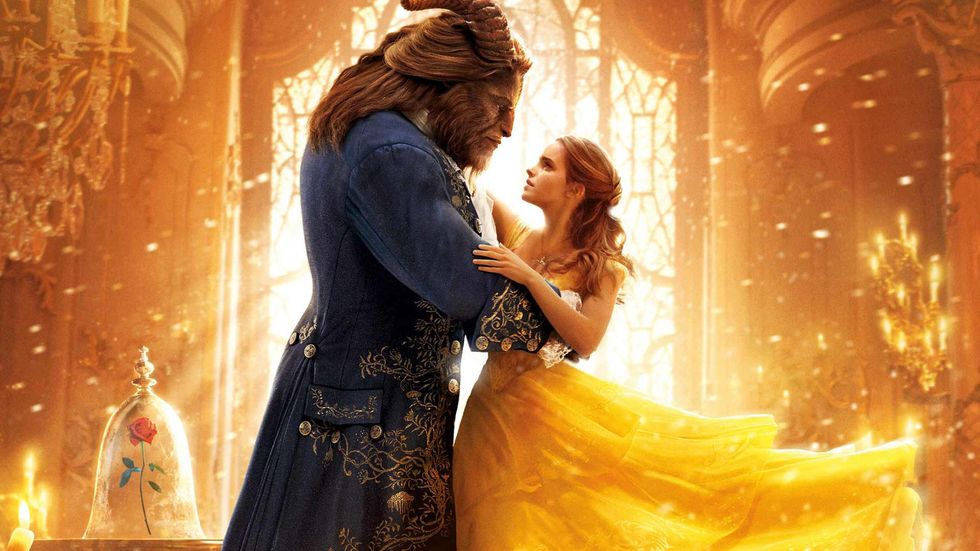
The stories a culture tells says a lot about the culture that tells them. I saw the new version of Beauty and the Beast recently, and so the reflection of the culture it represents is on my mind.
The 1991 animated rendition of Beauty and the Beast encapsulated its culture effectively in its day, and its descendant does the same for 2017. In contrast especially, the progression of America is reflected in these movies.
One major issue brought up by critics of the earlier movie is whether or not Belle is subject to Stockholm Syndrome as she falls in love with the Beast while held captive by him. This is an issue the newer version resolves by highlighting Belle's choice in saving the Beast from the wolves.
At one point, the Beast asks Belle if she was happy at the castle to which she responds with the line, "Can anyone be happy where they are not free?" Later, the Beast proves his internal change and love for Belle by letting her leave to save her father with no strings attached.
These and other changes remove the problem of Stockholm Syndrome by giving Belle more agency. In so doing, the creators of the new rendition of Beauty and the Beast introduce another concept that the previous one made advances toward but did not perfect: the disregard of gender stereotyping.
True to the classic “tale as old as time,” Belle falls in love with the Beast, who reveals himself to be a handsome prince in disguise. This setup seems stereotypical at first glance, but the way in which the story unfolds proves otherwise.
In the new version, Belle’s fearlessness is highlighted more prominently than in past renditions, and the Beast develops more of a soft side. Early in their relationship, the Beast mocks Belle for enjoying Romeo and Juliet, but later in the movie is shown reading about Guinevere and Lancelot. Indeed, Belle and the Beast’s shared love of books and differing opinions bring them together in this retelling, shifting the focus off of their genders and throwing it onto their personalities.
Yet another aspect of this rendition that reflects the culture that created it lies in the backstories and decisions of the characters. The Beast is revealed as having been abused as a child, and Belle’s mother is revealed as having died during a plague. While this may have provided the perfect excuse for Belle to “fix” the Beast’s behavior, she has no ulterior motive for helping him, and the change of heart is ultimately left to him. Letting Belle go serves as the culmination of that internal change.
The Beast’s father harmed his son, and it was the Beast himself who rejected that lifestyle and grew into a healthier one. Love as motivation for change on the Beast’s part reminds me personally of Pride and Prejudice’s Mr. Darcy, where Elizabeth provides Mr. Darcy with the motivation needed to overcome bad behavior and grow into a worthy suitor.
Much, much publicity and discourse has surrounded the addition of a gay character in this story in the form of LeFou. To me, this too is a change in Beauty and the Beast that accurately reflects the changes our culture has undergone since 1991.
Regardless of personal stance on LGBTQ+ individuals, they have been underrepresented throughout most media history, and in recent years, that tide has begun to turn. The inclusion of a gay character draws attention to this cultural shift, and the mostly subtle nature of that character reflects the gradual nature of that shift.
The gender equality, lack of Stockholm Syndrome, personal agency in behavior change and inclusion of a gay character are some of the ways in which this rendition of Beauty and the Beast encapsulates the culture of 2017 America. While some people may not agree with all of the changes made to the story, their points of contention with the movie correlate to their points of contention with our culture as a whole.
Stories are not at their best when attempting to appease all viewers at once. Rather, I find that they become enriched by showcasing the arguments of the time. Personally, I found some changes that I adamantly applaud and others that I disagree with.
Rarely do people find a collection of opinions that they either entirely agree with or entirely disagree with. More common by far is to find an assortment, and hold differing opinions on each aspect. Beauty and the Beast is no different, and I respect this new rendition as both a cultural study and a well-executed movie.