Even though my brother made the family subscription to Netflix a long time ago, I usually don’t watch movies on it on my own, unless someone close to me recommends me one. Recently, one of my professors told me to check out "Beasts of No Nation" and how it was a brilliant piece of work, and so I wanted to check it out for myself.
"Beasts of No Nation," based on the novel by Uzodinma Iweala, was written, directed and produced by Cary Joji Fukanaga, and released on Netflix on Oct. 16. I guess I should just state here that this isn’t your go-to movie to watch when you’re looking for laughs or mindless entertainment. In reality, "Beasts of No Nation" doesn’t do any of those things…in fact, the story and the larger issues enveloped in the movie might linger in your mind for quite a while. The best word I can think of to describe this film is sobering—definitely not a happy movie, but not a completely sad story. There’s shreds of hope in the story, moments of unwavering faith. It is an unyielding story about one boy slowly losing his innocence and sense of self as he joins a faction of child soldiers in an unnamed West African country torn by civil war.
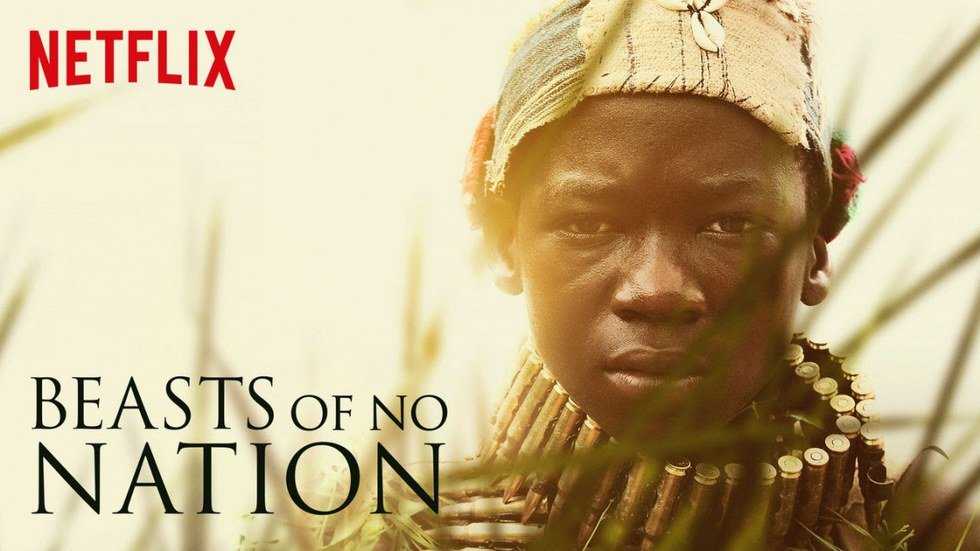
Every actor of the whole cast acted amazing, but Idris Elba and Abraham Attah were one of a kind. Elba plays the Commandant, a domineering, cunning and yet charismatic leader who recruits 12-year-old Agu into his faction after Agu’s father and older brother were slain by the rebels. Agu is played by Abraham Attah, who honestly was hands down the real center of this story. His performance is raw, real and beautiful in every single way, from the narrations he makes during the movie, to his smiles, his laughs, his cries. It genuinely felt like I was watching Agu as a real person, not as a portrayed character out of a novel.
The scoring of the film is simple and subdued, yet enhances every single scene. It’s not your typical overbearing Hollywood soundtrack with sad tunes that you might expect from a film like this. Instead, director Fukunaga uses his selection of sounds coordinated with specific scenes to let them speak for themselves.
The film depicts the terrifying yet all-too-real issue of child soldiers in Africa, an issue that I personally have not looked into much in the past before watching this. The UN estimated that up to 6,000 children were involved in the ongoing conflict in the Central African Republic, with all parties involved recruiting children whenever possible. It makes sense why they would recruit children to fight as soldiers, as the Commandant himself pointed out in the film—they have working hands and sharp eyes, and in the midst of all the turmoil and conflict they will easily do as they're told by someone who will promise them food, shelter and care.
Yet, while "Beasts of No Nation" revolves around that particular issue, there’s a sense of ambiguity in the film that people might criticize, but I personally enjoyed, and thought it enhanced the film. The messages in this film aren’t political—the country Agu is fighting in isn’t even named, and the names of the various rebel factions and government are vague and barely referenced, as if to say that they are unimportant in the larger scheme of things. This isn’t concerned about how it will resonate with the audience, but more so on telling Agu’s story, which made it all the more powerful and real.
I would talk about the rest of the plot, but it would be better to watch it for yourself. I can’t really describe the transition Agu goes through from being an innocent boy living his life to slowly have it disintegrate right before him when he feels himself become something completely unknown. It's something only you should witness for yourself.
As for a rating of some sort, I don’t really want to give it one. Again, this isn’t your typical Hollywood film and to say I merely “enjoyed” the experience wouldn’t be quite right. The film doesn’t sugarcoat things, nor mean to please you, and it’s evident throughout. Yes, I loved it, but I can’t say that I’ve “enjoyed” the story—it was raw and brutal and left me in tears in various scenes. At the same time, it’s one that really resonated with me, that beautifully and brilliantly told a powerful story. And for Netflix’s first original production, that was a great move.