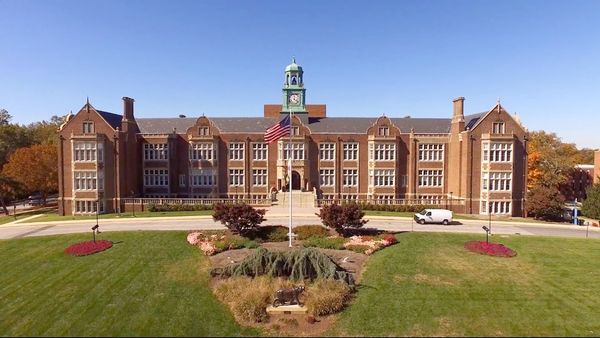


On the first day of my freshman orientation, hundreds of parents and nervous 18-year-olds shuffled into the musty campus church and took their seats on the grimy pews, waiting for convocation to begin. I squeezed in between the tall brunette who lived a few doors down from me and a chatty redhead who instantly struck up a conversation as we waited for the monotonous speeches to begin. Being that we were sitting in a church at a Catholic school, the topic of religion soon breached our already uncomfortable small talk. My somewhat sheepish admission that I do not consider myself to be Catholic, or even religious in the slightest, was instantly met with mutual feelings by one of the two people I was sat between. By the other, however, the response was, “Why did you even come to this school, then?”
That day was the first time that I experienced exclusion from the “sense of community” that everyone raves about at Saint Michael’s College. It would not be the last. A mere one week later, I took my seat at a round table with the 12 other students who were in my peace and justice class. My teacher paced in circles around us, giving an impassioned lecture through his heavy Ghanaian accent. Noticing that we were all zoning out, staring at other students as they crunched through the falling leaves outside the window and fiddling with our phones underneath the table, he stopped to pose a question: “How many of you think that a person can be moral without being religious?” I was the only person in the class to raise my hand. In a state of astonishment, I found myself desperately defending a part of myself in the face of wide-eyed teenagers and a college professor whose expression had quickly turned from curiosity to disapproval.
You are only a part of a community if you fit the mold, and the tighter-knit the community, the more the exclusion stings when you experience it. Being non-religious at my school made me different, and certainly not in a way that was valued by the majority of my peers. Luckily I am not the only one in my position, and regardless, most people meet me with less judgment than the girl sitting next to me at convocation. Ironically and probably unintentionally, my school has led me to grow far more comfortable in my beliefs.
Every time that I am challenged, I come back with slightly less shame. I also face such confrontations with less defensiveness. Other people do not have to agree with my perspective in order for my views to be valid. When my morality was questioned by my class on the first week of freshman year, I started questioning it myself. Now, however, I feel well equipped with a set of values that have been chosen and nurtured by me, without the Bible. Despite the hopes of my family and professors, there was no conversion, no religious awakening within me. Still, in a sort of backwards way, attending Catholic school as a non-religious person has strengthened my character, and though the road was filled with far too many awkward and borderline offensive moments, I would do it all again if I could.