
A while back, Scarlett Johansson was announced to be the protagonist in a live-action adaption of the anime movie Ghost in the Shell. The protagonist, Major Motoko Kusanagi, is the assault team leader for Public Security Section 9 in Japan, which makes her Japanese. Because of the casting selection of Johansson to play a role of an Asian –not to mention the allegations that the filmmakers were going to use CGI to make her look “more Asian” -- the controversy brought a lot of criticism by several fans and other members of the filmmaking industry for the usage of whitewashing.
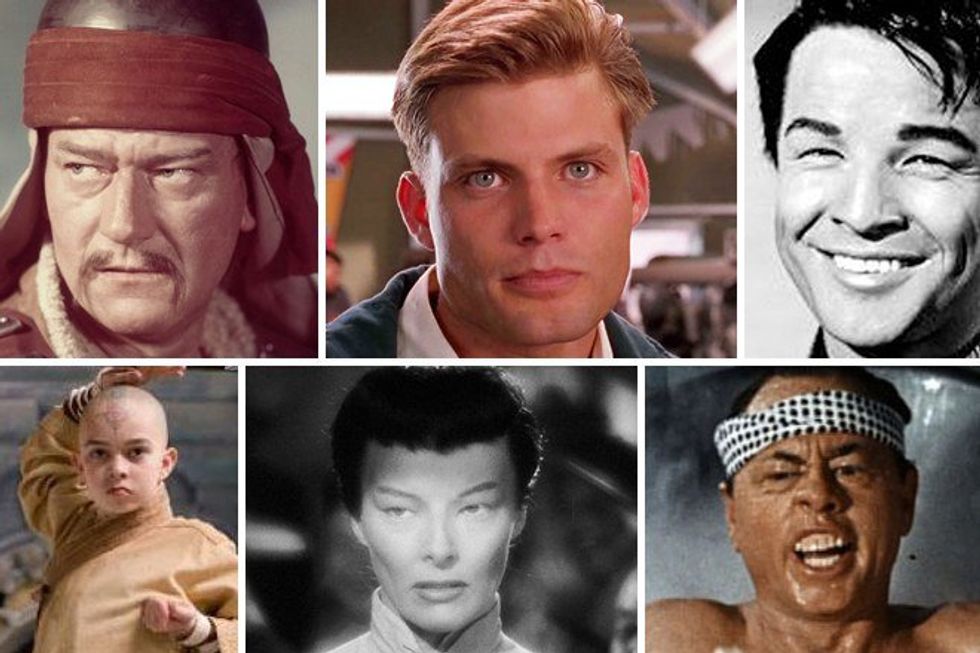
Whitewashing is when white actors or actresses are cast into non-white character roles, and it has been prevalent for decades. The various uses of whitewashing throughout film history has ranged from the casting of Emma Stone as someone of half-Asian/Hawaiian descent in Aloha to the infamous casting of Mickey Rooney as a stereotypical Japanese landlord in Breakfast at Tiffany's. Several specific items, like yellow face, fall under the umbrella which is whitewashing.
This form of casting has been prominent since the early 1900s, when racism was more prevalent and institutionalized. According to Vox, several discriminating features, actions and behaviors are dated back to around that time, but are repeated several times in recent history, like the use of brown face for Indian character from the 1940s to 1980s to now (especially with Ashton Kutcher dressing up as a Bollywood director searching for "the most delicious thing on the planet" in a Pop Chips commercial).
Because of such methods in American media being used either to get more funding by getting big actors or to exaggerate racial stereotyping, very few opportunities exist for many Asian-American actors on the big screen. As a result, many Asian-American viewers, mainly the youth, lack a character which they can relate or look up to. For me at a young age, I rarely saw any actual Indian characters who were neither stereotypical nor whitewashed; as a result, I never really felt a sense of pride for my Indian identity because there was not really a person there who I could relate to.
While, even now in the 21st century, many shows and films do still perpetuate this century-old method of casting, many new shows and channels are striving to break the Asian stereotypes and embrace its culture. On TV, the most recent show that does so is Quantico, which stars Priyanka Chopra, a well-known Bollywood actress, as an FBI agent searching for a terrorist who has framed her for a recent strike in New York. In animation, Avatar: The Last Airbender embraces several Asian cultures in the show, like lining up the four different nations to different Asian regions.
Even popular Youtube channels are questioning the status quo on whitewashing and stereotyping. Wong Fu Productions, for example, created a parody video called "Saved by the Bell: The Movie," which discusses the casting of all-Asian actors for their adaptation of the series, and a sketch called "Kung Fooled," which depicts how Asians can pass off as martial arts experts because of their stereotypes from movies and TV shows.
Even with the new breakthroughs in progress in the film industry, discriminations like whitewashing need to end in media. Many of these casting methods are from a time of racism and discrimination, so to have them now shows some hints of regression in Hollywood.
















