As a passionate movie-goer, I consider the Academy Awards a pretty big night. I pay attention to them every year. I make sure that movies that have won Best Picture are on my Netflix Queue. This year’s Academy Awards were different. The second time in a row to be called #OscarsSoWhite, the Academy was called out for having racial bias. It also struck a larger conversation: where is the diversity in Hollywood?
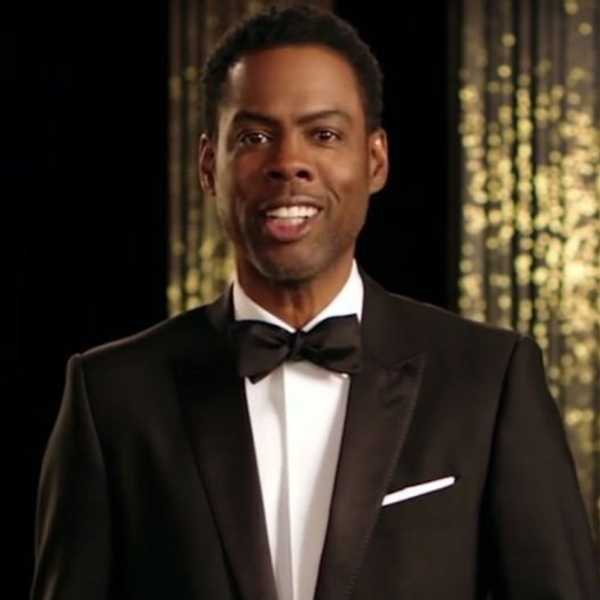
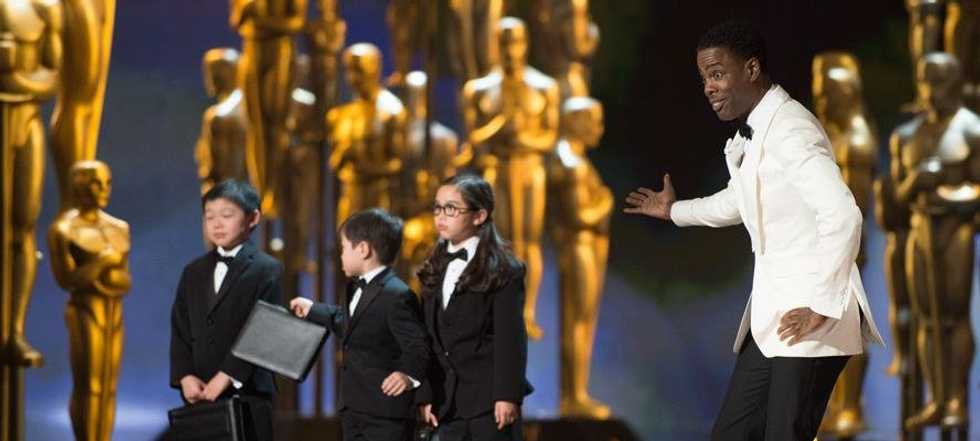
Chris Rock hosted Oscar night this year, and his opening monologue certainly lived up to its hype. Rock addressed that he is the black host on a night where all 20 of the nominees for actors/actresses categories are white. He also joked about Jada Pinkett-Smith boycotting the Oscars. However, the conversation was centered around the black and white binary. There was almost no mention of Asians or Latinos. As The Washington Post put it: “There was a lack of diversity in the lack of diversity.” Rock only mentioned Asians once. He brought three Asian children onto the stage. They were all posed as “bankers” from finance firm PricewaterhouseCoopers. Rock went on to make a joke about how smart Asians are and how these children are the ones building our phones. Um...what? As an Asian American, I see that as a problem.
In the past 25 years, no Asian Americans were nominated for an Academy Award. Only three Asians were nominated: Ken Watanabe and Rinko Kikuchi of Japan and Shoreh Aghdashloo of Iran. As a Japanese-American woman in my 20s, it’s getting harder and harder to watch current movies. I don’t see a lot of Asian or Asian American women in Hollywood. It makes me feel even more dislocated in my society. In America, I am labelled as Asian because of how I look. I get a lot of micro-aggressive comments when I meet people for the first time. “Do you speak English?” and “Where are you from?” are frequent questions. I feel like the token Asian friend in my non-Japanese-American friend groups. In Japan, I am not Japanese enough. I can speak and understand English fluently. I look like an outsider since apparently I have the presence of someone who hasn’t grown up in Japan. I’m too Americanized, at least that’s what my Japanese friends tell me.
If both of these cultures that I am from are seeing me as someone who doesn’t belong, where do I actually belong?
I struggle with participating in conversations about race. I feel that I never get to use my own voice in these conversations because I am mostly trying to ally myself with other minorities and the conversations seem to lean towards that black and white binary. I wish that the media presented to me would allow me to feel a little more included in popular culture.
I think about my own future in the workplace. How will I be viewed? If I speak out and voice my own opinions, will I feel obligated to apologize just for being assertive and honest? Even thinking these thoughts frustrates me. Why should I feel anxious in this way? Why should I question my own thoughts or actions when I am just doing my job?
It was only recently that I began feeling like my feelings were being finally publicly recognized. In "Master of None", Aziz Ansari’s new show, when Ansari’s character goes in for auditions, he is always asked to put on an Indian accent. The New York Times published an article called “What it’s really like to work in Hollywood (*if you’re not a straight white man.)” Ken Jeong was warned that he wouldn’t have a future in Hollywood, even though he got an A in his acting class at U.C.L.A. Mindy Kaling related that she wrote a pilot with her best friend called “Mindy and Brenda” based on their experiences. Even though Kaling had auditioned to play the part she had written for herself, they kept auditions open for Indian-American actresses to Middle Eastern actresses, and then eventually white actresses. Kaling also talks about how she’ll feel alien to say “‘I need this to happen, because it’s my show.’” She jokes that she’ll send bagels to her staff, offering, “Please forgive me for asserting myself in a small way.”
There was a big win for Latinos in Hollywood at the Academy Awards. Alejandro González Iñárritu won his second Oscar in a row. In his speech for Best Director, Iñárritu says: “What a great opportunity for our generation, to really liberate yourself from all prejudice and this tribal thinking and make sure for once and forever, the color of skin becomes as irrelevant as the length of our hair.” This resonated with me so much. I can only hope that this will become true.
In the Times article, Mindy Kaling writes, “my role is not just artist. It’s also activist because of the way I look.” After trying to find a role model in Hollywood for so long, I finally found her. I feel like I have an obligation to be an activist as an Asian American, and as a woman. Watch out world, here I come. (Uh-oh, did I just assert myself too much?)
References (and suggestions for further reading)
“If the Oscars were all about diversity, why the crude Asian joke?” by Jessica Contrera The Washington Post
“These charts explain how Oscars diversity is way more complicated than you think” by Dan Zak The Washington Post
“What it’s really like to work in Hollywood (*if you’re not a straight white man.)” by Melena Ryzik The New York Times
Aziz Ansari stars in Master Of None on Netflix. Go watch it.