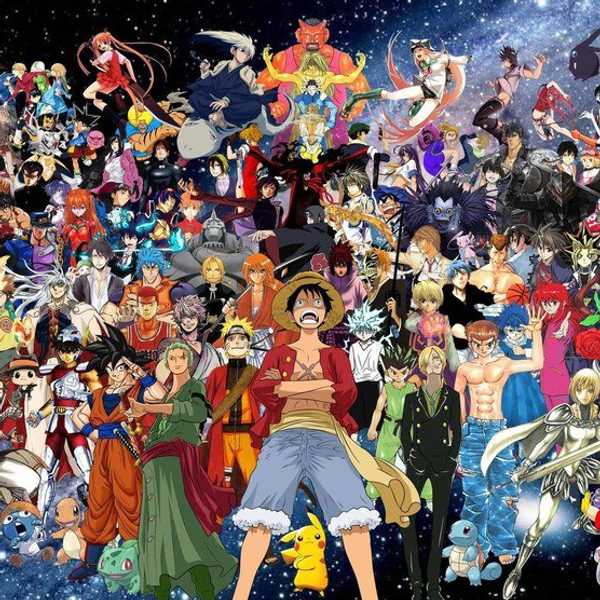
When you hear the word anime, what comes to mind? If you are like most people, you probably think anime is just some odd Japanese version of cartoons. You probably think about Pokémon, Naruto, Dragon Ball, or Sailor Moon. You may even think of hentai, tentacle porn, and other niche parts of the anime industry. Most people, sadly, never get to know anime beyond these few children’s shows and stereotyped clichés.
Traditional film is widely regarded as a respectable form of art. The Oscars and Emmys recognize those artists who stand out the most in the industry and contribute to society with their art. Many colleges and universities have a film studies major because film and television are rightfully viewed as a part of the arts. Yet animation is held to a secondary status, seen as somehow lesser or not on the same level of artistry. Animation, however, is an art form like any other.
A big part of the problem is that in America, people are not very open to the idea that animation can present mature ideas and themes. When most people think of animation, cartoons, Disney films, and Adult Swim are the types of things that come to mind. Rick and Morty is one of the only American shows I can think of which consistently presents adult themes, and this, like most American animation aimed at adults, is a comedy show.
In Japan, by contrast, there are many animated shows (anime) and movies, which are aimed at adults. Perhaps the most famous example of this is Hayao Miyazaki and Studio Ghibli, who have received widespread recognition (and won an Oscar) for their contribution to movie making as a whole. After watching a somewhat large amount of both anime and film, there are definitely certain things that anime is naturally better at than film. Perhaps the biggest one is children’s shows and the expression of youth. By youth I mean much more than just Pokémon, though. Animation has the ability to simplify spaces and objects extremely. Anime often has faces and objects that are completely void of any detail, depth, or layers. An essential part of Hayao Miyazaki’s style is his ability to capture not just the face of youth, but the essential feeling of it. His ability to capture this youthful sense of wonder, freedom, and enjoyment make me feel like I have been transported to a magical wonderland when I am watching his movies.
Traditional film is often seen as more mature and “adult” because it captures real landscapes, people, and events that animation simply cannot. Like any medium, however, animation has its own (often under appreciated) strengths. For example, because animation is not constrained by the need to have real images, there is a lot more opportunity to use symbolism and exaggeration. This is taken full advantage of in Revolutionary Girl Utena, which has a dueling arena that looks like this:
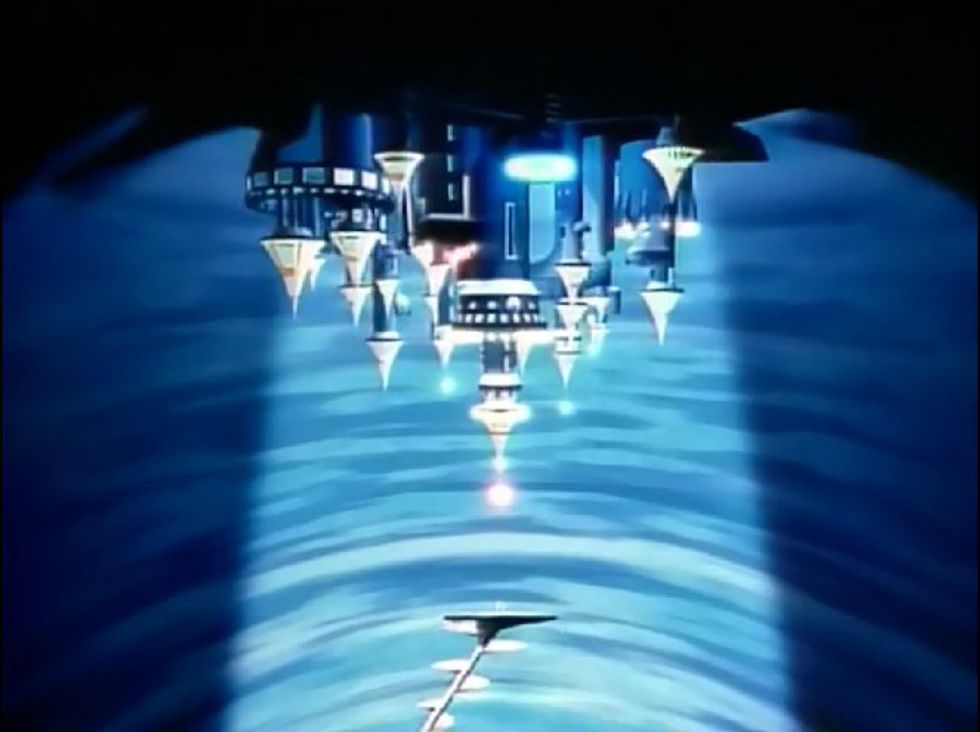
Nearly every element of the above dueling arena wouldn't be possible in a non-animated setting. The castle in the sky above the arena would also not be possible to get in a traditional film without the use of CGI. The very structure of the dueling arena itself would not be possible, since the support beam goes diagonally downwards from the arena. The shading and coloring of the picture are also very unique to animation. The beam of light coming out from the castle is used as part of an extended metaphor with the castle itself throughout the series. Additionally, the coloring of the sky in differing shades of blue creates a feeling of liquidity and smoothness. The entire frame creates a sense of being drawn upwards into the castle while still maintaining the camera's view as outside of all the chaos that wouldn't be possible to recreate by simply filming the sky.
Animators have the freedom to exaggerate their characters’ proportions to unreal lengths, which allows for unprecedented forms of symbolism and metaphors. One of my favorite examples of this is in Ping Pong the Animation, which exaggerates the relative size of each competitor to show the huge power imbalance between the two:
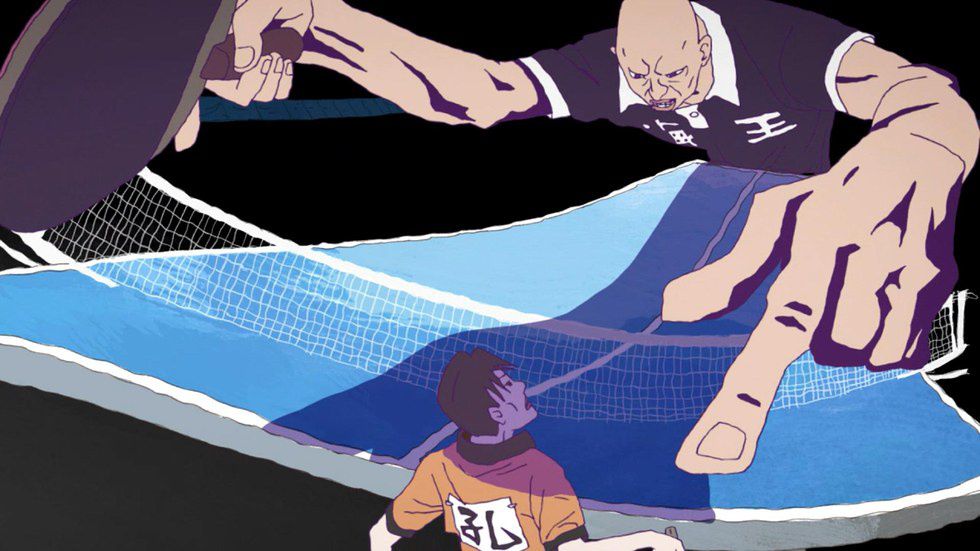
As an extension of the symbolism discussed above, good directors can play with this concept quite a lot of illusions and/or supernatural mysteries (both common themes in anime) are incorporated into a show, because in animation it is very hard to tell what is meant to be real (but could not exist in real life) and what is an illusion. Although playing with illusions and supernatural forces is also common in traditional film, animation allows directors to take illusions to an entirely new level. Doing this is a great way for a director to be able to play with the minds of the audience and make them question if other things in life are illusions. The video below, by Every Frame a Painting, shows how one famous Japanese director, Satoshi Kon, distorts the very fabric of both space and time in his animation.
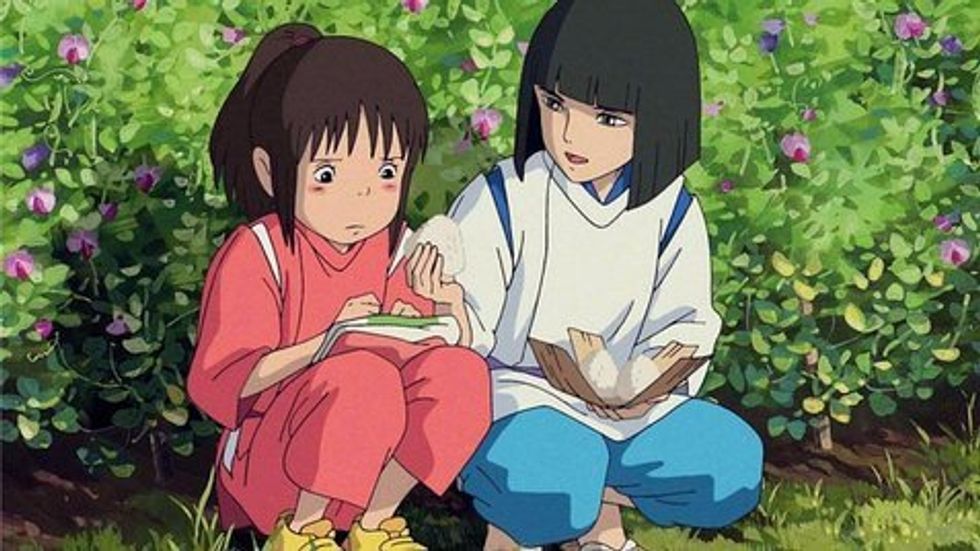
Because film captures the real world, it often is the best avenue to provide commentary and insights into current events and the problems that are currently happening in the world. Animation, by contrast, is completely free to have whatever shapes, sizes, and colors the director and animators can imagine. This freedom allows for a few very interesting things to happen. Changes in mood and color scheme can happen with much more flow to them in animation than in film. Here is the way this can affect an action as simple as eating food:
Animation also allows for an unprecedented amount of control over background scenery (or lack thereof), enabling directors to use white space in ways that make us focus on different things or which emphasize what is in the image:
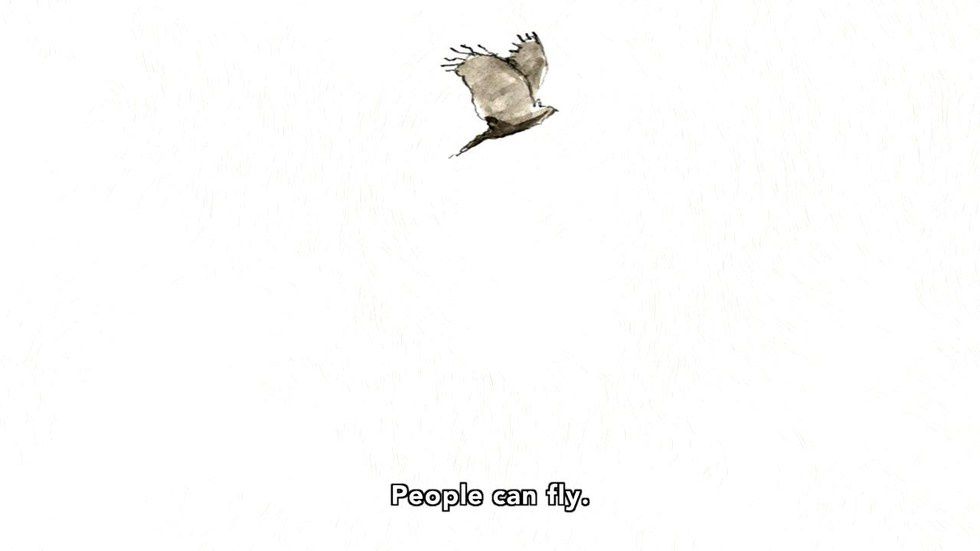
Frames like the above, where there is nothing but a single bird and white space, are simply not possible in traditional film. You could try and film a bird against the sky with the camera pointing upwards, but the effect wouldn’t be nearly the same, as the above shot has a clear simplicity to it that simply could not be matched in a live action shot of a bird in the sky.
Animation also lends itself to having spirits and other supernatural phenomenon much more easily than live action, since certain queues can signal us in to supernatural activity. This can be seen here:
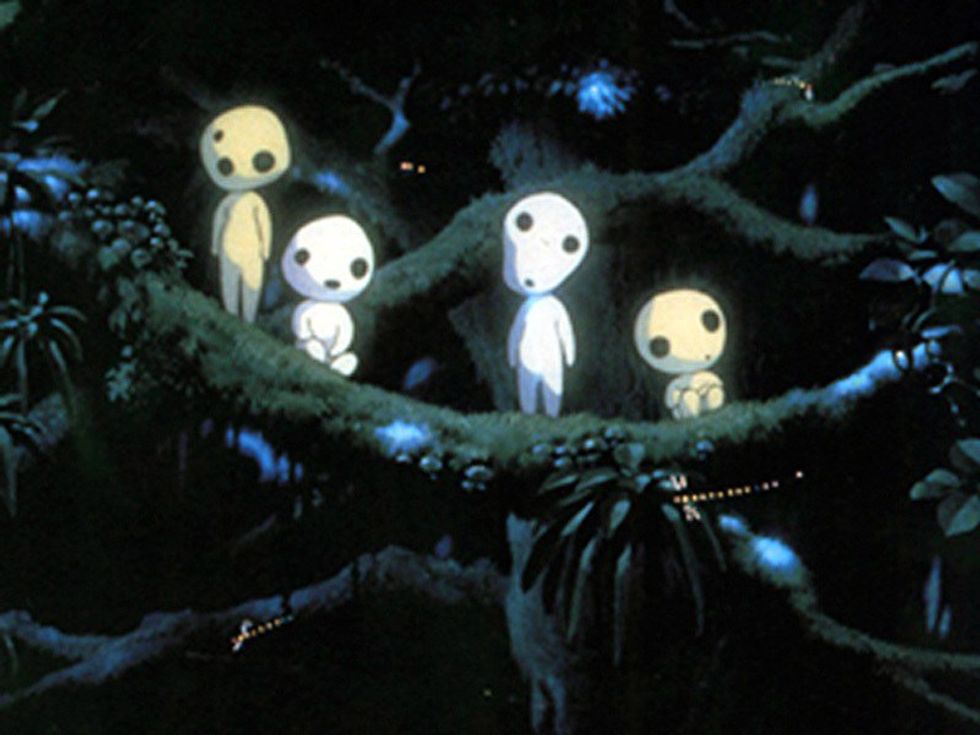
This is very useful in the horror genre for obvious reasons, but it has also been used creatively to create a religious or spiritual atmosphere (or similarly a connection to nature). This can also be expressed as connection to Mother Nature. The effect is used often in sci-fi, comedy, and in supernatural anime.
These biases in what anime specifically can do that live action cannot leads to interesting and different creative choices. For example, the higher ability to invoke the supernatural and unreal leads to lots of exploration of the concept of fate, destiny, and God in general. White space and non-detailed faces and scenery allows for very clear pictures and a higher degree of simplicity and focus in shots. Shading and coloring can change extremely quickly, and can be used to color things in very non-traditional ways and to create shading and layering that wouldn’t be possible in film. Characters proportions and symbols can be more drawn out and exaggerated, and the fabric of space and time itself can be stretched in different ways, among other things. These creative differences, and what directors and film makers can do with them, is why I love exploring anime and animation. It is an underappreciated form of art here in America that deserves more recognition. Animation is far from something just for little kids. It can also be very mature in its own right.