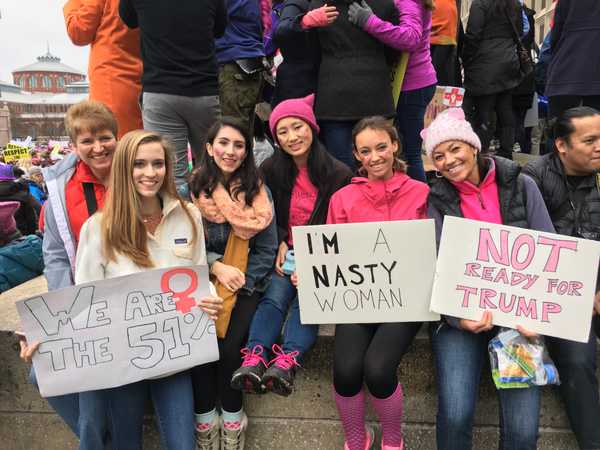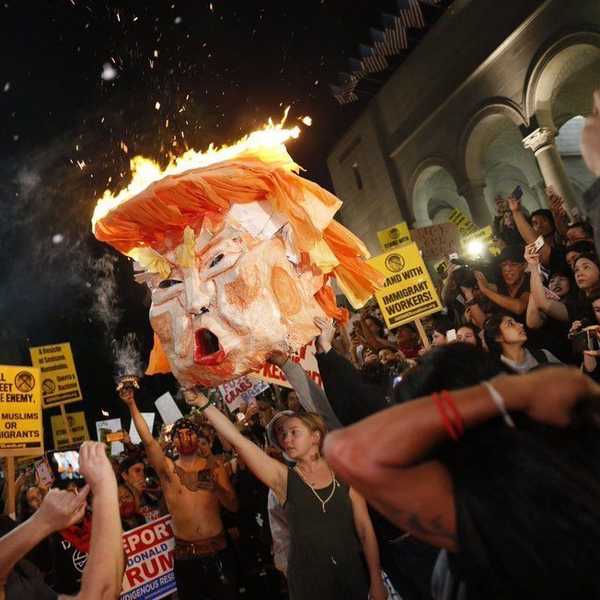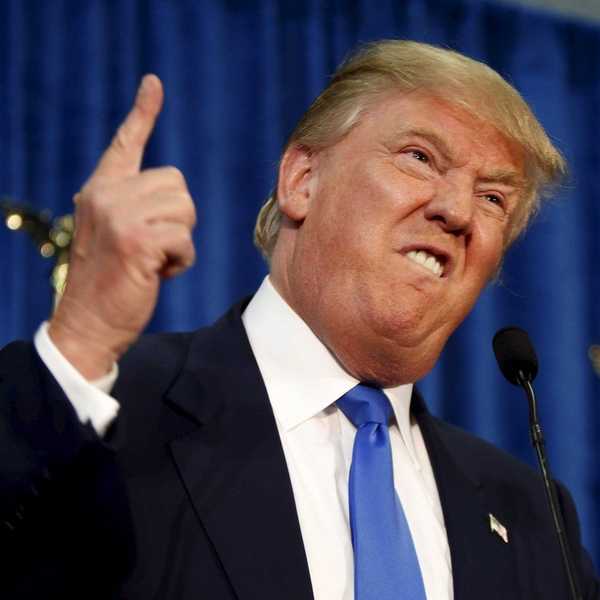

Like many Americans, I am still in shock and possibly denial about the results of the 2016 Presidential Election. Perhaps as a coping mechanism, or as a response to the realization that we often place undue importance on the present simply because we live in it, I looked to history. Specifically, I looked at the history of our county and its leaders, wondering if there was ever a president as dividing, controversial and larger-than-life as you-know-who. While I didn’t expect to have to look at all 44 Presidents, I also didn’t expect to only get to the seventh before finding one that fit the bill. Unless you know who the seventh President of the United States was off the top of your head, I won’t keep you in suspense: Andrew Jackson, also known as “That guy who was responsible for the Trail of Tears but still ended up on the $20 bill.”
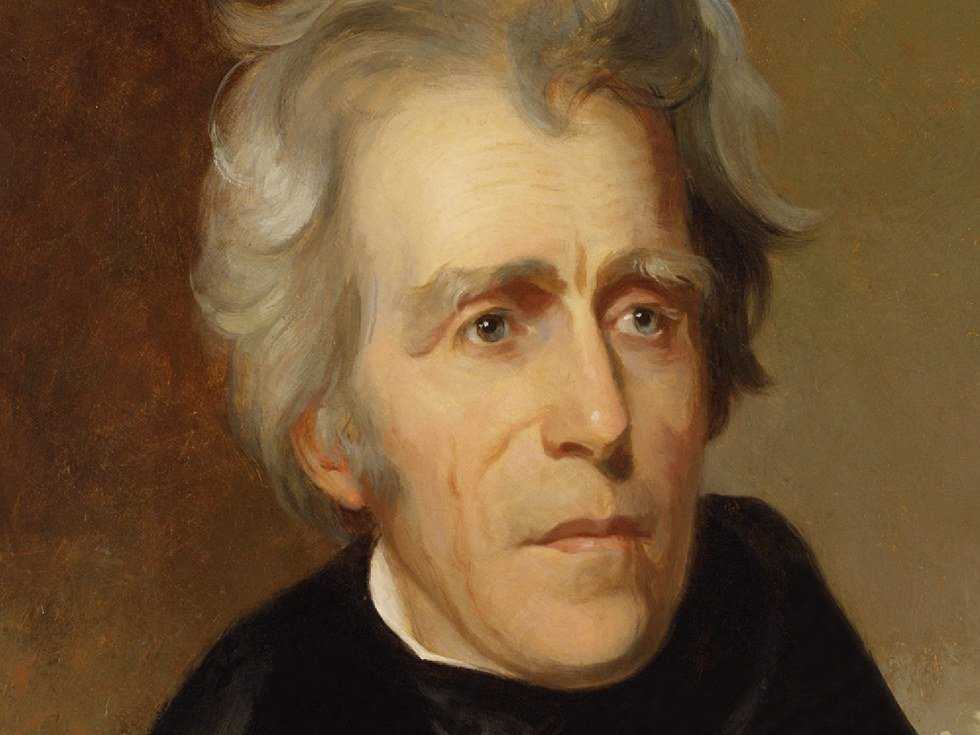
Andrew “Old Hickory” Jackson was born on March 15, 1767 in the Waxhaws region between North and South Carolinas. Jackson lost his mother and two brothers in 1781 when the British had invaded the Carolinas. After Jackson was captured by the British, an officer slashed him across the face with a saber when he refused to shine the officer’s boots. Jackson would carry the scars and a hatred for the British for his entire life.
Fast-forward a few years, Jackson had moved to what would soon become Tennessee, where he worked as an attorney and met his future wife, Rachel Donelson. Jackson would go on to be Tennessee’s first member in the U.S. House of Representatives, after which he was elected to the U.S. Senate. In 1806, Jackson killed a fellow attorney by the name of Charles Dickinson in a duel, after the latter had insulted both Jackson himself and his wife. As he would reportedly do in the many duels he fought in his lifetime, Jackson wore an oversized coat to hide his true size and therefore make himself harder to hit. He even let Dickinson take the first shot, which hit Jackson in the chest right and dangerously close to the heart. Seemingly unfazed, Jackson shot Dickinson in the stomach, and the latter would bleed out from the wound several hours later. Due to its proximity to his heart, the bullet in Jackson’s chest was never removed, and would occasionally cause him to cough up blood throughout his life. It’s interesting to note that although Jackson fought in over a hundred duels in his life, even before he became President, Dickinson was the only man he killed. Although this may just be due to the fact that Jackson was a notoriously bad shot.
When the War of 1812 kicked off, Andre Jackson served as a major general, gaining fame for his victory at the Battle of New Orleans. Facing a numerically superior British force, Jackson reportedly declared martial law in New Orleans and ordered every able-bodied man and weapon to join the defense of the city. Among his ranks were regular soldiers, militiamen, aristocrats, free blacks and even pirates. Despite overwhelming odds, Jackson’s forces beat back the British advance, losing only 100 men while the British lost over 2,000, including seven colonels and three generals. Jackson became a national hero, with even President James Monroe hailing him as such. Funny thing is, the Treaty of Ghent (which would end the conflict), was already signed before the battle began, only news traveled slowly.
After the war, Jackson invaded Florida to drive out the native Seminoles (one of his many asshole moves against indigenous people), and claim the land for the United States, although it still belonged to Spain. While his actions caused international outrage, it also boosted his status, leading him to run against John Quincy Adams in the 1824 Presidential Election. While Jackson won the popular vote, neither him nor Adams won the electoral vote, meaning it went to the House of Representatives, who chose Adams. Jackson labeled this a “corrupt bargain” since the Speaker of the House, Henry Clay, sided with Adams in exchange for being his Secretary of State. Jackson won the election when he ran again in 1828, despite the death of his wife and being labeled as “King Andrew I” and a “jackass” by his opposition. Jackson actually liked the latter insult and had it instilled as the symbol of the Democratic Party, which would reemerge after it had died out following Jackson’s presidency.
Following his inauguration, Jackson hosted an open part in the White House. Given his unprecedented popularity with “the common man,” thousands showed up and reportedly trashed the White House, to the point that Jackson himself had to sneak out a window. Another similar story is when Jackson was given a 1,400-pound wheel of cheese. At the end of his presidency, he invited the public to come eat the gigantic wheel of cheese after it had been sitting in the White House for years.
Andrew Jackson’s presidency wasn’t all fun and games, however. In 1835, he became the first President to have an attempt made on his life. Jackson’s would be assassin was Richard Lawrence, a mentally unstable house painter who was convinced he was the King of England. As Jackson was walking back from a funeral, Lawrence pulled out a pistol, pointed it at the President and pulled the trigger. Misfire. The would-be assassin pulled out another pistol, once again pointed it at the President and pulled the trigger. Another misfire. At this point, Jackson proceeded to beat the hell out of Lawrence with his cane before being pulled off of him by his aides.
However, three things that Andrew Jackson is most remembered for are probably the “spoils system,” his fight against the Bank of the United States and the Indian Removal Act. Jackson’s “spoils system” was when he replaced many public officials with his supporters. His antagonism against the Bank of the United States probably stemmed from his debt problems in his earlier years, and his subsequent mistrust of financial institutions. And unlike the Bank, Jackson preferred gold and silver to paper money. As a result, he took considerable measures to destroy the Bank, even telling them, “You are a den of vipers and thieves. I intend to rout you out, and by the eternal God, I will rout you out!” He has also been famously quoted as telling his Vice President, Martin Van Buren, “The Bank is trying to kill me, Sir, but I intend to kill it!” However, this was only a fraction of the hostility that Jackson showed towards Native Americans. By signing the Indian Removal Act into law, he allowed states to relocate their native populations to unsettled land in return for their native population’s land within their respective borders. As a result, around 4,000 Cherokees died when they were forced to move west by the US Government.
Originally, I planned to end this on a happier note. Or at the very least, I wanted to conclude with a badass fact about Andrew Jackson, like how his pet parrot had to be removed from his funeral due to its constant swearing. But that’s not how history works. We can’t just remember the good things that our nation or our leaders have done while forgetting the atrocities they committed. We owe it to all those who suffered and still suffer under such atrocities to share their stories, both in the past and in the present. We owe it to our children to teach them that while this country may be “great,” its greatness wasn’t attained with purely virtuous laws or only justified bloodshed. And most of all, we owe it to ourselves to remember history as it was, not as we wish would be, so as to have a clearer perspective and better understanding when deciding our future.