Women who create art, whether it be paintings, songs, or novels, will face many people who will gaze upon their creativity and choose to judge instead of understand. There will be people who will take it upon themselves to try and force their own understanding of a painting, song, or novel onto the artist herself. And those people who try to judge the painting, song, or novel will effectively nullify the real artist’s meaning if they impose their own upon it. Once a person does this, the painting, song, novel, is no longer the artist’s, but it is theirs. It erases the emotions of the artist.
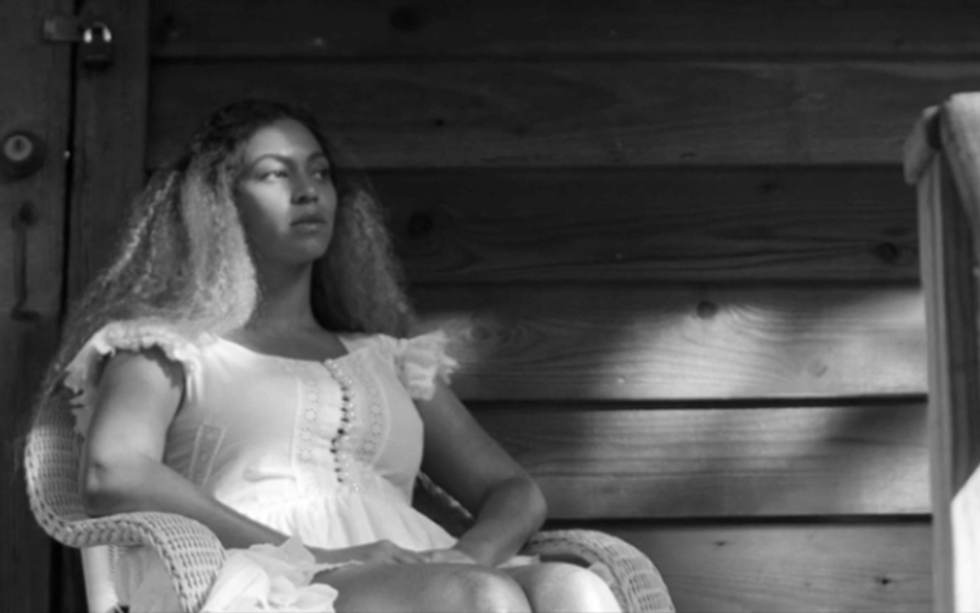
When I first heard Lemonade by Beyoncé, I knew that this was a masterpiece from a woman who thought she had done everything right in her relationship and still hit a rough patch. And many men (and women), I noticed, quickly wrote articles online trying to understand the grief and pain that went into her songs; these men and women essentially belittled her artistry because they do not know what women are facing, and do not know precisely how Beyoncé was feeling.
Beyoncé found an outlet through music to channel all of her anger, disbelief, and misery. Each song in her visual album perfectly captured a different feeling, and in so doing, reflected every emotion that women specifically face in their individual relationships. The world issues that she crafted to fit her songs contribute to the helplessness that women often feel in relationships.
But the men and women who are looking at her album and jumping to conclusions (and society in general) are thinking that the cause of all of her pain is a man. When the album dropped, social media outlets were quick to jump to conclusions: that Beyoncé’s album was about Jay Z’s infidelity.
And so she tries to find an escape in her songs, and the listener sees that this doesn’t work because she is still trapped by familial responsibilities. Women are raised to have their families on the forefront of their minds. And we see this with her album; Lemonade is not a fun album. It is an outlet for a woman who has struggled with the burdens placed upon her and the helplessness that she feels in her relationship. Her album brilliantly captures what every woman will go through at least once in her life—betrayal by a man whom she thought loved her. This is an album that portrays the lost feeling that comes along with a man’s betrayal, as Beyoncé sings about murdering her man and killing herself. This is not an album you turn up at a party, because this is real life. This is an album for personal listening and reflection.
I know that I can’t try to understand her album. There are so many intertwined emotions, possibilities, and hopes flying about and essentially making her album what it is. But I can relate to her pain. I am a woman. I have faced this same kind of betrayal, I have loved a man who showed me clearly that he didn’t love me and I still prayed and hoped that things would change. That things would get better. That we weren’t done yet. And so I understand my pain, because I have someone else’s to compare it to. This woman felt the same thing I did—I’m not “jealous” or “crazy." As Beyonce sang in Hold Up, “what’s worse, lookin’ jealous or crazy? Jealous or crazy? Or like being walked all over lately, walked all over lately. I’d rather be crazy.” This woman went through the same thing I did and came out whole, strong, and resilient.
But our pain is separate. Our relationships are different. Our coping mechanisms contrast each other’s. I will feel my own pain and she will feel hers, but I can’t inflict mine upon her, and she on me. And so I can write about my pain; I can write about how I had to fall apart before I could come back together. And Beyoncé can sing about her pain; she can sing about the grief she felt when her life suddenly came down, down, down, and crashed, halted, stopped. And this means that I can’t say, “this is what Beyoncé felt,” or, “this is really what Beyoncé was trying to say.” And neither can you.