
Didn’t finish the last half of your sandwich? Want to save the rest of that casserole for tomorrow’s lunch? No problem, just wrap them all up and store them in your fridge.
From cold pizza to turkey sandwiches the weekend after Thanksgiving, leftovers today are an essential part of the American diet. Yet this was not always the case. In fact, tracking the history of leftovers in American gastronomy provides a simultaneously compelling look at the state of the U.S. economy over the last 150 years.
During the 19th century, leftovers were such an integral part of everyday cooking and meals that they were hardly considered their own category of food. Breakfast typically consisted of whatever had been served at dinner the night before. In a time before refrigeration, cooking and food preservation became interchangeable. Pickling, smoking, potting, and salting were indispensable to the cuisine of the day. Milk was repurposed into a variety of dairy products, while the alcohol in whiskey and hard cider was used to preserve grains and fruits.
But these handy techniques would quickly recede from American kitchens as iceboxes and early electric fridges were introduced to middle-class families at the dawn of the 20th century. With the rise of refrigeration -- which enabled families to eat the same meal for several days on end by keeping highly perishable foods cool -- came the downfall of domestic food preservation methods, from egg-pickling to cheese-making. Unsurprisingly, this era saw the coinage of the term “leftovers” and the publication in 1910 of "Left-Over Foods and How to Use Them," the first cookbook dedicated to their use, commissioned by none other than a refrigerator company.
Yet not everyone was able to partake in these novel culinary developments, which were enjoyed almost exclusively by middle and upper-class families. On average, Americans spent 40 percent of their income on food, with poorer families expending even more. (Compare this to the average today, which is around 10 percent.) These families, most of whom lived in urban tenements, often suffered from diseases of malnutrition as they struggled to put food on the table every evening. Consequently, having leftovers and iceboxes in which to store them soon became status symbols.
During World War I, leftovers dominated the national conversation as the United States embarked on its first formal international food-aid program. Housewives were encouraged to incorporate the remainders of uneaten meals into casseroles and goulashes. Others went further, calling on restaurants to resell uneaten food off customers’ plates. Some even killed their pets, since they consumed human food that was past its prime and which could be sent to Europe instead; these individuals, in fact, were celebrated as patriots in the newspapers.
Yet as America entered the Roaring Twenties, food prices fell and refrigerators suddenly became widely available. Now, leftovers came to be seen as a problem of abundance. The wealthy made it clear that they rarely ate them. Indeed, white Southerners prided themselves on sending their domestic servants home with leftovers from dinner (all the while disregarding the fact that this practice was used to justify paying their servants miserly wages).
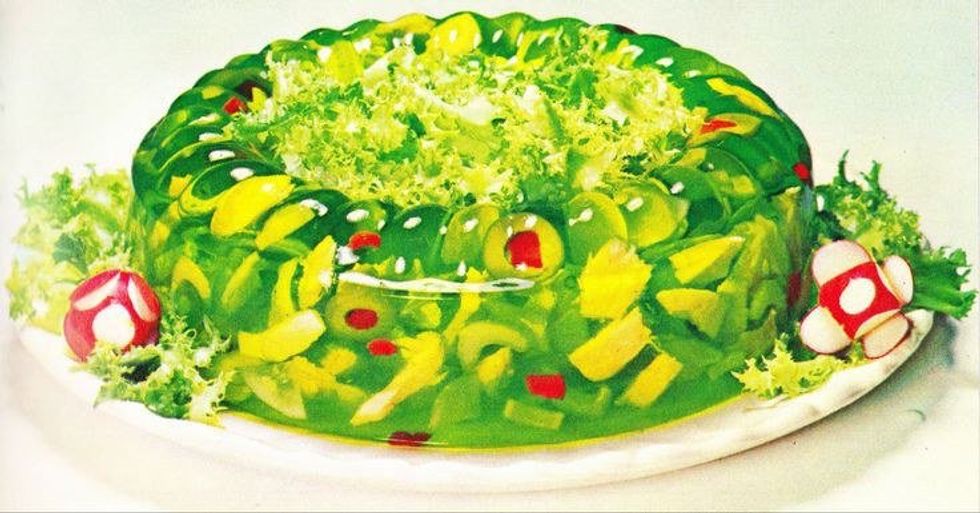
During the Great Depression, however, leftovers once again shone in the national spotlight. The U.S. Department of Agriculture sponsored radio broadcasts which highlighted the importance of eating leftovers in these dire circumstances. This necessity led to creativity, marking the beginning of a 30-year golden age for leftovers. Chefs repurposed the latter in such inventive ways, that they were hardly recognizable. Indeed, a cook’s ability to create an appetizing and aesthetically-pleasing meal out of leftovers came to be seen as the ultimate test of his ingenuity.
By the 1960s, the majority of Americans enjoyed financial stability. This did not bode well for leftovers, as families no longer had to fret about wasting food. Americans were devoting only 25 percent of their income to food, with that percentage decreasing yearly. Peg Bracken, who penned the 1960 satire I Hate to Cook Book series, advised in her cookbooks, “When in doubt, throw it out.”
This scornful attitude towards leftovers and waste would last throughout the rest of the 20th century. Today, as Americans become increasingly aware of the (largely negative) environmental and economic effects of food production, leftovers are entering another golden age. Indeed, saving and reusing uneaten food -- as opposed to tossing it out -- is slowly becoming the trendy new norm.