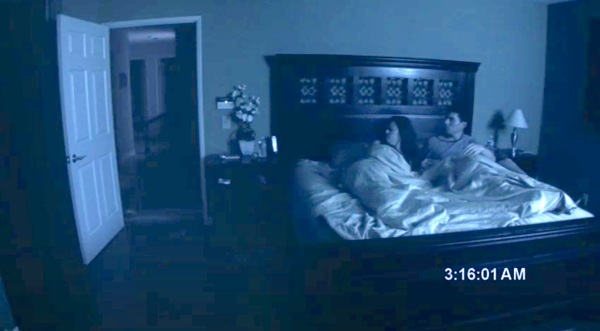
I used to say that I loved horror movies. I loved the feeling of never knowing when something would pop out at you, discovering the identity of the supernatural/human killer on the loose, and the feeling of anticipation that crept up on you throughout the movie, waiting for you to get just wrapped up enough in the story that it would suck you in and spit you out, weeping for protection. However, as the years have gone by, and my need for adrenaline has reduced, I've found that my love of horror has faded to mild disinterest. Recently, I began to ask myself why that was and I've come to one conclusion: shock value for shock value's sake.
Once upon a time, Alfred Hitchcock grabbed the genre of psychological suspense/horror by the throat and dragged it uphill. He single-handedly created the world of suspense simply by choosing to terrify the viewer with what they could not see. It was the terror that remained unseen but implied that made his films so captivating and to this day, make me terrified of both birds and motels. Yet, despite his slight of hand cinematography and the applied technique of gradually growing suspense, he could not save the world of suspense and horror from what it threatens to become.
One such example of shock value for shock's sake comes not in the form of film, but in the world of television. Ryan Murphy, the creator of American Horror Story and the equally horrifying Glee, seemed promising with the first season of American Horror Story, yet as seasons go by, I found myself finishing each episode with a growing sense of disgust. His obnoxious, gratuitous, and offensive use of rape throughout each season leaves me questioning his ethical sensibilities, specifically, "Why is rape being used as a tool to shock viewers instead of educating them?" For Murphy, it feels as though rape, and the horrifying perpetration of it, are not done to condemn rape or speak up for rape survivors, but instead scare viewers and remind them of the evil certain characters are capable of. In a time of needed sensibilities, especially as young men and women grapple with the large numbers of sexual assaults committed, Murphy chooses to use rape so frequently in his shows that it nearly desensitizes the viewer to it. And the fact is, desensitizing viewers to rape is the scariest thing about the show.
While I remember only two instances of rape in the first season, I felt as though this was the only season in which Murphy condemned rape, using it as a plot point to shock the viewers, but not titillate them. However, towards the end, it felt as though this vision were gone, and *kind of a spoiler* the rapist was victimized and suddenly forgiven. I struggled to comprehend how the hinted "big bad" of the season could simply be let off, surely to be punished, but so slightly that now rape was almost excusable.
Now, in its sixth season, I find myself still watching the first episodes of each season, praying that Murphy will somehow move away from shock value and focus more on psychological twists that horrify the viewer without desensitizing and humiliating them. This season has significantly less rape, but in its place are multiple instances of cannibalism, torture, and disembowelment to charm the viewers with.
Now, as I sit here still hoping there is a light at the end of the tunnel for this TV show, I began to realize that for some people, graphic sexual content, and horrific violence ARE horror. Personally, I find myself still longing for the time of Hitchcock, a man who could entice the viewer into a film with charm and wit, and spit them out, scared to go out into the real world because they have been psychologically stunned. Instead, we live in a generation which thrives on graphic content to send messages, forcing the viewers to relive the images every day, sometimes unknowingly, and in the process desensitizes them to what used to be horrifying concepts. Perhaps I simply do not have the stomach for gore, or perhaps I'm worried at the messages this sends to people my age who look for the exciting adrenaline boost of a good scare and instead are inundated with anything but. Whatever the reason, I think the times of American Horror Story and the graphic like will be retired from my playlist after this season. For me, rape and disembowelment don't deserve screen time, they deserve justice, and so does the viewer.
For examples of quality psychological thrillers, suspense, and horror films, here are some suggestions:
- Vertigo (1958)-dir. Alfred Hitchcock; 97% critic score on Rotten Tomatoes
- Psycho (1960)-dir. Alfred Hitchcock; 96% critic score on Rotten Tomatoes
- Memento (2000)- dir. Christopher Nolan; 92% critic score on Rotten Tomatoes (warning: there is an instance of rape in this film, however, it is not gratuitous and is used for emotional development)
- The Shining (1980)- dir. Stanley Kubrick; 88% critic score on Rotten Tomatoes (warning: pretty weird nude scene, but no rape)
- Donnie Darko (2001)- dir. Richard Kelly; 85% critic score on Rotten Tomatoes
- Rear Window (1954)-dir. Alfred Hitchcock; 100% critic score on Rotten Tomatoes
- Carrie (1976)- dir. Brian de Palma; 93% critic score on Rotten Tomatoes
- Scream (1996)-dir. Wes Craven; 79% critic score on Rotten Tomatoes
- Sinister (2012)- dir. Scott Derrickson; 63% critic score on Rotten Tomatoes
- Poltergeist (1982)- dir. Steven Spielberg; 88% critic score on Rotten Tomatoes