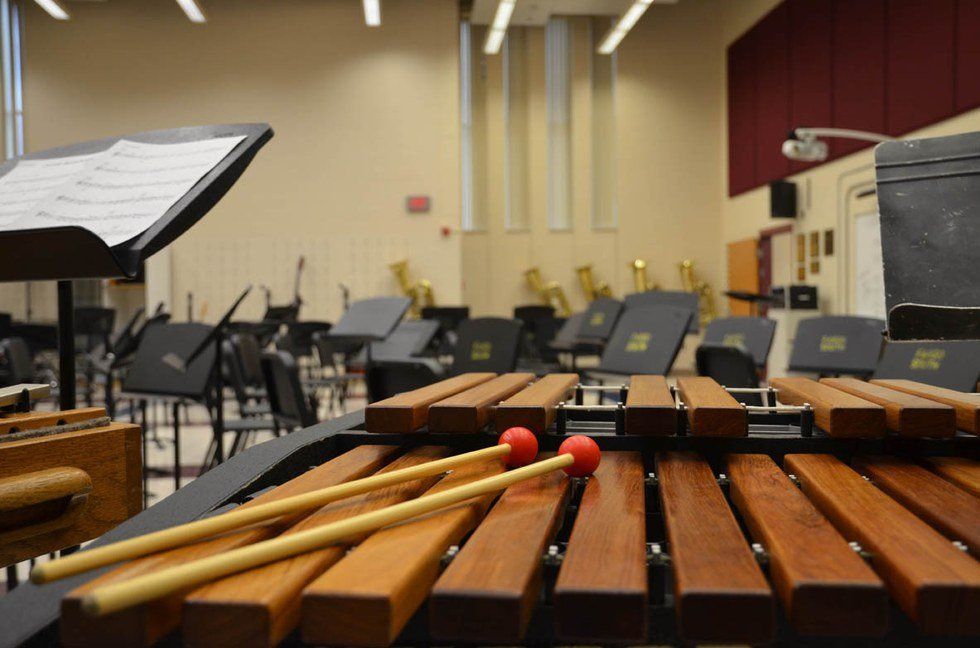
For those who spent the years of their youth in the classrooms of K-12 band and choir classes, we can always remember the dread of rehearsing the pieces we didn't personally favor, or forging parent signatures on practice logs. As a percussionist, I've sat through hundreds of rehearsals dedicated to every instrument but mine, with the full knowledge that historically and musically my instrument is often an afterthought. Upon graduating high school, and setting my sights on a music degree, I felt as if I was entering a new world. However, as anybody who recalls the tender age of 19 will tell you, my vision was jaded.
Academia is, in many ways, the most enlightening thing for an artist. A concentrated place to study the works of great artists before you not only shapes your individual voice as a musician, but also provides a humbling perspective of how we all stand on the shoulders of giants. In the realm of academic music, the opportunities to apply a comprehensive understanding of music as an art form are abundant. Personally, the financial apocalypse I've handed to my future-self has been softened by the fulfillment I get when I hear Hector Berlioz's "Symphonie Fantasique." With the tools handed to me by academia, I can fully reach across two centuries to decipher the messages of fundamental humanity within. Only through music can I realize that I am very similar to this 19th-century French composer.
Again, I must reiterate how jaded my viewpoint is. I am a music nerd, through and through. I am often confronted by this side of myself in the world of applied music. I remember a younger colleague of mine, frustrated with how tediously I was attempting to get him to produce a good tone on the triangle (yes, I'm serious, a triangle) exclaimed to me, "Does this even matter? Will anybody even notice?"
When he says "anybody" he doesn't mean me, and he doesn't mean our percussion professor, he means non-musicians. Will non-musicians understand the sound they hear? To be honest, this question hit me hard. The answer, it turns out, is a resounding 'no.' The non-musician has no concept of the tone and timbre of a triangle to the level of somebody being asked to execute a perfect stroke on it. So why do we practice it?
In this regard, I feel sympathetically for those who share the hallways with us music majors, the art majors or as I like to specify to myself – the "visual art" majors. I wonder if a painter focuses on every brush stroke as much as us musicians focus on every single note. What separates a professional musician from an amateur musician? A painting prodigy from myself after a weekend trip to Hobby Lobby and a house that smells of turpentine? I often wonder if an artist looks at his work, frustrated by one single pencil stroke. Is the fundamental difference somewhere between myself and my triangle playing colleague?
In a world of practice logs, requirements, concert reviews and essays on those long and gone, it may be hard to find the artistic reason behind what we do as collegiate musicians and artists. In a field where complacency is defeat and the process is painfully tedious, where is our meaning?
In a world where auto tune is a studio normalcy, why do we practice singing in tune?
For those artists reading this article, who know why they subscribe to the process day in and day out, don't ever let that reason go. The process of being an artist can be the most strenuous process for the soul. For those musicians that are reading this, don't ever give up on developing your language and being better able to express yourself through your art.
It's a strange thing, being an artist.