

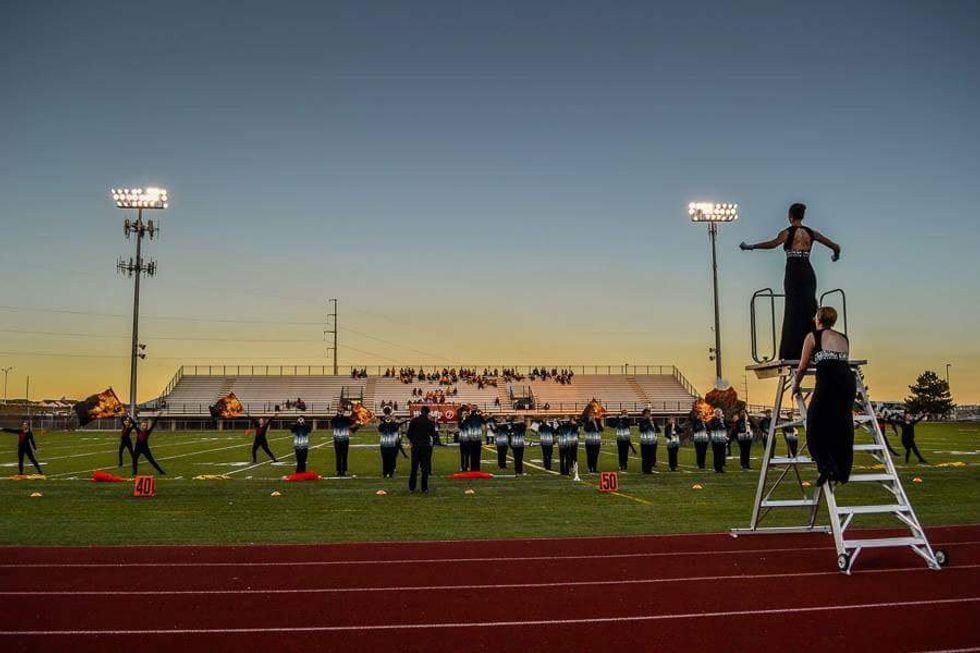
When I joined band in middle school, I never imagined that I'd be in for the experience of a lifetime. However, in so many years—going on 8 now—I've learned a couple things that I'd like to share with you.
1. Persistence is key

Any performer can tell you that the only way to improve is to practice (perfect practice produces perfect performance), especially when you have difficult runs. Whether you’re just starting out learning what a note is or working a complicated run, determination is vital to your success.
2. Teamwork
Unless you’re performing in a recital, chances are a concert is not about you. Therefore, you have to learn how to fit in to the “color” of the piece. In band, we call this “balance”—learning when your part is important and when you need to back off. Plus, "many hands make light work" when you're cleaning up the band room, so you have to work together no matter what.
3. Leadership
There comes a time in every musicians life where they must lead, whether they are first chair soloist, a drum major, or the only one on their part. For me personally, I grew as a drum major by learning how to teach students no more than 3 years my junior. It was a valuable experience.
4. Value of Time
A very common band motto is "If you're early, you're on time; if you're on time, you're late; if you're late, you're left behind." From a very young age, this ingrains the idea of punctuality into the minds of students. We also learn how to manage time by having to juggle rehearsal and personal practice time with social lives and school.
5. Take Responsibility
It’s easy to let the blame slide off our backs onto another person’s—we do it all the time, almost subconsciously. However, in band, the director knows who or what section made the mistake and is not afraid to call you on it. Therefore, it’s simply easier to own up to the mistake so class will move on and you can fix it.
6. Self-Discipline

Not only is taking responsibility important, but so is being self-disciplined. The band director can't possibly work with every student, so it's up to each individual member in the ensemble to notice their mistakes and fix them. Similarly, they must also be disciplined enough to actually practice. This is essential in all ensembles.
7. Be In Sync

Sure, to be a halfway decent musician, you have to have a semblance of rhythm, but that's not all. Marching takes a significant amount of synchronization, so much so that occasionally groups of band members fall in step and may even breathe in rhythm.
8. Build Family

In band, we refer to ourselves as a family, and nothing could be closer to the truth. We love and laugh together, and also bicker constantly. At the end of the day, though, we have each other's backs through thick and thin. Not only does this teach us conflict resolution, but those of us who have trouble socializing, band becomes a safe haven to share a common interest.
Obviously each band is different, but from my experience, these lessons are universal. So, parents, encourage your child in their passion—especially if that passion is band (though far be it from me to force students into something they don't love). And if you'd like to pick up an instrument yourself, it's never too late.