Buying makeup brushes can be intimidating, even for experienced artists. There are hundreds of brands with almost identical brushes. So how is anyone supposed navigate their way around makeup brushes when no one's made a map?
To follow up my article listing the five face brushes everyone should own, I thought it was only fitting to continue onto eye brushes. Through trial and error, I've learned what brushes work the best for me. I've been learning on my own and from videos on Youtube for about seven years now, and I think it's time to share the over abundance of knowledge I have. By no means am I saying I'm an expert, but I do believe I have a solid grasp on which eye shadow brushes should be a staple in everyone's collection.
Makeup is an art, and like any art the tools required can be used for anything you want to use them for. I'll be sharing brushes with their intended purpose because I find that's the best place to start. Get a firm foundation of basic brushes then add more on when you figure out what styles you're missing. But of course, if a brush looks like you'd use it for something different than I've suggested then go for it! Follow your artistic instincts and have fun, that's all makeup is supposed to be.
I'm going to try and list the brushes in the order of how I do my eyeshadow, that way it'll be easy to follow!
1. Flat Shader Brush
This brush is essential, it may be one of the most important brushes a makeup artist can have. They come in a variety of sizes and are as versatile as a brush can be. To sweep a powder or skin tone shadow all over the eye area, a large shader brush like the Morphe B40 or the Sigma E50 is ideal. To put a color on the mobile lid (the actual lid, right under the crease), a smaller shader brush like the Zoeva 232 or the Morphe B83 would be best.
2. Tapered Blending Brush
Like the shader, there are many styles of blending brushes. If there is one thing I can't emphasize enough, it's that you need blending brushes. Many of them, in many different sizes. The idea of a large blending brush, like the Mac 224 or the Sigma E40, is to sweep a light wash of color to act as a transition color. A transition color helps any crease color you add later blend better, and is essential to creating a flawless and blended eye look.
3. Blending Brush
Next, you want a slightly more precise blending brush. Ideally with a slight taper and you want it to be more dense and thin than your transition brush. Brushes like the Sigma E25, Makeup Geek Soft Dome Brush, and the Zoeva 221 are perfect. These brushes allow you to get color more accurately in your crease to start darkening your eye look. They're not too small that it's a very concentrated color application, but they're not too big that there's no accuracy in it's placement of color. This is a standard blending brush.
4. Defined Crease Brush
This brush is the smallest of your blending brushes. They're generally fluffy enough to blend but still manage to stay dense to have precise color placement. Brushes like the Morphe M514, the Zoeva 224, the Cozzette S185, and the Makeup Geek Pointed Crease Brush can achieve the right amount of concentration while still blending everything together.
5. Pencil Brush
While you can use a pencil brush to further define the crease, I especially like them for applying color to the lower lash line. Brushes like the Mac 219, the Sigma E30, and the Cozzette D220 are small enough to get a good amount of color on the lower lash line and they blend as they go.
6. Accent/Detail Brush
These will probably be the smallest brushes you own. They're fabulous for adding an inner corner highlight or very small details to your eye look. They also come in handy for lip art! Some amazing detail brushes are the Morphe M212, the Zoeva 223, and, my favorite, the accent brush in the Real Techniques Starter Set.
7. Brow Brush
Right now, brows are running the makeup world. To have good brows you need to have good tools. The best brush for brows is a very thin, angled brush like the Mac 208, the Morphe M216, and, by the queen of brows, the Duo Brush #12 from Anastasia Beverly Hills. The perk of buying a brush meant for brows, is that most have a spooly on the end of the brush so you can comb the product through your brows to make them look more natural.
8. Eye Liner Brush
There are two different styles of liner brushes, depending on what works best for you. Of course, the classic angle brush (this brush is very similar to a brow brush, but without the spooly on the end) like the Morphe G21 or the Sigma E65. The other style of liner brush is a thin pointed brush, much like the applicator of a brush tip liquid liner. Some examples include the Real Techniques Silicone Liner Brush, the Mac 209, or the Sigma E11. You could also use a synthetic paint brush from the craft store for this because when using gel liner, you want your liner brushes to be synthetic. Gel liner can harm natural hair brushes if not cleaned properly.
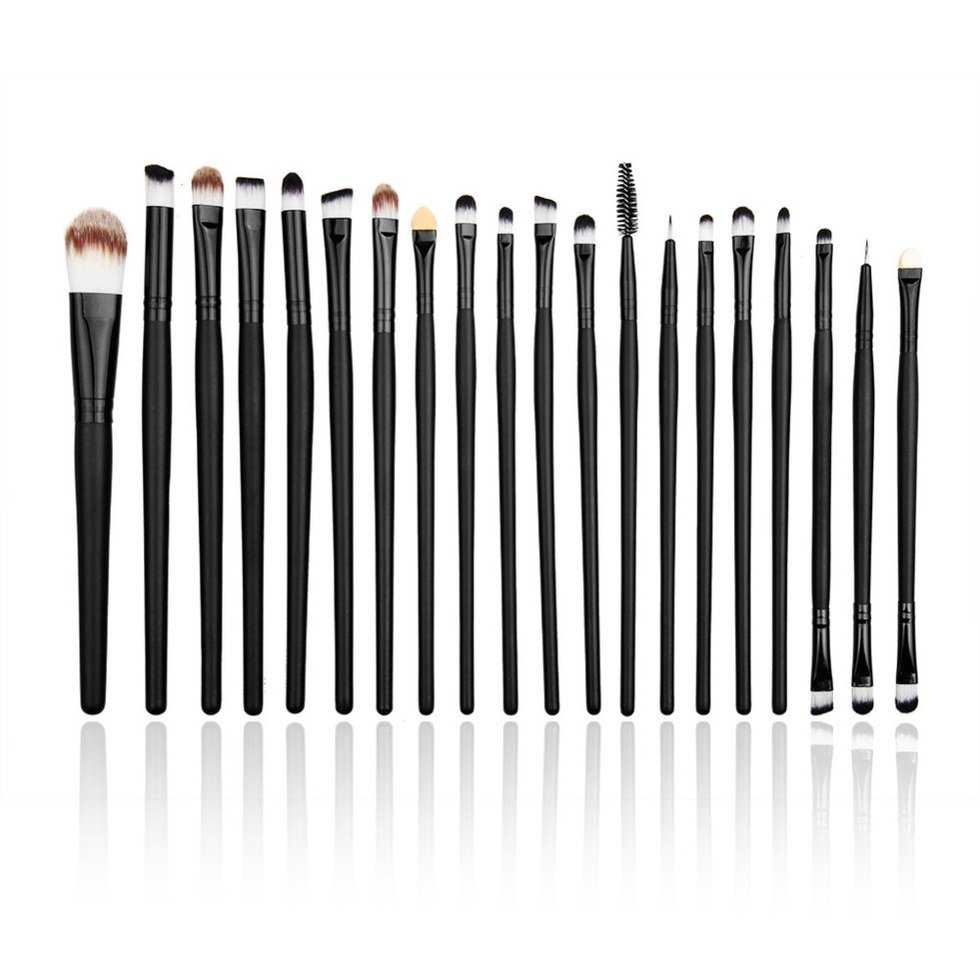
Naturally, there are other styles not mentioned. Firm blending brushes, pointed blending brushes, fluffy shader brushes, smudger brushes, cream color brushes (which are pretty much identical to a concealer brush), and many more. Once you have the basic set of brushes, you can add more specific brushes later.
Finally, I think it's important to mention that not just big name brands make amazing brushes. The price point doesn't determine the quality of a brush, not anymore. There are amazing affordable brands out there, so don't be afraid to try new brands. Look up reviews on Google or Youtube and try them out. Who knows, you might discover the next huge name in makeup.