
Nowadays, Hollywood seems to be rampant with book adaptations. Anybody can probably name the huge book and movie franchises that have just come out in the recent years: Harry Potter, The Hunger Games, Lord of the Rings…the list can go on and on. However, if you’re like me, you probably always end up leaving the theater disappointed, no matter how good the transition from page to screen was. This is inevitable, and here’s why.
1. Printed words have a power of their own.
A book is comprised of twenty-six letters, and yet those twenty-six letters have the power to completely enthrall you, weave story after story, create and destroy worlds and characters and everything in between. Tarereh Mafi sums it up perfectly in her novel, Ignite Me: “Words, I think, are such unpredictable creatures. No gun, no sword, no army or king will ever be more powerful than a sentence. Swords may cut and kill, but words will stab and study, burying themselves in our bones to become corpses we carry into the future.”
2. Books have the power to completely transport you to another world.
When you’re reading a book, you are holding an entire universe that is drastically different than your reality. When you read Harry Potter, you are in Hogwarts. His thoughts are your thoughts, what he sees is what you see. Reading a book requires a complete immersion in the story at hand, and that is an experience staring at a screen falls short of. The entire story exists in your imagination, no matter how real it feels. As Dumbledore says, “Of course it is happening inside your head, Harry, but why on earth should that mean that it is not real?”
3. You are in control of what you see.
For example, book characters are entirely a product of the imagination. The author provides a skeleton of a few physical and behavioral treats, but you, the reader, are in control. You can picture a character that is clearly described as brunette blonde, and once you decide that, no one can contradict you. Someone else can read the same book and picture the same exact character differently as you or the author.
4. You get insight into a character’s internal monologue.
In a book, you can see a character’s thoughts etched clearly on the page. In a movie, it isn’t that simple; you have to be able to decipher what the character thinks through their expressions, actions, relationships, or a distinct voice over. In books, entire chapters can happen inside a character’s head, so movies are forced to compensate, perhaps by adding, changing, or cutting out scenes all together.
5. They don’t have to necessarily be romance heavy.
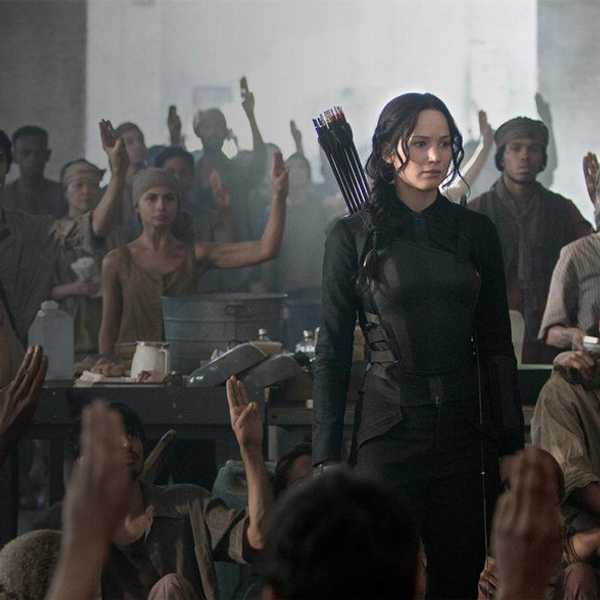
As soon as The Hunger Games came out, the phrase “Team Peeta or Team Gale?” was everywhere, despite the fact that the plot was actually centered around children sent to an arena to fight to the death. Katniss’ love life was a secondary plot line, in spite of the buzz around the movie being focused on her romance as a societal norm.