

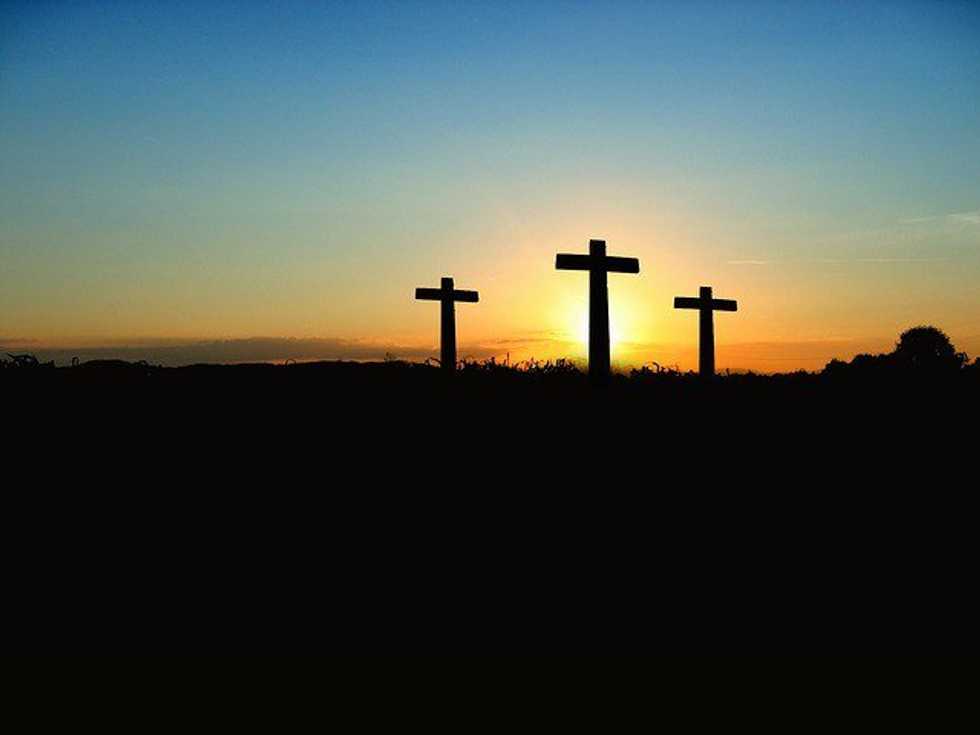
You've heard of male privilege, you've heard of white privilege, but have you ever heard about Christian privilege? Lately, there have been a lot of cries in the media by various people and groups about a "war on Christianity".
Perhaps Christians feel like there is a war on their religion because people are finally treating members of their religion the same way members of other religions are treated all the time? I think that Christians often fail to realize that defining yourself as a Christian gives you privileges that aren't always afforded to people who identify with different religions, such as Buddhists, Hindus, and Muslims. Here are ten examples of everyday Christian privileges to help you understand what I'm talking about.
1. Having your religious holidays recognized.
If you're a Christian, more than likely state and federal holidays line up with the holidays of your religion. You almost definitely won't have to work on days like Christmas or Easter, there are hundreds of songs, movies, and television programs centered around your holidays, and you aren't pressured to celebrate the holidays of other religions that may conflict with your religious beliefs. In fact, your holidays and faith are so widely accepted that you can openly wish people holiday greetings without being aware that they are limited to your faith, or considering how they may impact people who do not share in the same religious holidays as you.
2. Most stores sell items pertaining to your religious norms, customs, and holidays.
Walk into almost any store around the time of Christian religious holidays and you are sure to find cards, decorations, candy, clothing, and more, being used to represent, advertise, and celebrate your holidays. Walk into these same stores year round and you will most likely find books, cards, movies, even jewelry that is used in both practicing and advertising your faith.
3. You are free to openly advertise your religion without fear of judgement or persecution.
If you were to just start talking about your Christian beliefs or practices, chances are no one would bat an eye. People won't avoid making eye contact with you or cross the street to avoid getting close to you. You can wear symbols of your religion or put bumper stickers promoting your beliefs on your car and not have to worry about being harassed or your car being vandalized. You can practice your faith without fear of being questioned or mocked. You don't have to worry about losing your job, or about the safety of you and your family if you discuss your religion openly with others.
4. You can openly critique other religions without much fear of retaliation.
Chances are that the people around you are going to also be Christian, and if you were to openly criticize people, or aspects of a different religion, the chances of someone becoming upset with you or reprimanding you for your criticisms aren't very big.
5. Your authority figures, law-enforcement officials, and government representatives most likely share the same religion as you.
Being mostly surrounded by people of your own faith, the authoritative figures in your life probably share the same faith as you as well. People like your bosses, your police officers, your mayors, judges, governors, and President. You have people in all positions of power that share in, understand, and recognize the beliefs, customs, and ideals that are a part of your religion.
6. Places relevant to your religion and practicing your faith are widely available and are not targets for violence.
Christian churches and other places of worship, along with Christian schools and hospitals, are rarely targets for violence because of a hatred towards religion.
7. Your religion is represented widely and generally positively in the media.
Christianity and the people who practice it are generally portrayed in a good light in the media. They rarely speak negatively about the customs, beliefs, or ceremonies practiced by your religion. They praise the good deeds done by members of your faith and don't focus on or draw a lot of attention to actions of people that are socially frowned upon. That being said...
8. It's unlikely that you are judged based upon the actions of others who share your religion.
When another Christian or group of Christians commit a crime or do something horrible, no one points their finger and blames every single follower of Christianity for it. No one blames Christianity as the reason why those people did what they did. No one judges or makes assumptions about you because you share a faith with someone who robbed a bank, raped someone, or committed murder.
9. You are never asked to speak on behalf of all peoples who share your faith.
Christians individuals aren't asked to speak for the whole of their religion. They aren't asked to defend themselves, other members of their religion. They are not asked to defend their religion as a whole whenever something happens, whenever someone of their faith acts out, or whenever something associated with their religion is frowned upon by others.
10. Your citizenship and immigration status is never questioned based upon your religion.
Being Christian, your religion is never the reason why someone would ask you where you were born, where your family comes from, or if they can see your birth certificate.
These are just a few ways in which Christian privilege is prevalent, not only in America, but all over the world, every day. If you are a Christian, I encourage you to consider what it would be like to walk a mile in the shoes of someone who does not share your faith.
Consider how different your life would be if you were not afforded the privileges you are currently gifted with by the safety of your identity as a Christian. Take a moment to try and see the world from other perspectives, and most importantly, remember that we're all just humans, and that we all deserve the same love, respect, and opportunities regardless of who or what we believe in, or whether we believe in anything at all.