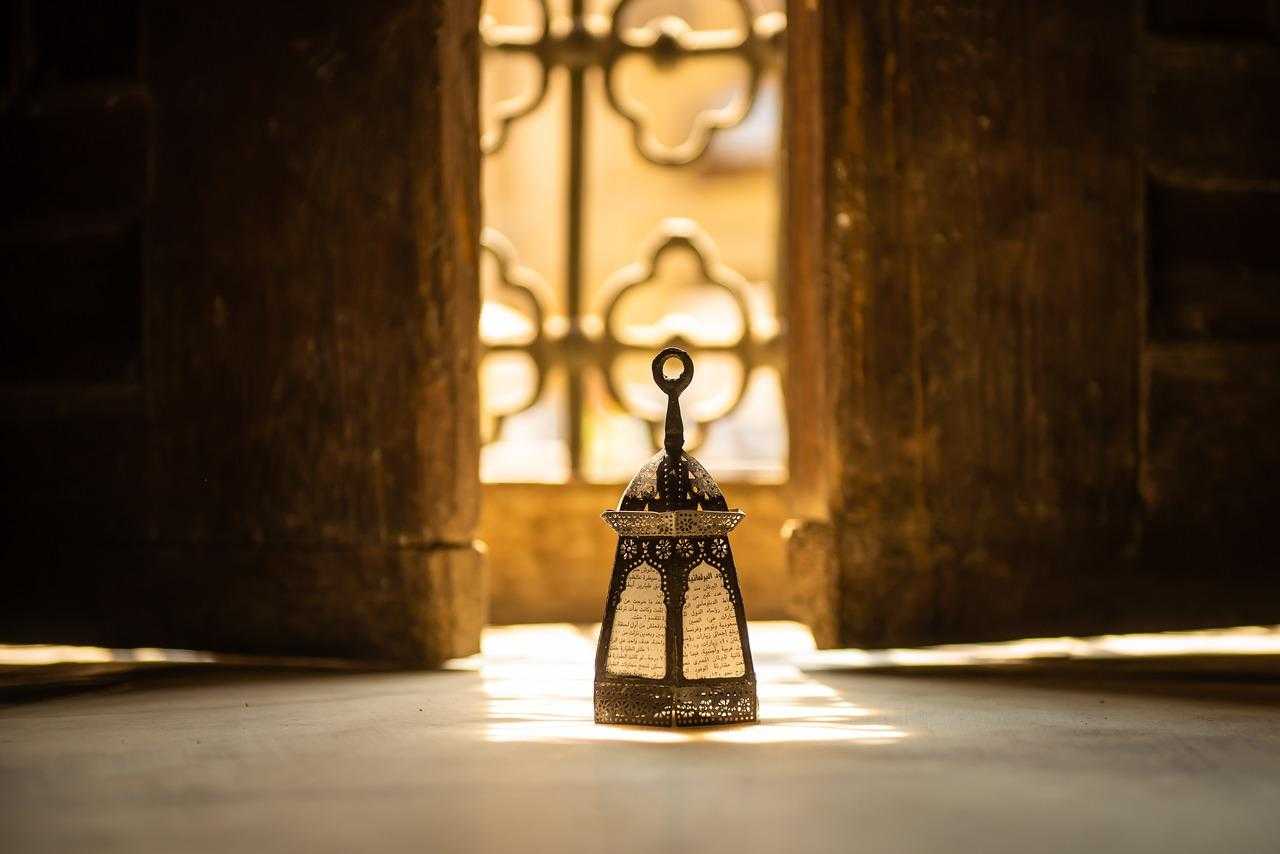
Ramadan is the month of fasting that is obligatory for Muslims and the Quran tells us about its importance.
Indeed, Muslim scholars believe that God Almighty sent down other messages and books to prophets other than the prophets of the three messages, which are the newspapers of Ibrahim and the Book of Dhubur, which the Almighty sent down to the father of the prophets, Hebron Ibrahim, peace be upon him, and the honorable Prophet David, in order.
Ramadan date ?
Ramadan is the ninth month of the 12-month lunar year in Islam, which is called the Hijri calendar (Hijri calendar). God Almighty Himself determined the lunar year at the time of the earth's creation.
In Rabi` al-Awwal of the year 16 AH, and the day of Muharram 1 of the year 17 AH was the beginning of the first Hijri year after the adoption of the Hijri calendar.
With the day our Master Muhammad, peace be upon him, the last Messenger of God to mankind, completed his emigration from Mecca, the commercial and spiritual center of the Arabian Peninsula, to the city of Yathrib in the west of the Arabian Peninsula. Then Yathrib was known as the city of the Messenger, the city of the Prophet, his home and resting place, peace be upon him.
The Islamic lunar calendar is based on the solar year and seasons, as the true lunar year is naturally 10 to 11 days shorter than its solar counterpart. Ramadan takes about 33 solar years to cycle back through the entire solar calendar. In a typical lifetime, a Muslim will experience Ramadan through the full scope of the solar year.
What is Ramadan fasting?
Ramadan fasting is imposed from dawn until sunset and abstaining from food, drink, sexual intercourse and emissions throughout 29 or 30 days, as the lunar months fluctuate naturally, and this is obligatory for all Muslims who are not sick or on a journey of inability to tolerate fasting due to age, pregnancy, lactation and the like. Difficulties (Those who can pay the so-called ransom, instead of fasting. Breaking the fast: Those who deliberately fail to fast without reason must pay expiation. See also: What are the invalidations of fasting?).
Ramadan fasting is explained in four verses
What is the purpose of Ramadan?
Fasting Ramadan does not aim at imposing hunger, thirst, or sensory deprivation for those who fast.
Ramadan aims for the believers to have morals, specifically, our trial as human beings is to judge and act" based on our judgment at the time granted to him by God Almighty as he said in his dear book (Who created death and life to test you as to which of you is best in action, and He is the Mighty, the Mighty, the All-Powerful) 2)
The criterion of worship is the unseen, the invisible, as God Almighty said in this regard:
Say to them - O Messenger -: God is the one who brought you into being out of nothingness, and made hearing for you to hear with it, eyes for you to see with it, and hearts for you to reason with it. Say to them: God is the one who created you and spread you on the earth, and to Him alone you will be gathered after this separation for reckoning and recompense.
In other words, Ramadan is a divine intervention in worldly life designed to liberate us to become what the right hands of the Creator originally created us: consciously and openly worshipers of gratitude to this one and only God.
In fact the linguistic meaning of Ramadan means "purification by fire".
What does the fasting person get from Ramadan?
Spiritually, the Qur'an tells us that the explicit virtue afforded by the fasting of Ramadan to the believer is to be fearful of God. Becoming God-fearing is essential to our ultimate success.
Where the Almighty said (On the Day when neither wealth nor children will benefit, except for those who come to God with a sound heart) (Al-Shu’ara’ 26: 87-89). ).
And also:
(3) We created man in the best of the evaluation (4) Then we repeated it as a lower one (5) except those who believe and do the righteous.
In the vocabulary of the Qur’an, “fear of God” - it is the fear of the Sublime, the action of revelation, the defining strength that the divine intention wants us to take from the Ramadan fast -
“Taqwa,” the word to which this verse refers, is a Qur’anic term of art, and the early Islamic community defined it briefly, passing its definition on to those who followed them, and those who have done so until now: Do what God has commanded, and do not do what He has forbidden.
They painted him with this proverb: A man walks watchful, wary, his arms hemming him across a narrow path lined with thistles.
So, fear of God is based on knowledge of His revelation - by word (the Qur'an), by action (life's model for its human ideal, Muhammad, peace be upon him), and by action (God's creation). All are signs of God's truth.
All in all, the fasting of Ramadan exfoliates the world from our senses, its veil from our hearts, and restores our spirits to the first fluidity, so we bear the fruit of Ramadan: piety, a decent fear of God. In a world shrouded in God's light to us.
Is fasting only legitimate worship?
Fasting Ramadan is not new to people. His Qur'anic teachings consider it as an ancient devotional source like the monotheistic faith, that is, as old as man, because true religion and man appear together in the sacred anthropology of Islam, contrary to what our religious teaching calls for.
Are there any mandatory charitable payments in Ramadan?
Yes, Zakat al-Fitr is the zakat that all Muslims must pay at the end of Ramadan.
Zakat al-Fitr comes in the form of basic foodstuffs or, more generally today, as a payment to each family member whose value is equivalent to providing a person's entire day's sustenance.
(1) It is a purification for the fasting person from idle talk and obscenity, i.e. it erases what a Muslim may commit in Ramadan of legal prohibitions during his fast.
, and (2) in general, it helps to provide food resources for the poor believers and as an expression of sincere thanks to God Almighty, it is food for the poor; To dispense with the question on the day of the feast, and share with the rich in the joy of the feast.
It is a way to praise and thank God for completing the Ramadan fast, and for the rest of the countless blessings.
(Look what is zakat al-fitr?).
What are the special virtues of Ramadan?
- Ramadan is full of worship along with fasting, and it lavishes its bounty over many other pious deeds. God Almighty has doubled the reward for any charitable work in it, no matter how small.
1- Shahada : a testimony that there is no god but God and that Muhammad is the Messenger of God, and its practices are manifested on a daily basis every day in Ramadan
2- Prayer: Worshipers perform the distinctive Islamic worship daily for a continuous month - individually and collectively, in the sun and in the light of the stars, in mosques and places of prayer time all over the earth, and it is characterized by the Tarawih prayer every night of the holy month, a hymn to heaven in choir with the angels, Ameen!
3- Zakat: Muslims pay the zakat of their money for a lunar year and give it to the poor, the needy , those who work on it, those whose hearts are to be reconciled, and in the way of God and the wayfarer (see what is zakat?).
The accumulation of wealth for a full year often reaches maturity for most people in Ramadan. These zakat alms make a great deal for what they are entitled to when distributed by wise distributors), and they are paid with joy, for they are highly rewarded especially in the holy month of Ramadan.