Not to be dramatic, but the moment my doctor's words, "I think you have bipolar disorder" touched my ears, my life changed.
Seated in the corner of a room that loosely resembled what I would imagine to be a closet in a federal prison, I tried to put two-and-two together. Ohhhh, I thought, that's why she asked how long I've gone without sleep. I came in for a psychiatric evaluation thinking I was struggling with some form of ADHD. I left diagnosed with a severe mood disorder.
Immediately upon leaving the doctor's office, I did as much research on bipolar disorder as I could find: I scoured forums, read lists of symptoms, even found a stash of "bipolar memes" (which absolutely exist and are hilarious, by the way). My whole life started to come together and make sense, for the first time in my life. The patterns I had started to identify, the weird behavior I exhibited since childhood, my racing thoughts and turbulent interpersonal relationships were eerily documented and analyzed by doctors, patients, and the gloriously reliable WebMD.
I was excited! Finally I had an explanation for my severe mood swings. I felt as if I had just tapped into an entire community full of supportive individuals, willing to share their experiences grappling with this mental illness. For the first time, I didn't feel alone.
But then it really started to sink in what this all meant. Suicide rate statistics of bipolar individuals kept appearing as ominous reminders of my past. Suggested everywhere was treatment of bipolar through medication, potentially lifelong. Forums were oftentimes riddled with desperate pleas for help and support. I shut my laptop and cried.
I had spent most of my life trying to pinpoint why I was the way I was.
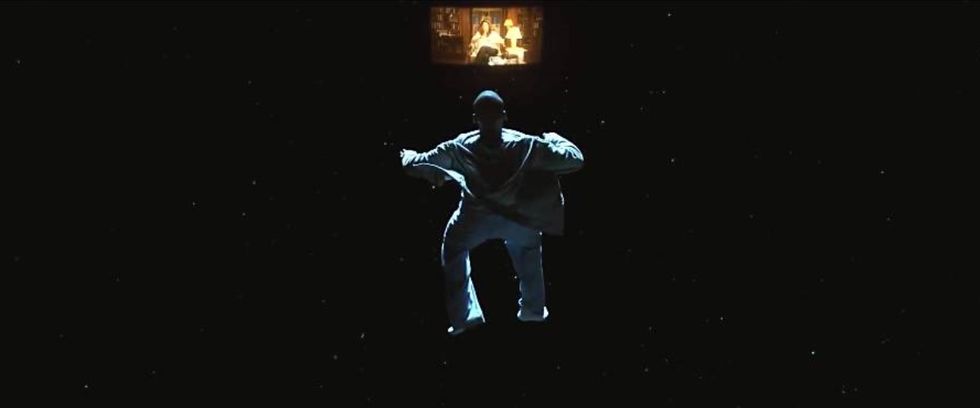
"The Sunken Place" from Jordan Peele's Get Out (2017)
My first memory of depression was when I was in elementary school. I didn't have many friends, I hit puberty way too early, I hated myself, played with an imaginary friend named Nobody. Yes, Nobody. I would joke around with myself, "Nobody likes me!" My teacher ended up keeping me after class because she was concerned about my wellbeing, primarily because I named myself "Noba Dee" in our classroom forum in 4th grade. My 9 year-old self thought that was top tier comedy. Turns out Ms. Wood did not.
As I got older, the depression only worsened. I'd lock myself in my room all day, emerge only to eat, and retreat into bed again to continue binge watching horror anime. Followed by the periods of depression were months of pure sunshine. I'd sing at the top of my lungs around the house, get into physical "play" fights with my friends, dance around the dinner table and gush about how much I loved each and every one of my family members and then frantically list off reasons why. I once stayed up 60 straight hours, dancing, drawing, writing music and practicing vocal technique in the shower all through the night. I'd sneak out of my house, look up at the night sky and cry because I thought I was absorbing the power of the moon. I felt invincible. I felt like a god.
And then, inexplicably, I felt nothing at all.
Numb and dissociated, I passively watched my life unfold around me. I felt like I existed in the "sunken place" as portrayed in Get Out. What began as numbness evolved into irritation: I had anxiety attacks in the hallways, cried in the bathroom stalls, dropped friends like hot cakes and isolated myself until I barely recognized who I was anymore.
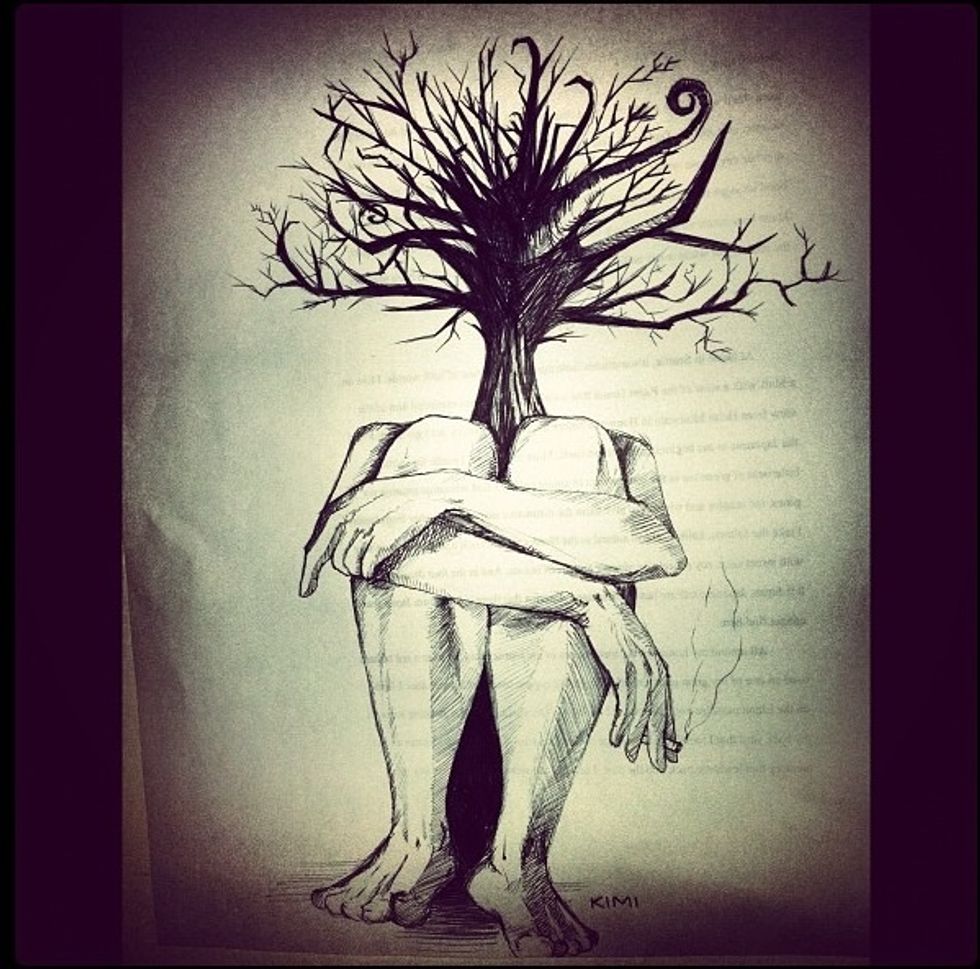
Art I drew while in an episode.
Nothing mattered. Class, my grades, my friends, my life. I'd stand on the balcony of my apartment and visualize myself jumping off the ledge and splatting on the pavement, over, and over, and over, and over again. I didn't want to live like this anymore. What is the point of living when your entire life has been a struggle to survive? I barely trusted myself. I looked in the mirror and saw nothing.
The thing is, my life wasn't always a living hell. I would lose myself so severely in my episodes of depression and mania that I would forget who I was, what I had been through. My judgment was clouded, my memories ceased to exist, and I would function purely on fictional narratives concocted by my own mind. But there were many months where I was normal; I went to school, was on my high school's dance team, hung out with friends and was relatively happy. Glimpses of reality, of the real me, would make life worth living.
Most of my struggle existed internally. I rarely externalized my emotions, which primarily manifested themselves in isolation. My friends were somewhat surprised by my diagnosis, probably because I am disgustingly talented at tricking people into thinking I am relatively mentally stable. Ha ha, jokes on you, fools. I actually constantly want to die. *finger guns*
At least, not anymore. Once I started treatment, I found myself relieved of the suicidal thoughts and ruminations, relieved of the sleepless nights and psychotic agitation. I felt emotions wholly, but was able to handle them as I imagined a neurotypical individual would. I wasn't numb anymore; in fact, colors were brighter, my dreams were vivid and positive, I was able to feel sadness without it debilitating me for months. All the stigma I had built up around medication fell to the side once my life pieced itself back together again.
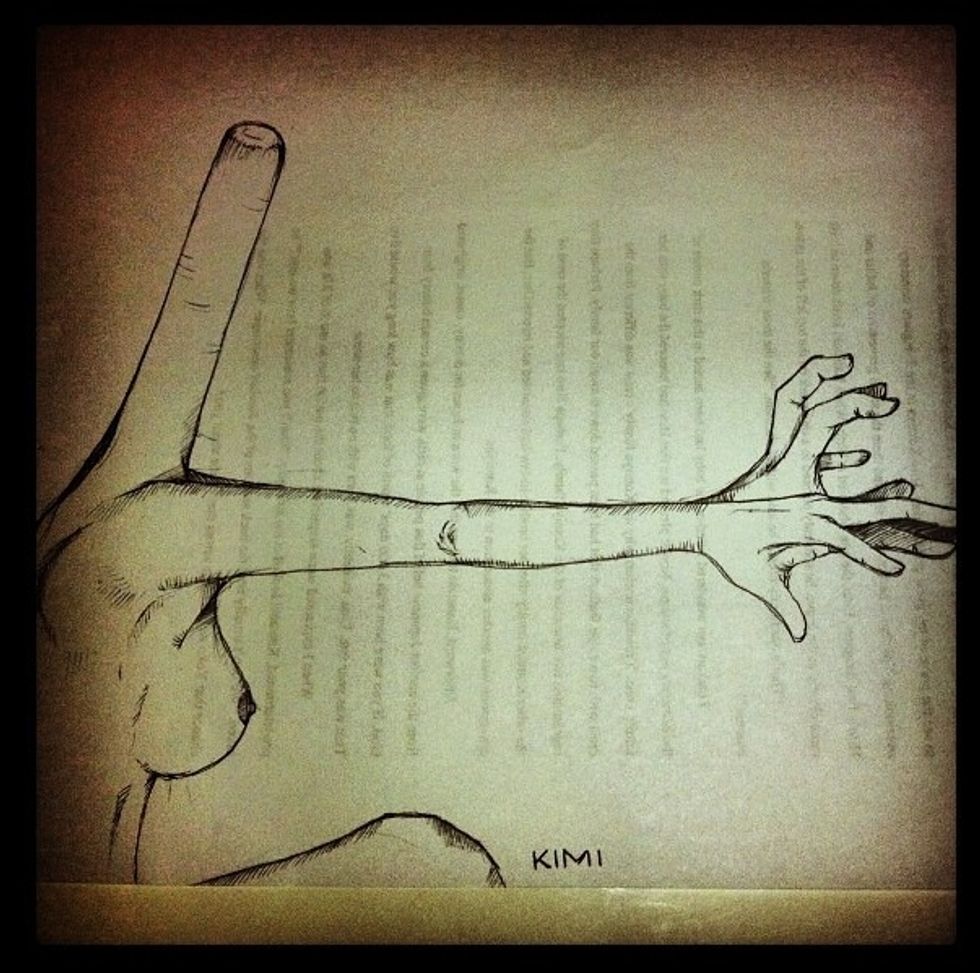
More art I drew in an episode.
In the midst of my episodes, I lost a lot of friends, made some decisions I cringe at now, acted impulsively and made too many mistakes to count. Just because I have bipolar disorder does not excuse my behavior. How I treat people is a testament to my choices, and despite the fact I can't always control my moods, I can control my reactions and treatment of those around me. These were hard lessons that I had to learn firsthand before I realized there were major behavioral changes and maturing I still needed to undergo.
I can't speak on behalf of all of those with bipolar, but I can speak for myself. Bipolar disorder is not just the crazy person screaming on the side of the road, or the person who snaps at the slightest trigger, neither is it the person who switches on and off like a light switch. The misconceptions built up in the media about bipolar disorder are oftentimes just flat out incorrect for a majority of us. No, I will not start randomly yelling at you if you minorly inconvenience me. No, I am not about to gamble away my savings in one night on mah-jong. I may spend a majority of it on clothes, but that's beside the point. Plus it's Buy One Get One 50% off all weekend at the mall so excuse me for wanting to take advantage of the deals.
Mental illness is on a spectrum. What some may experience is entirely different than the next person. I am not crazy, I have an illness, one that needs to be monitored and treated just like any physical ailment. Treat me as you would any other person.
Honestly, we're not too different. We have our struggles, but really, who doesn't?
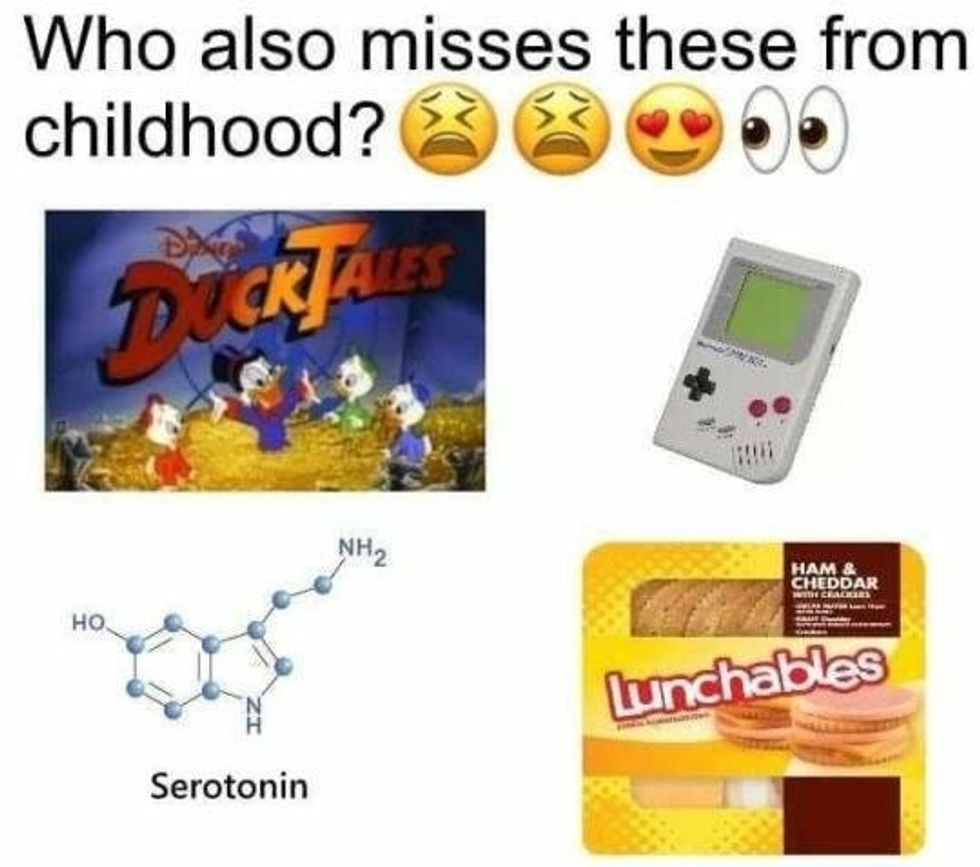
Enjoy some top-notch bipolar memes, compliments to reddit.com/r/bipolar!
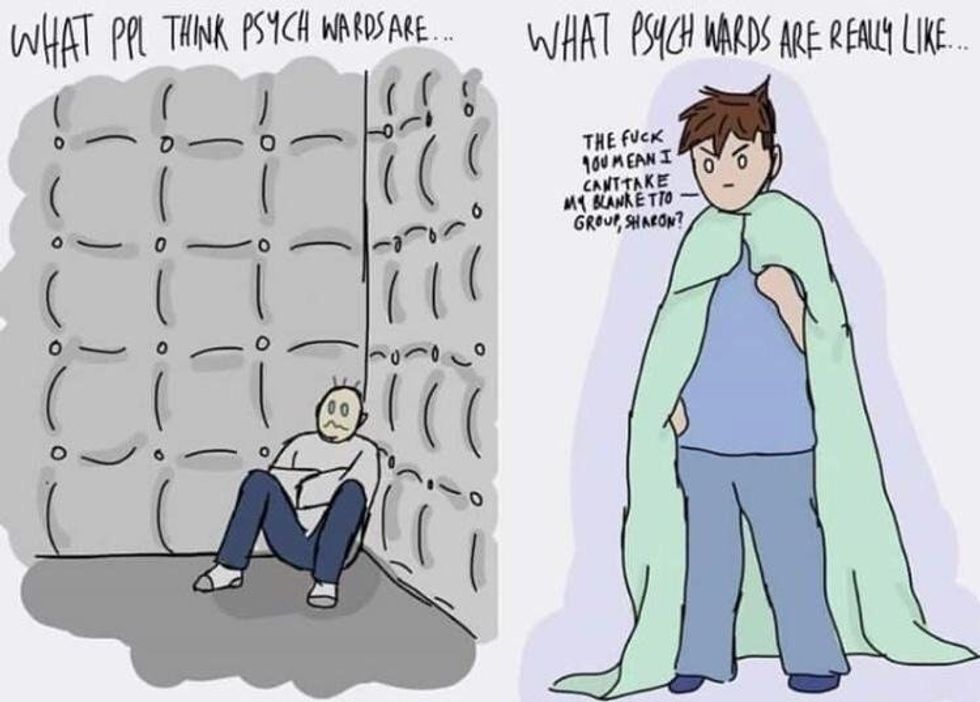
Submitted to r/bipolar by u/shedsy
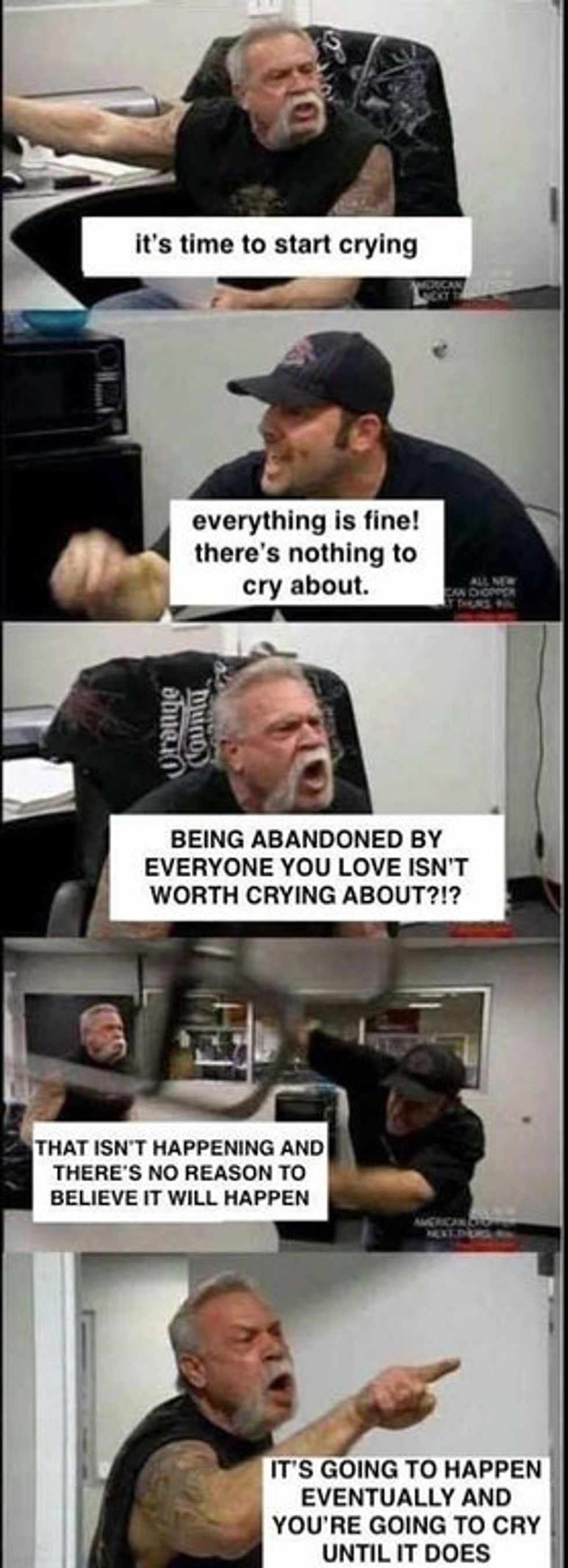
Submitted to r/bipolar by u/softbaphoment
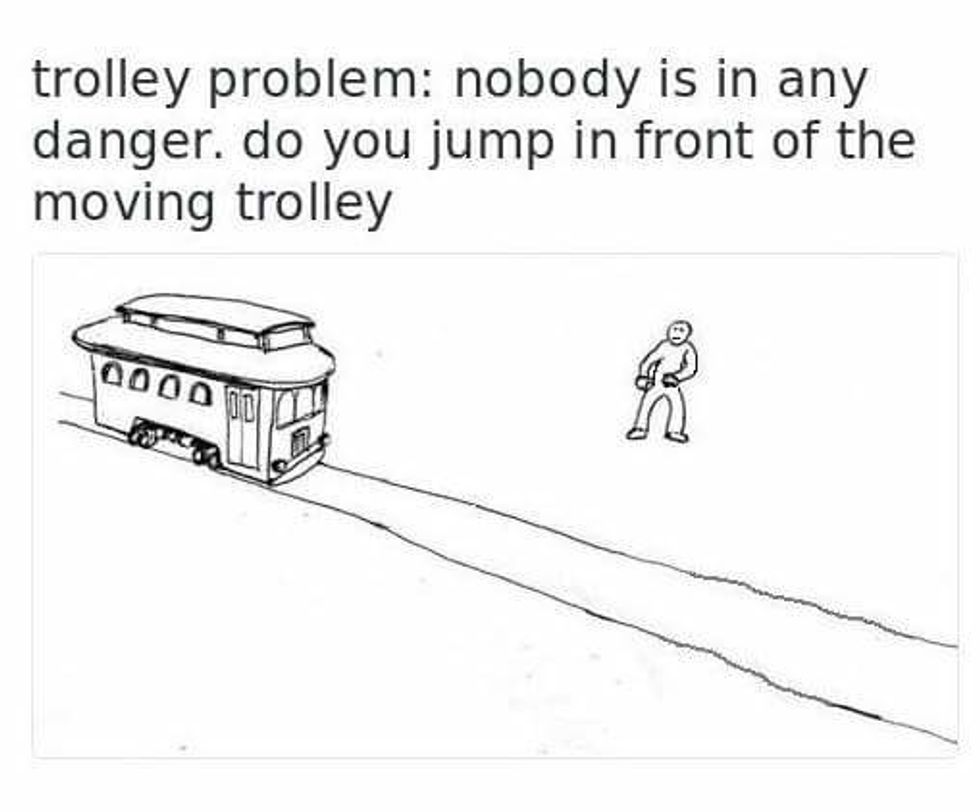
"Trolley problem for the manic depressive"
Submitted to r/bipolar by u/Doomsy88
u/BringtheBacon
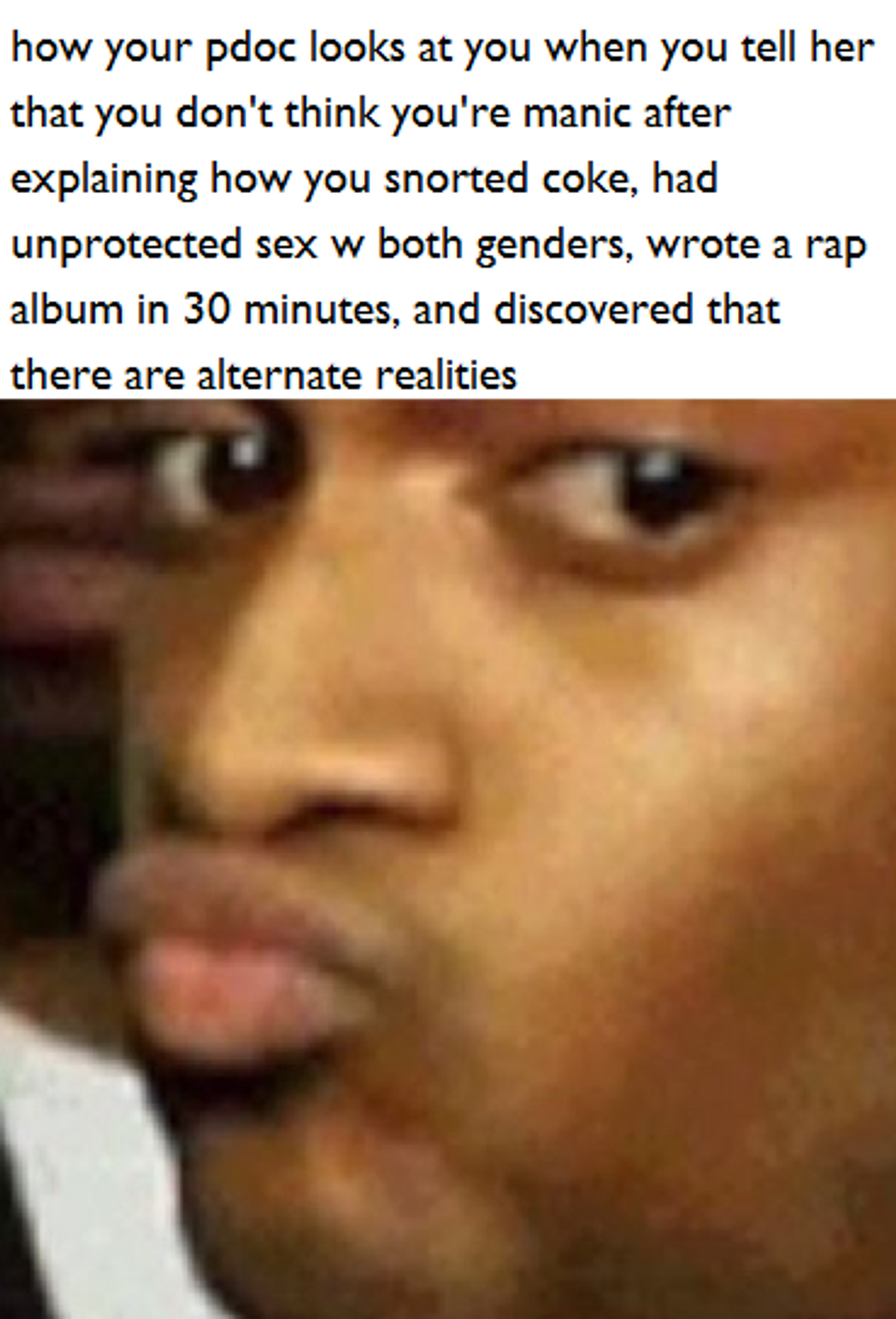
u/lordpuffy
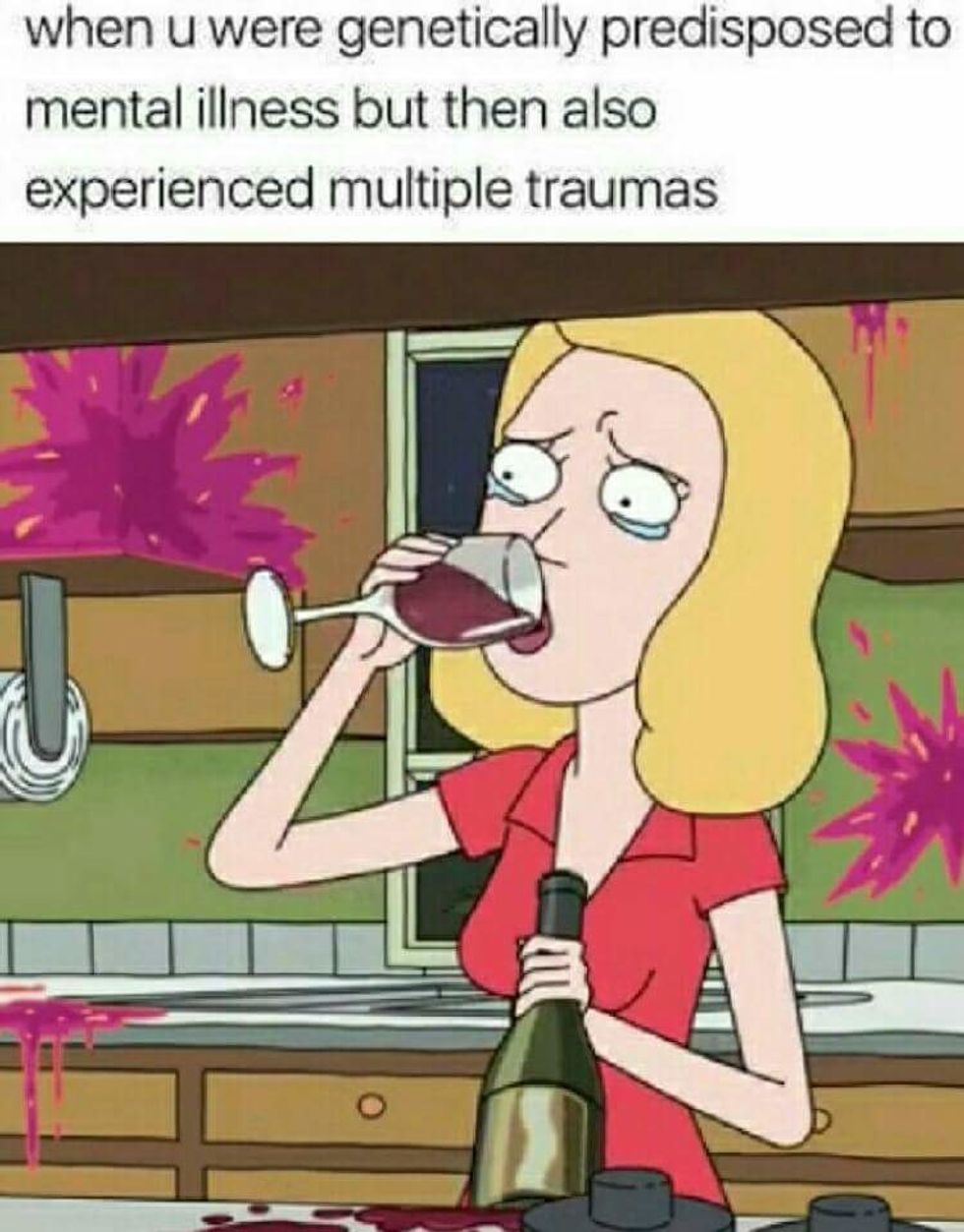
u/FuckBigots5