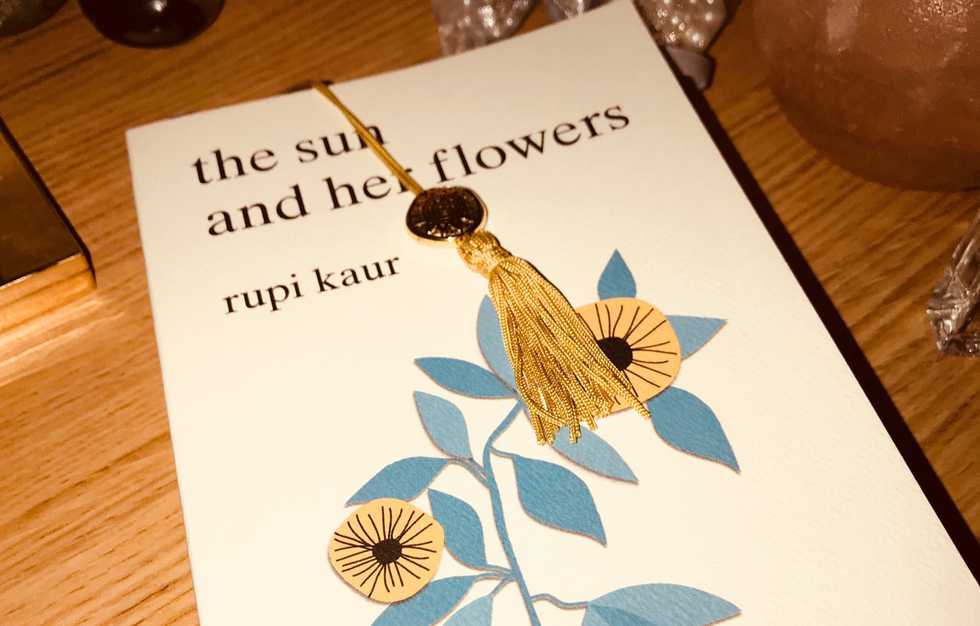
I was given Rupi Kaur’s second book of poetry for my birthday by my best friend. Like many, I had devoured "Milk and Honey," and I was excitedly awaiting the sequel.
I didn’t get around to reading it for three months, partly because of other obligations, but mostly because I was fearful of being disappointed. Sequels seem to have that effect.
On social media, I had seen posts mocking the simplicity of the poems, claiming Rupi simply breaks up sentences with random spaces. Having read "Milk and Honey," I wondered if these critiques had even taken the time to read the book in its entirety.
The post I saw had called out the line “i long to be a lily pad” captioning it “deep” with a scoffing emoji.
While I can agree that this line might not be the most breathtaking, to me it doesn’t discredit the overall message of the book.
Another reason I waited so long to read "The Sun and Her Flowers" was because I wasn’t sure if I was ready to re-experience the uncomfortable feelings I had while reading "Milk and Honey." While calling these books uncomfortable may seem like an insult, it’s actually the exact reason why I find them worth the read.
Once I finally read "The Sun and Her Flowers," I was satisfied to find that Rupi didn’t fail to deliver another poignant message like she did with "Milk and Honey."
These books are uncomfortable because they are both heart wrenching and beautiful.
I’m a woman who has never known the struggles of immigration or the devastation of sexual assault, but through reading these poems I feel as if I have. The books are successful because of the way they make people feel. Critiques will tear apart the writing, but they are missing the message.
If you like or love these books, don’t ever let anyone tell you that you are mainstream for feeling so. Poetry is easy to make fun of because it’s one of the most vulnerable forms of expression.
Topics such as sexual assault, feminism, and female sexuality make people uncomfortable. We hear about sex all day long from men's perspectives. It’s infiltrated in our media and it’s so normal that we don’t blink an eye, but when a woman dares to write the word orgasm or bleed the most intimate urges onto a page, we all have to look away.
Yet, the beauty of these books is that people aren't looking away. They are bestsellers, and they are here to stay.
Those that make fun of certain lines do so because something so raw can be hard to digest. These books are not mainstream, girly, or not well written; they are a milestone in awakening our perspectives on topics that need to be talked about.